Low Carbon Chinatown
低碳唐人街
Low Carbon Chinatown is an award-winning environmental art initiative that brings together urban interventions, installations, participatory platforms, and meal-as-performance to address the Climate Crisis.
Blending art, science, and technology, it explores how cultural knowledge, collective climate action, and everyday practices can reshape food systems, inspire broader environmental engagement, and contribute to more sustainable futures.
Food, as a shared cultural language, breaks down barriers and brings people together. Using Chinese diasporic food culture as a starting point—chosen for both its global popularity and the persistent misconceptions surrounding its environmental impact—the project engages large, cross-generational East and Southeast Asian communities in the UK. Participants work alongside climate and data scientists, researchers, food writers, and chefs to develop new ‘authentic’ and sustainable approaches to producing, sourcing, cooking, and consuming food that evokes joy, memory, and cultural continuity.
These explorations are presented to the wider public through multiple formats, including multimedia installations, performative supper clubs, architectural pop-ups, and large scale participatory banquets. Working with low carbon materials and processes, Low Carbon Chinatown connects food, art, design, and dialogue, inviting audiences to consider how our individual and collective actions, what we eat, gather, and do, can shape more resilient and inclusive futures.
Low Carbon Chinatown, a project by artist and designer Ling Tan, has been presented at cultural venues across the UK and Europe, within Hackney borough, and at festivals including the London Design Festival, Compass Festival, and Ars Electronica Festival. The project has received Honorary Mention for the Prix Ars Electronica 2026 – Digital Humanity, and has been nominated for several other awards, including the S+T+ARTS Prize in 2024 and 2026, and the Seoul Design Finalist Award 2023.
Explore: Past Presentations of Low Carbon Chinatown and Resources For Climate Action
Past Presentations of Low Carbon Chinatown
Learn about Low Carbon Chinatown through its past presentations across cultural and public venues.
Resources For Climate Action
Discover interactive tools, data maps, and stories that reveal the climate impact of our everyday choices. Explore low carbon Chinese recipes that retain authenticity while evoking joy and memories, 100 Climate Actions, and datasets uncovering our food system’s carbon footprint. Compare ingredients, trace their emission journeys, examine the impact of climate actions carried out individually and collectively, and reflect on how culture, food, community and climate intertwine.
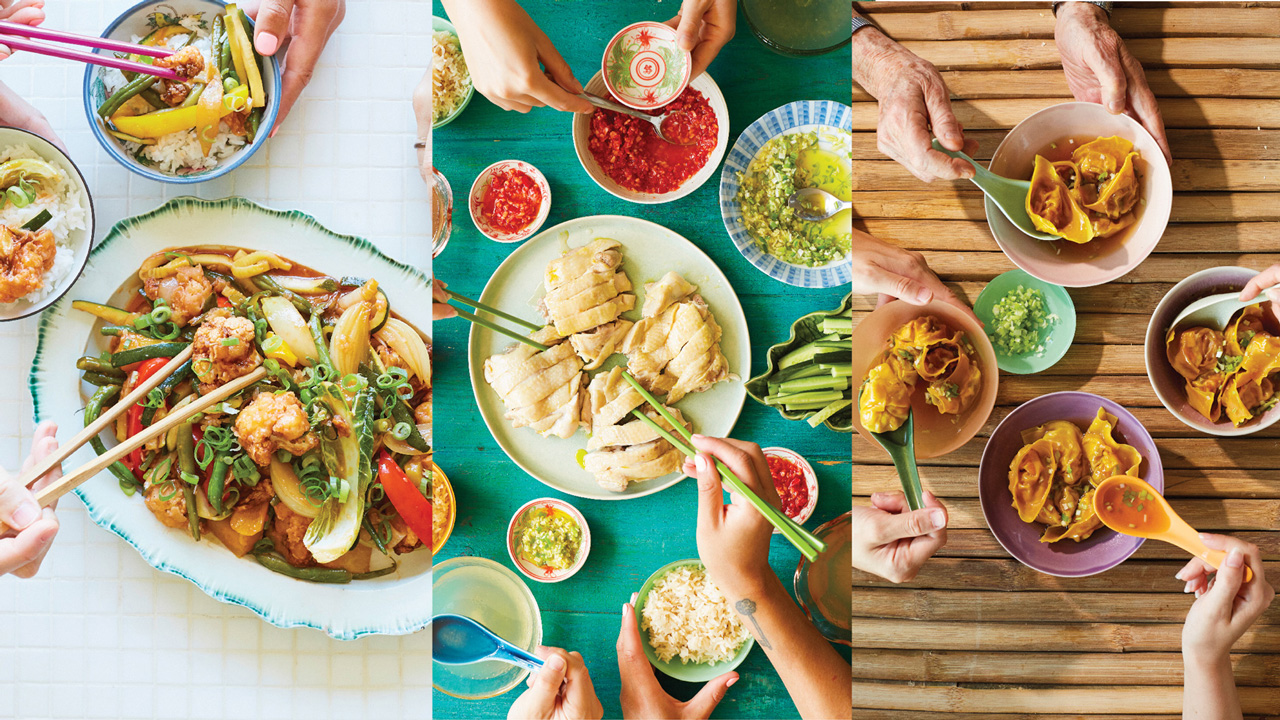
Low Carbon Digital Cookbook
Explore a variety of low carbon recipes developed by UK-based East and Southeast Asians in collaboration with data scientists, acclaimed chefs, and food writers from East and Southeast Asian backgrounds. Gain insight into the carbon footprint of our food system by examining ingredients, cooking techniques, and food sourcing. Try cooking the dishes at home while reflecting on the climate impact of your own culinary practices.
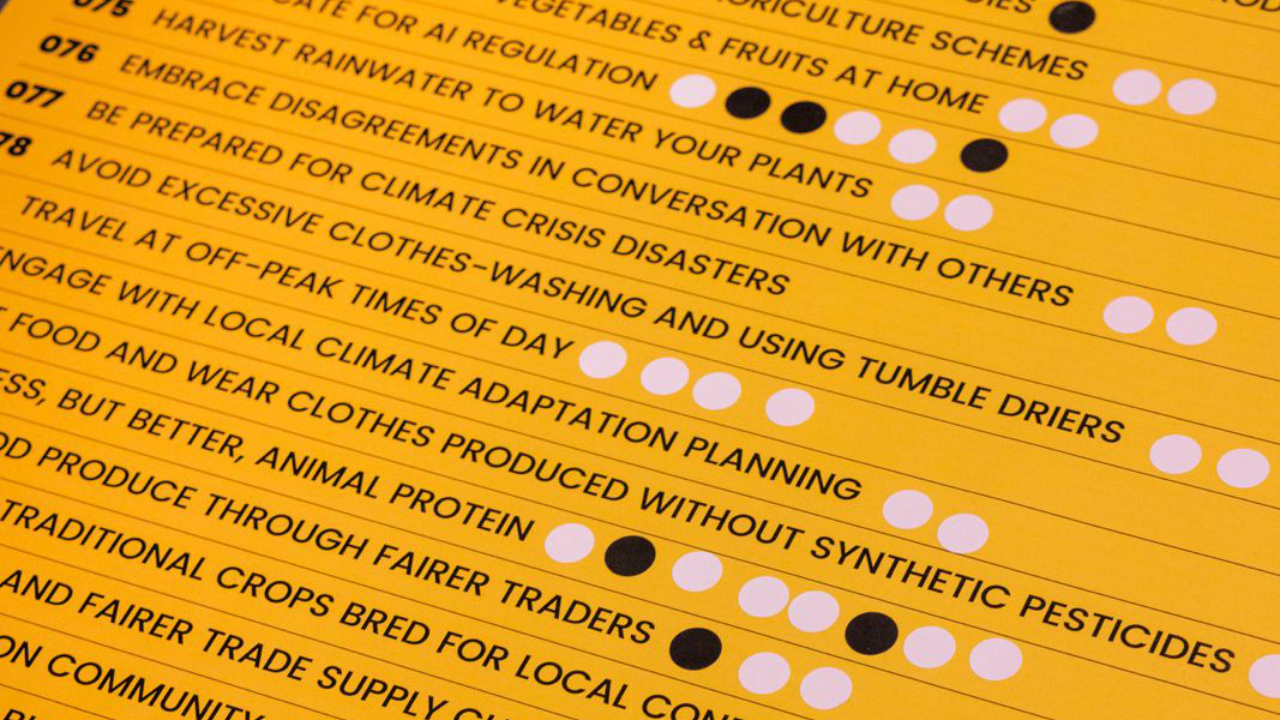
100 CLIMATE ACTIONS
Explore 100 unique Climate Actions ranging from individual daily activities to large-scale advocacy, that examine the power of individual and the impact each of us can have, whether alongside 99 other people or scaled up to an entire borough.
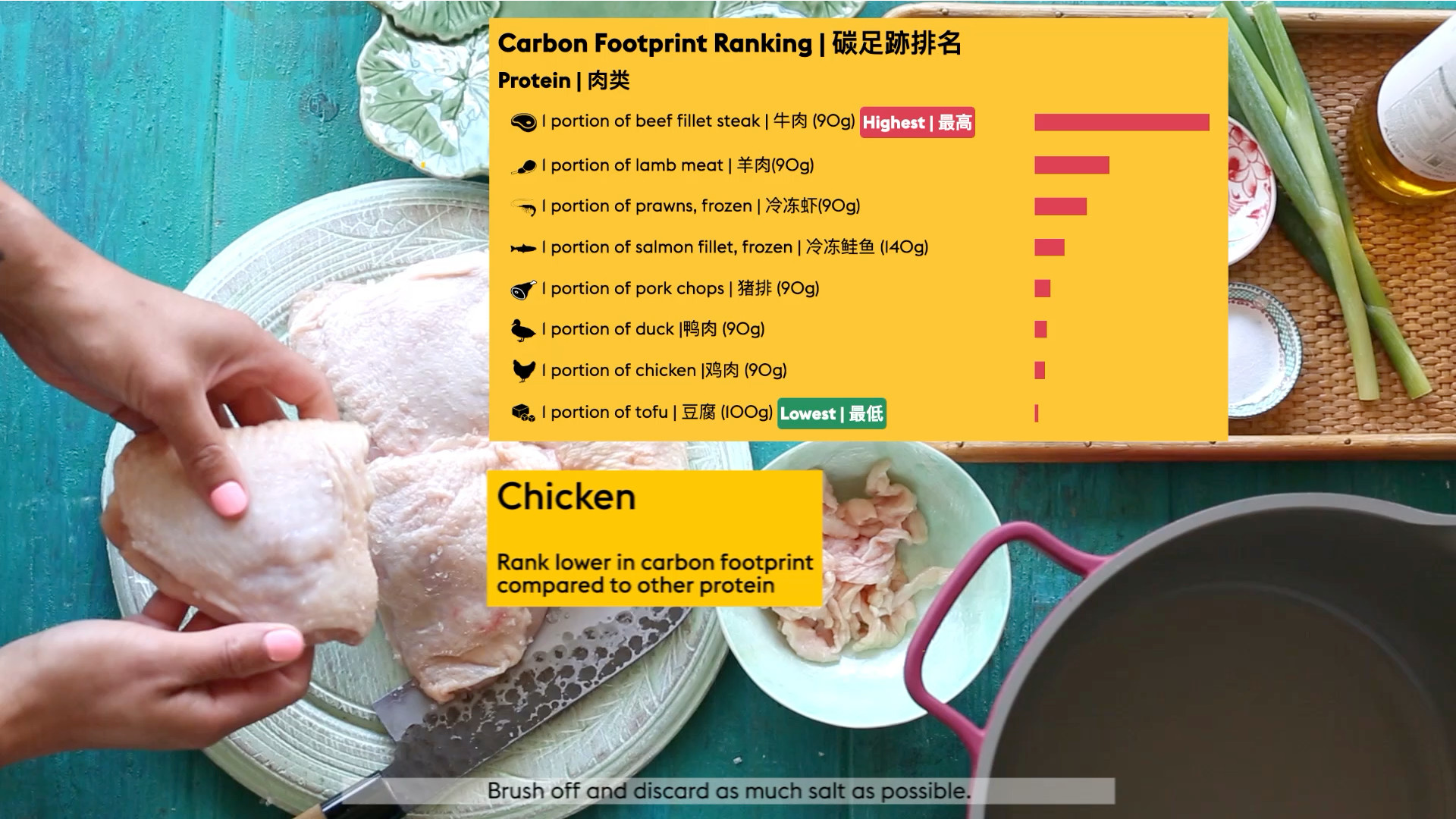
Our Food System's Carbon Footprint
Explore a range of datasets that compare the environmental and carbon footprints of popular Chinese dishes in the UK. These datasets have been gathered over several years in collaboration with data scientists, cultural organisations, UK-based East and Southeast Asian communities, food writers, and chefs.
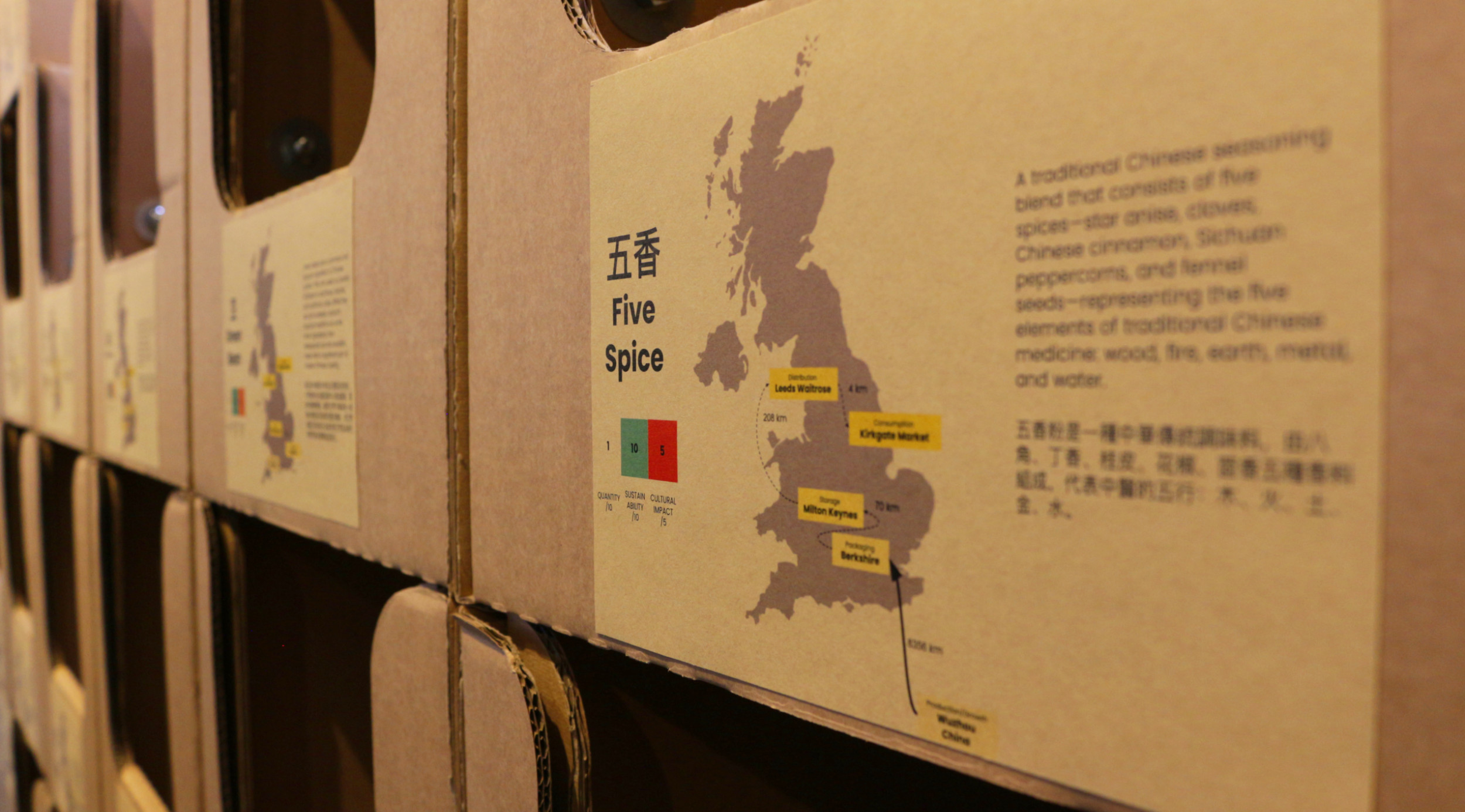
Towards a Low Carbon Cultural Food System
Compare the cultural and environmental impact of food ingredients used in low carbon dishes. Track each ingredient’s lifecycle from cradle to consumption, including its carbon footprint, transportation journey, historical origin, and significance within Chinese food culture.
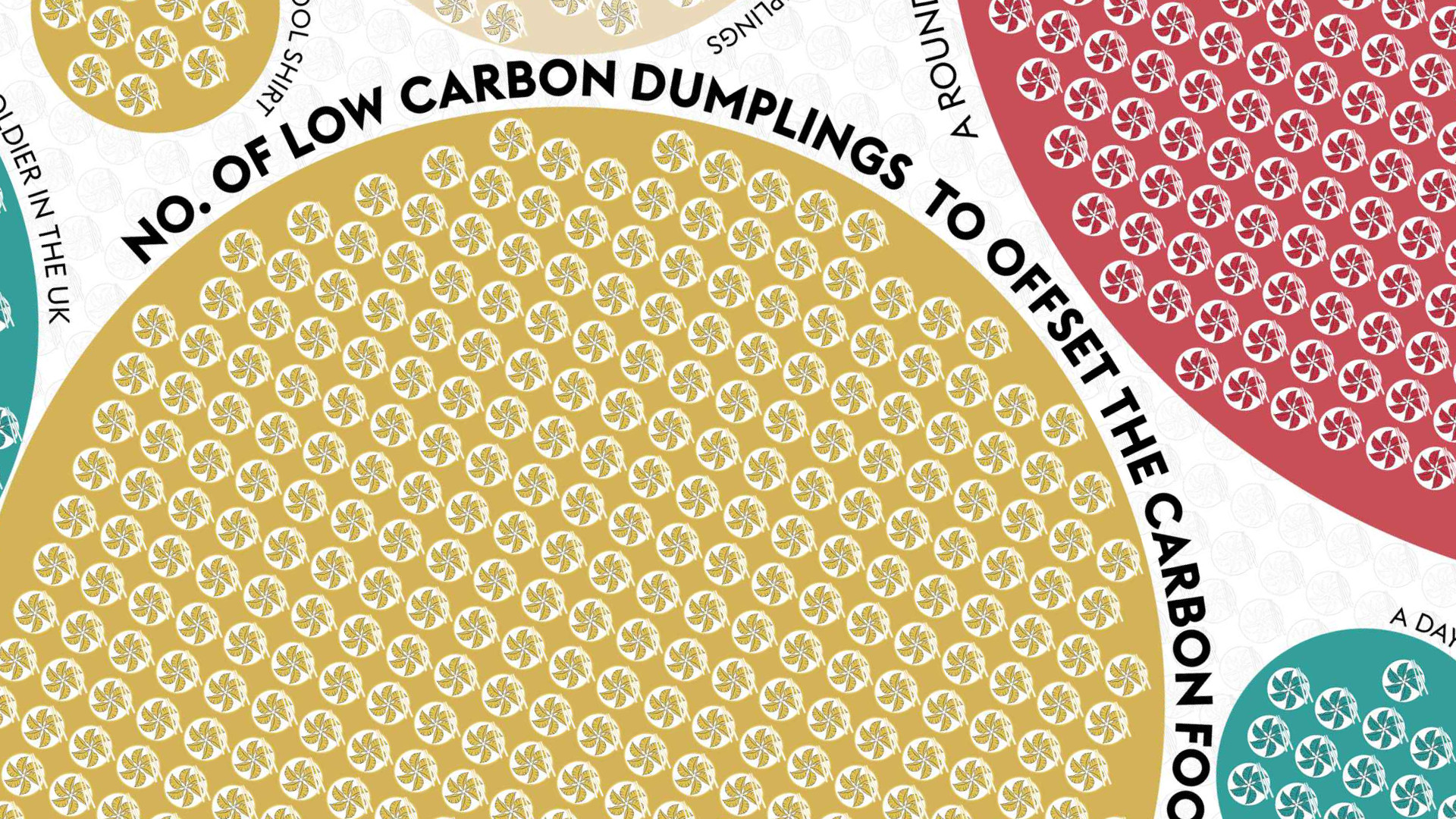
The Scale of Our Impact
Compare the carbon footprint of a bowl of Low Carbon Wonton Dumplings with the emissions generated by various global activities carried out by people.
Hackney’s Low Carbon Chinatown / Harvesting Climate Action
Hackney’s Low Carbon Chinatown is a project in partnership with Hackney Council’s Climate Team, developing public interventions with hundreds of participants across the borough that address the climate crisis through low carbon local food systems and broader climate action.
The project unfolded over several months in late 2025 and culminated in multiple public-facing initiatives. These included Harvesting Climate Action, a six-week multimedia installation mapping the complexity of possible pathways for collective climate action; the finale Low Carbon Banquet for a Hundred, which invited 100 members of the public—including the Mayor of Hackney—to share a meal while engaging in climate provocations and discussions, and a legacy Low Carbon Children’s Banquet, which will now take place annually at Gainsborough Primary School.
Alongside these events, the project produced the 100 Climate Actions toolkit, detailing the environmental impact of 100 individual and collective actions, gathered with the expertise of climate scientists, economists, designers, artists, council staff, and local participants.
All the banquets featured low carbon Chinese dishes developed over several years in collaboration with East and Southeast Asian community members across the UK, alongside scientists, food writers, and chefs. Food produce used in both banquets was grown or sourced locally by local school gardens and farmers, further connecting participants to the local food system.
– Video of Hackney’s Low Carbon Chinatown. Videography by Nick Turpin. –
Hackney’s Low Carbon Chinatown is a project by Ling Tan, supported by the Climate Team in Hackney Council and public funding by the National Lottery through Arts Council England, delivered in partnership with Growing Communities, Gainsborough Primary School and MadLeap.
Special thanks to:
Stephanie Li & Ander Zabala at Hackney Council
Tim Jones, Ronald Springer & Facilities Team at Hackney Service Centre
Uyen Luu
Neil Eakapong
Jenna Clark, Rab Brownell & Debby Lewis at Gainsborough Primary School
Participating students from Gainsborough Primary School
Rokiah Yaman & Katrina Wright at MadLeap
Danny Fisher & Sophie Verhagen at Growing Communities
Catherine Chong at CLEAR
Dr Alice Garvey at Priestley Centre for Climate Futures
Rachel Bronstein at Design Council
Alexie Sommer at Design Declares
Usman Haque
Studio Makecreate
Jennie Gilman

Low Carbon Banquet For A Hundred
Hackney Town Hall, Borough of Hackney, London, 2025
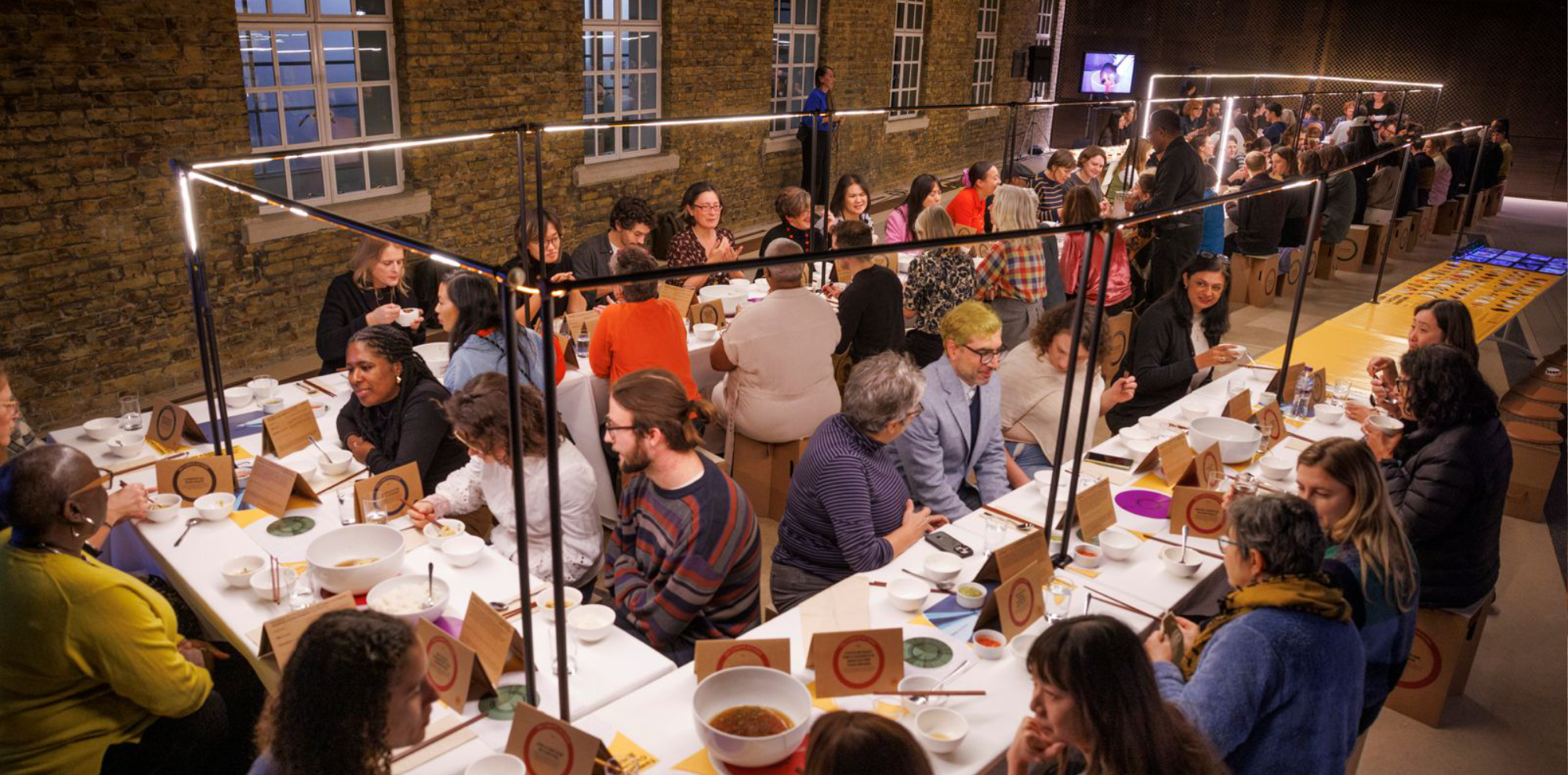
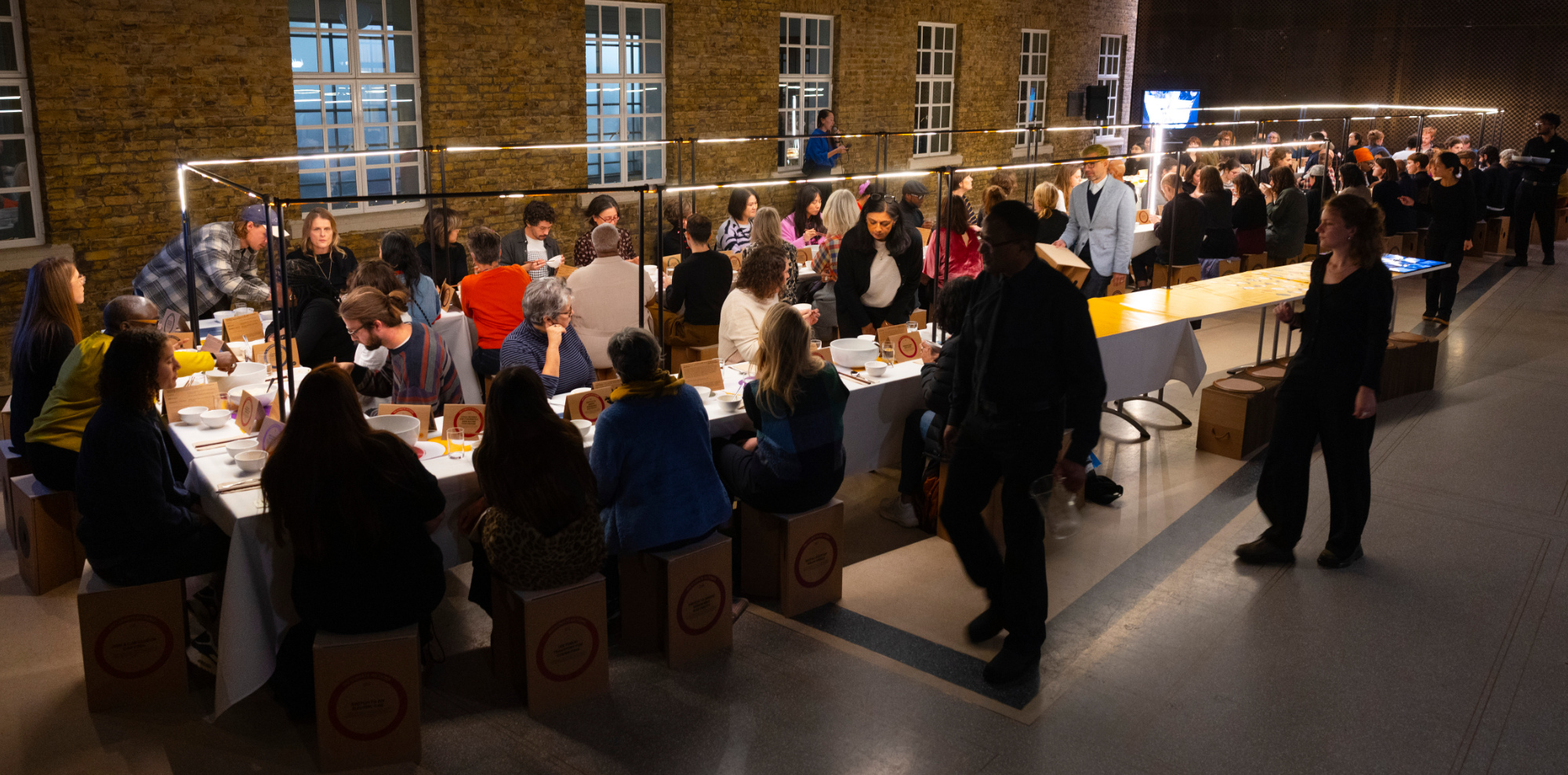
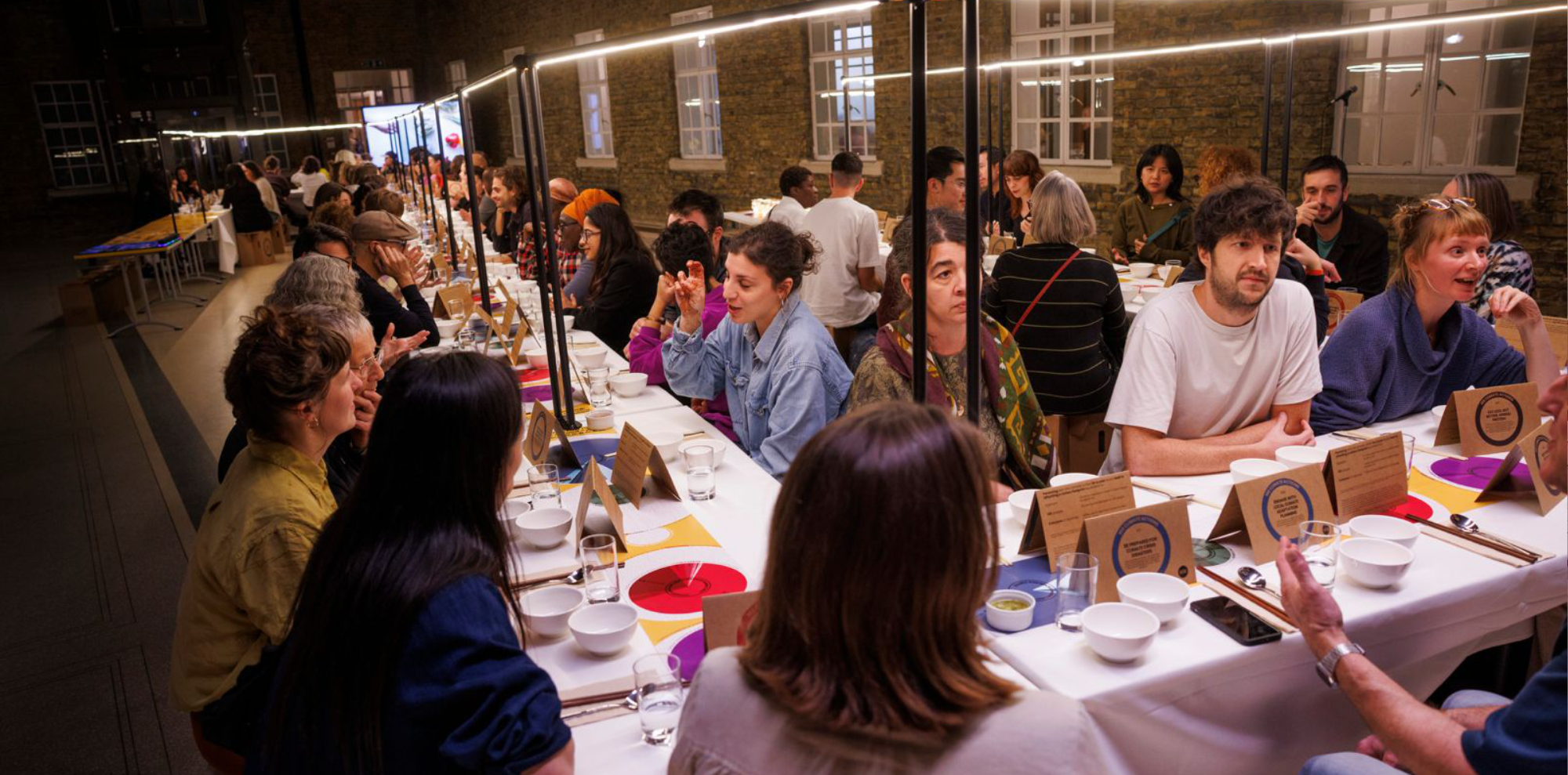
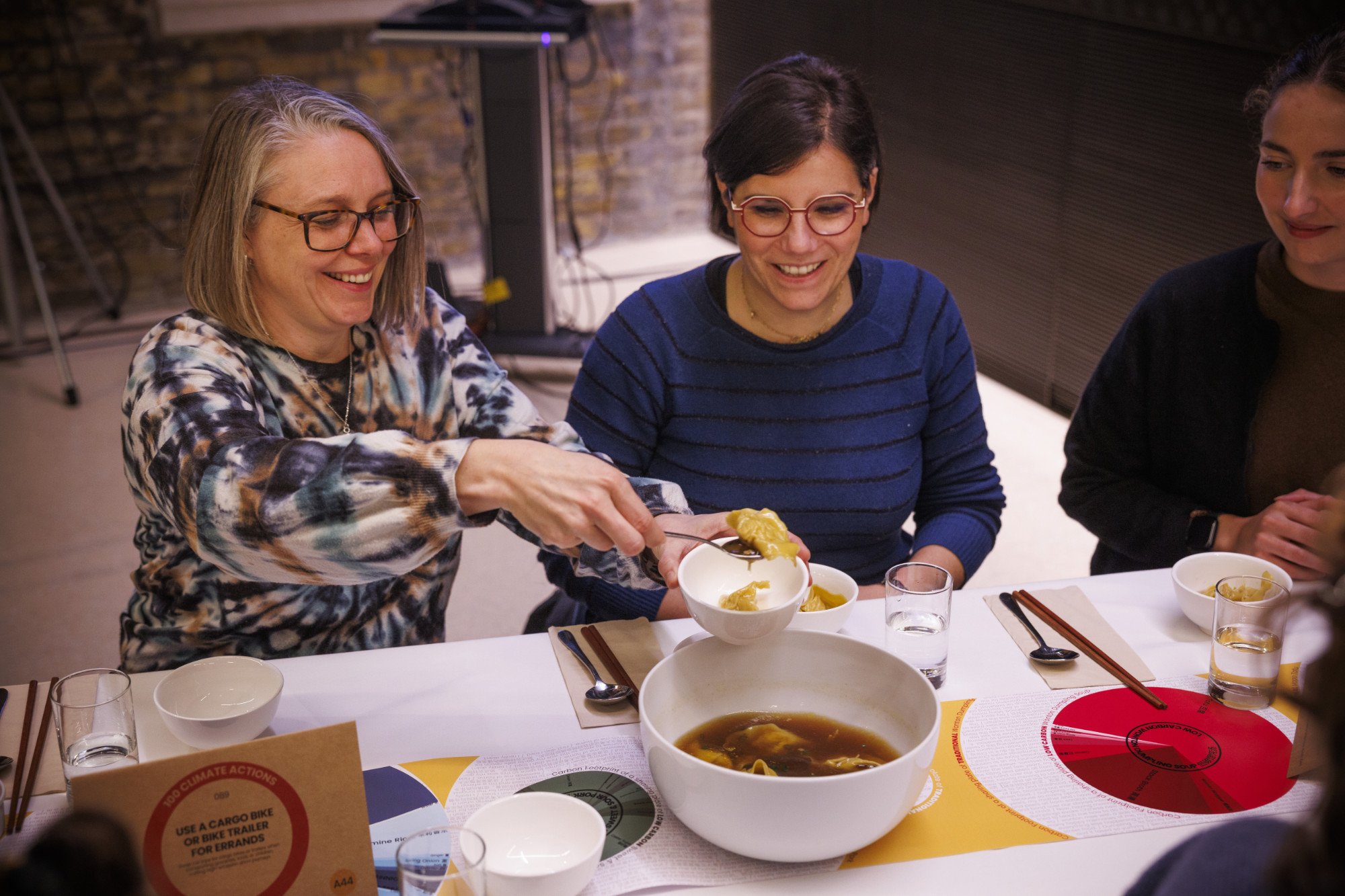
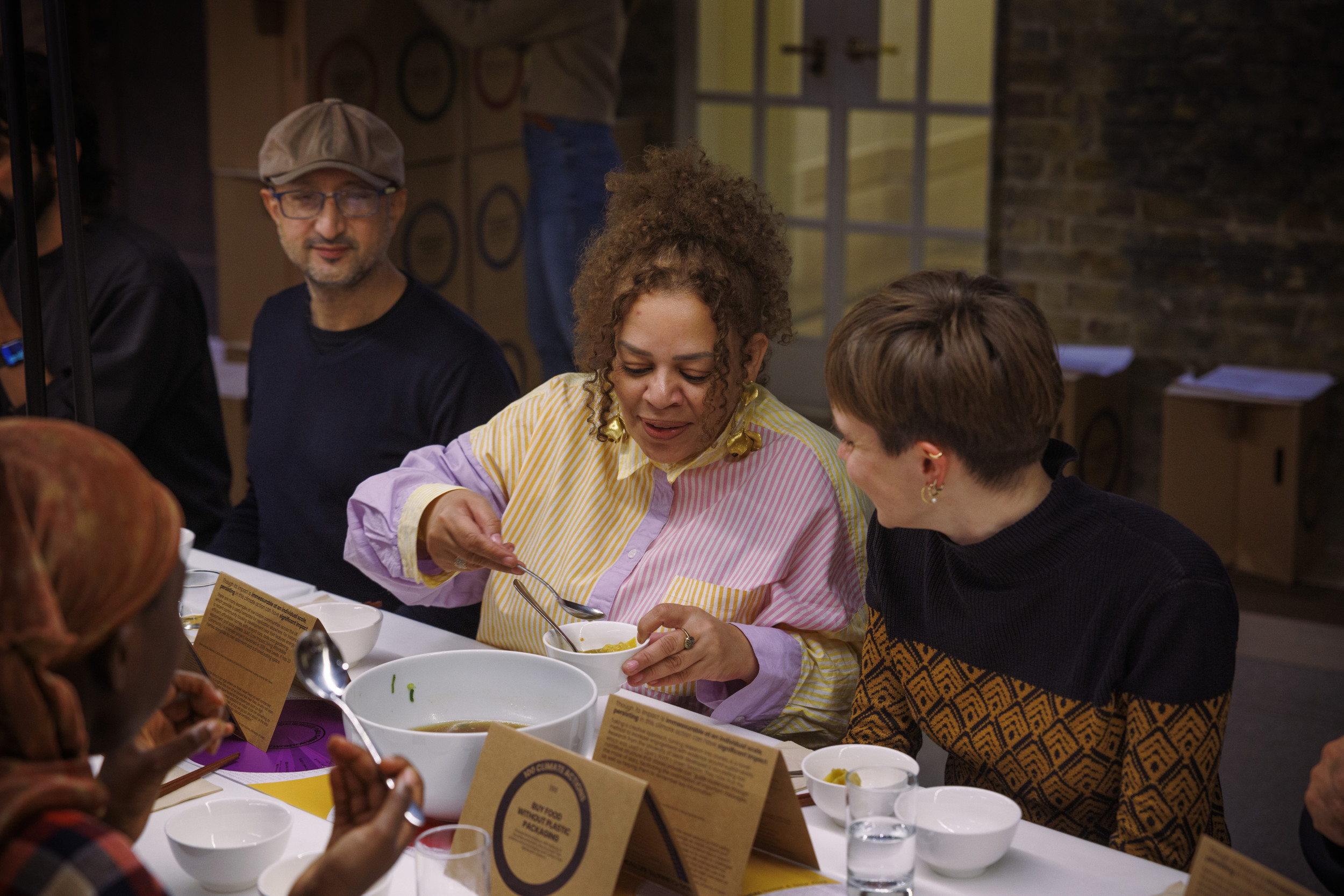
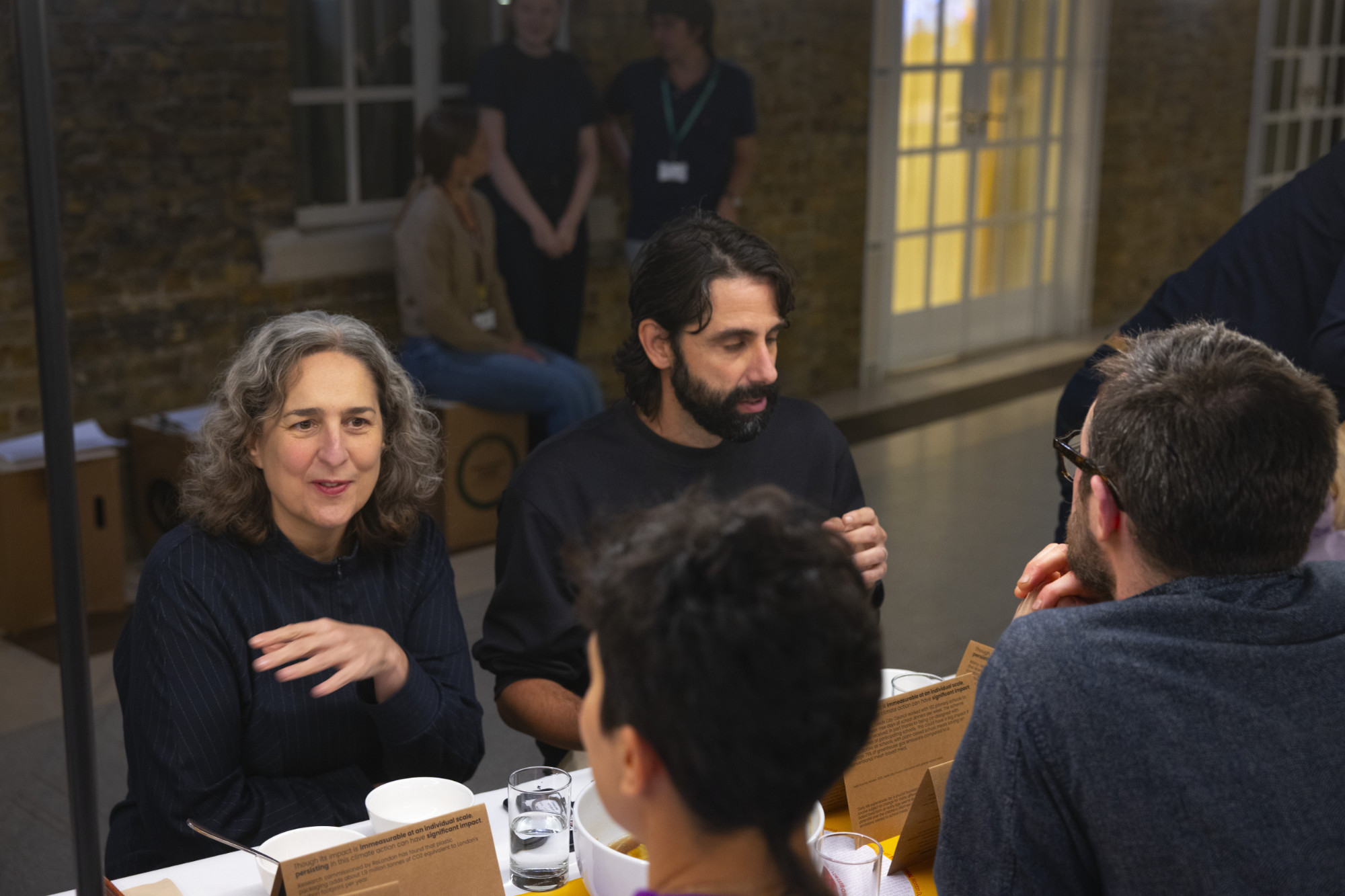
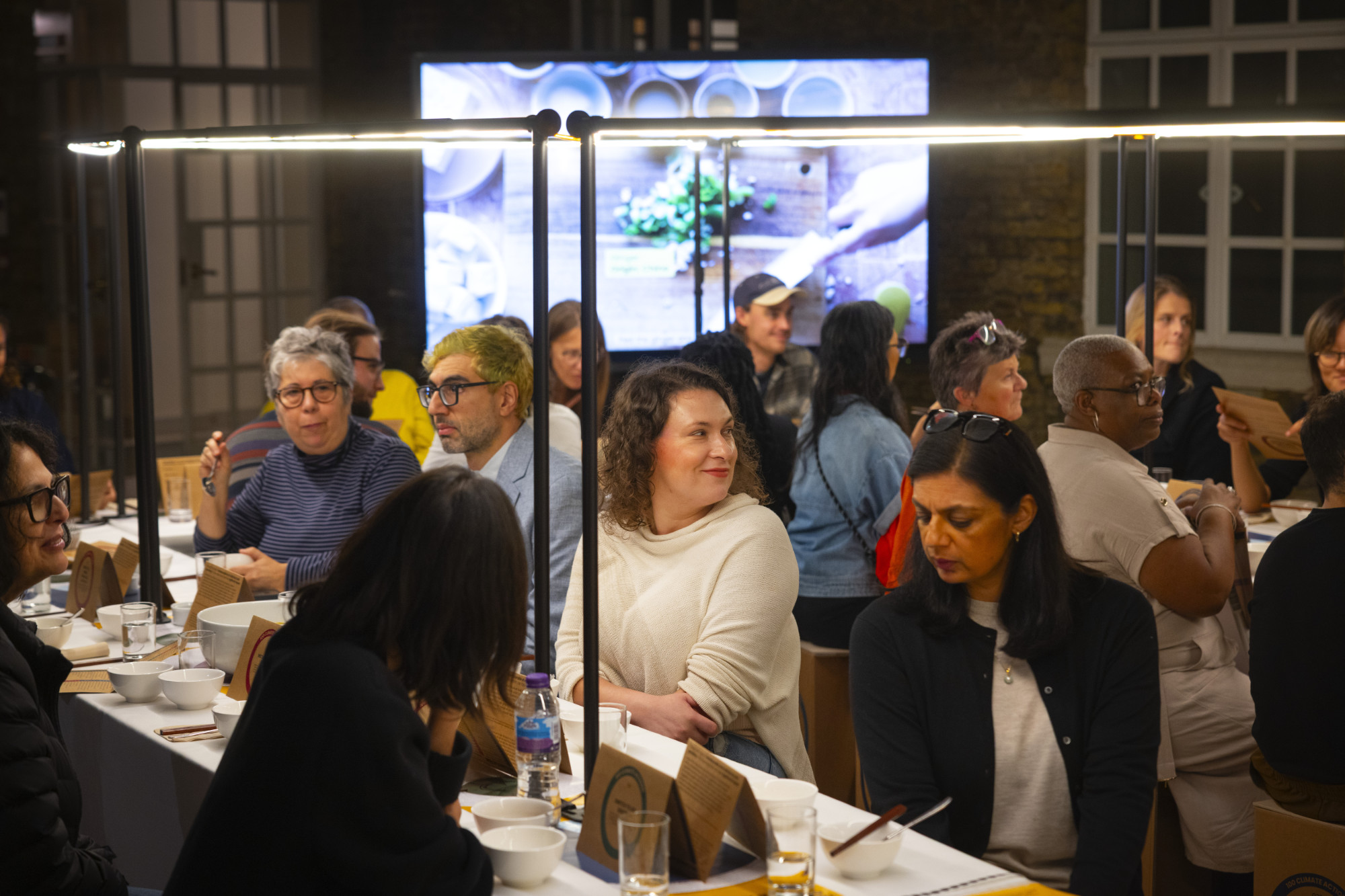
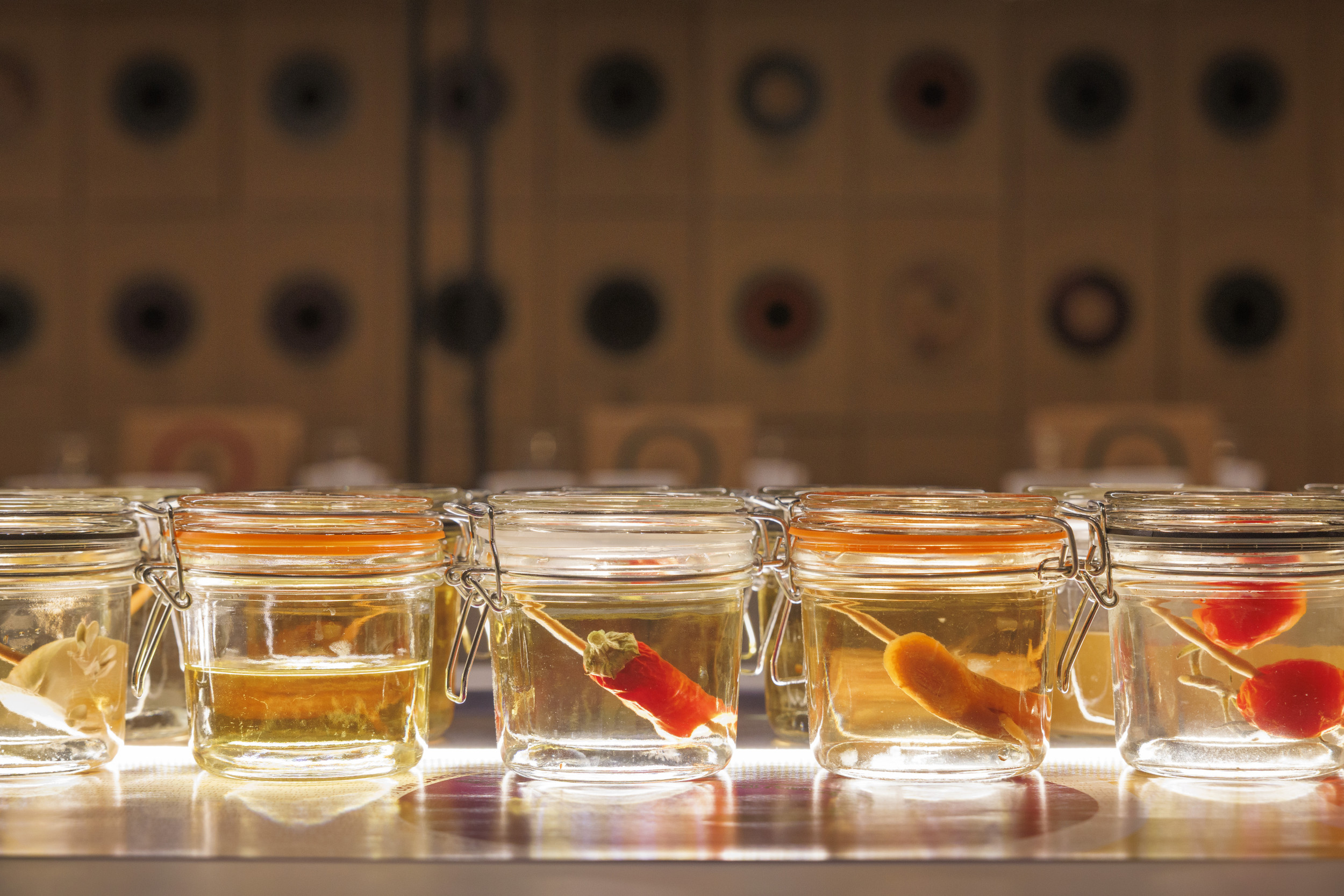
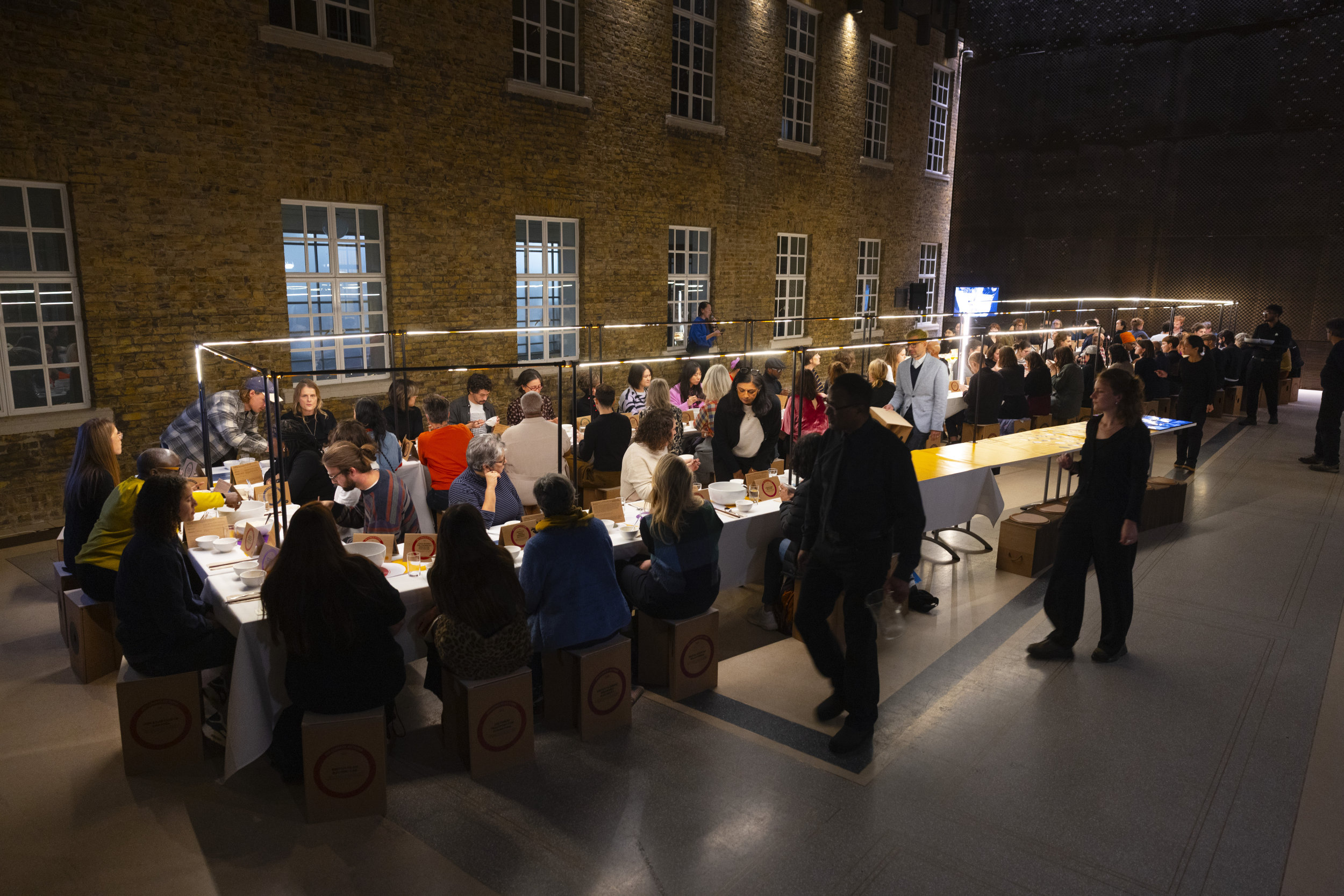
The finale Low Carbon Banquet for a Hundred marked the conclusion of Hackney’s Low Carbon Chinatown. At the Banquet, 100 members of the public, including scientists, environmentalists, teachers, students, families, civil servants, councillors, and the Mayor, came together to share a communal meal and conversation. The menu featured a series of low carbon Chinese dishes, collaboratively developed over three years with UK-based East and Southeast Asian participants, scientists, and acclaimed food writers.
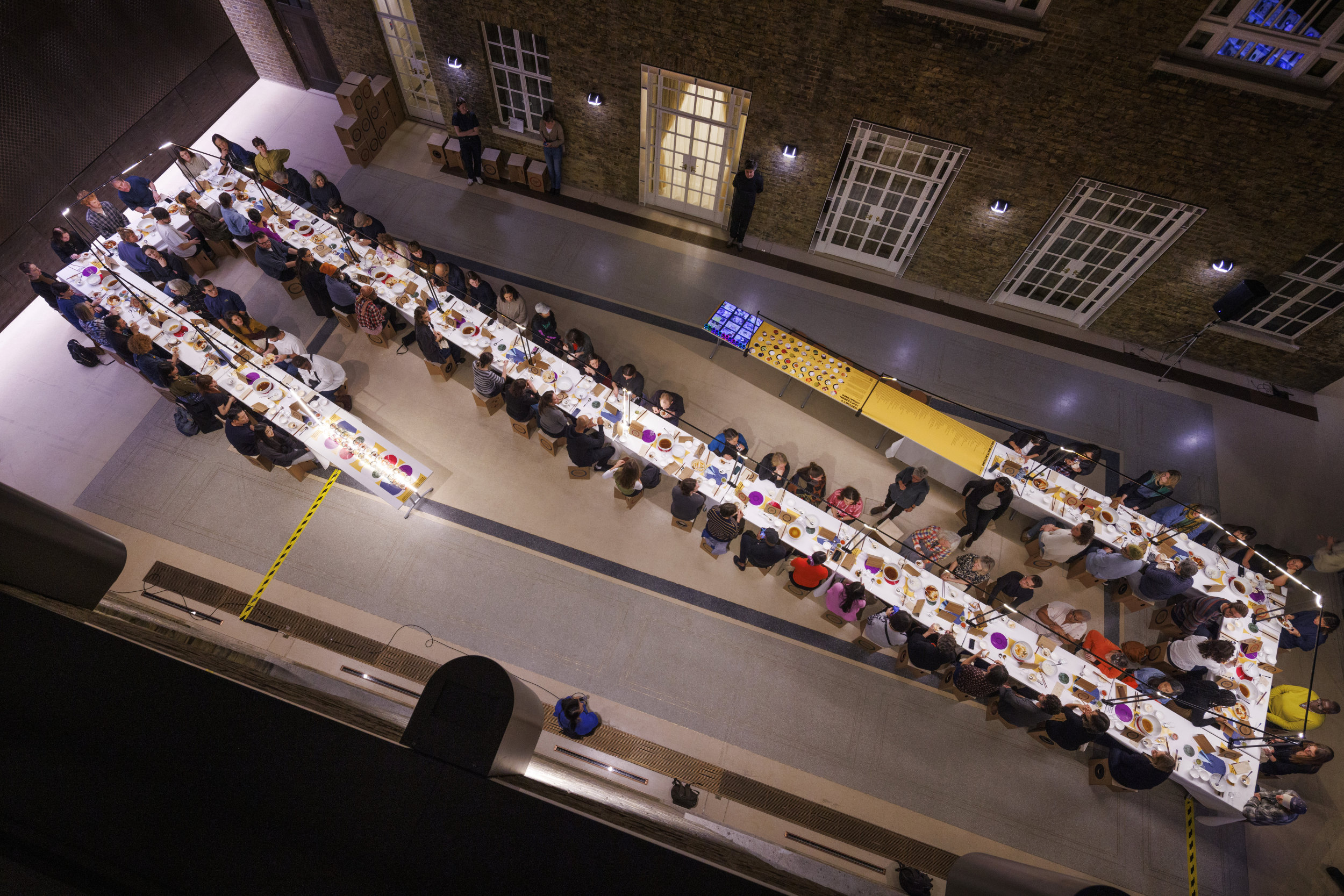
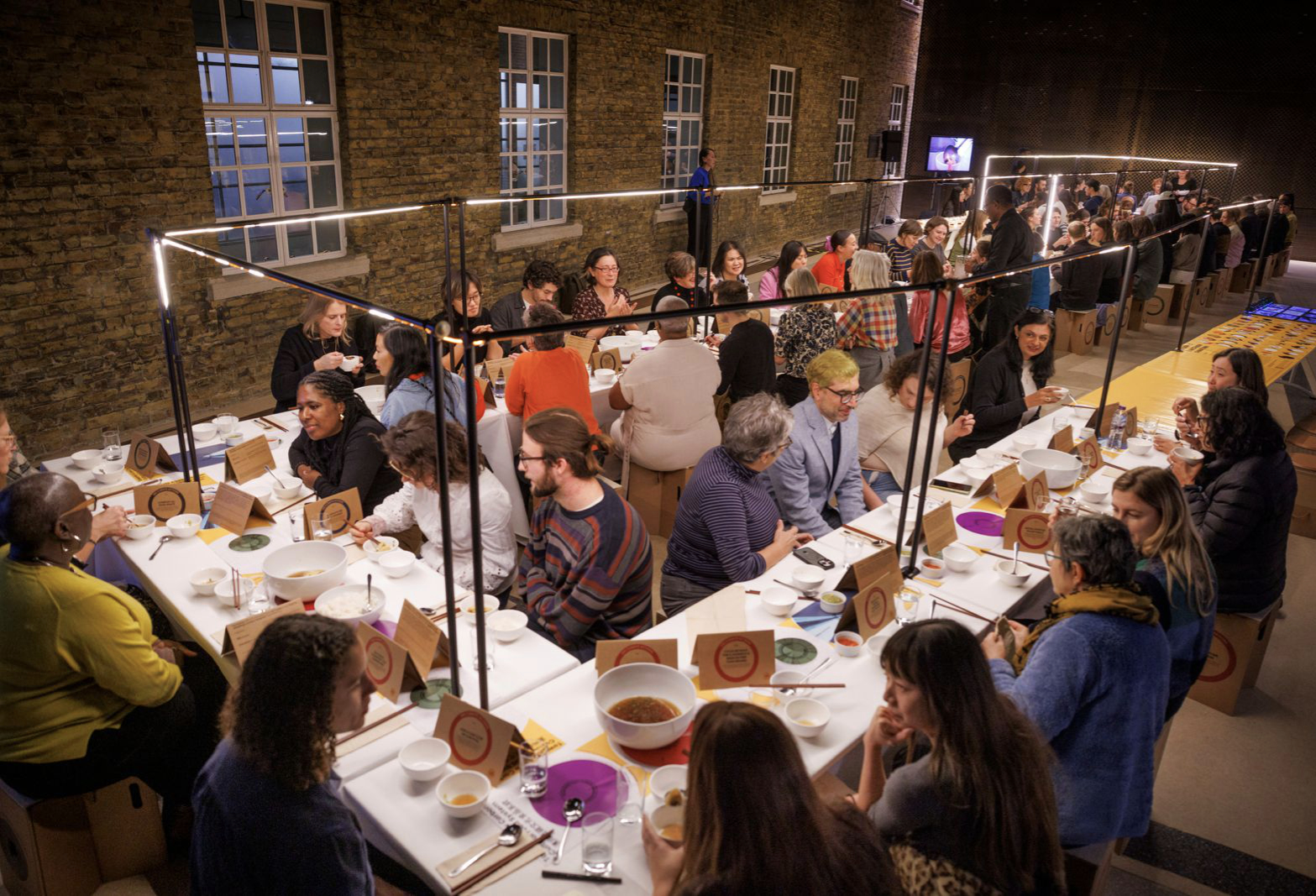
– Video of Low Carbon Banquet For A Hundred. Videography by Nick Turpin. –
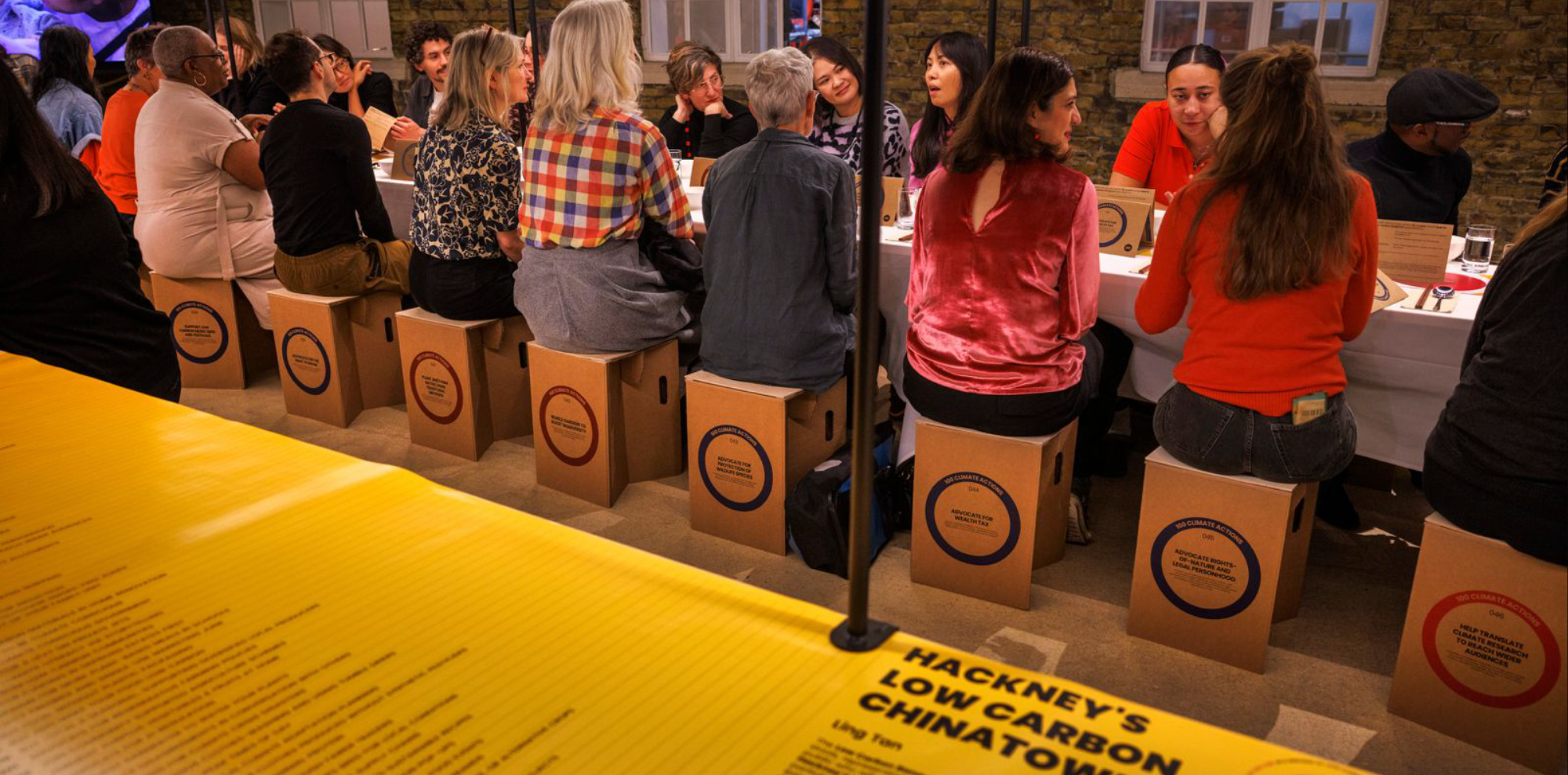
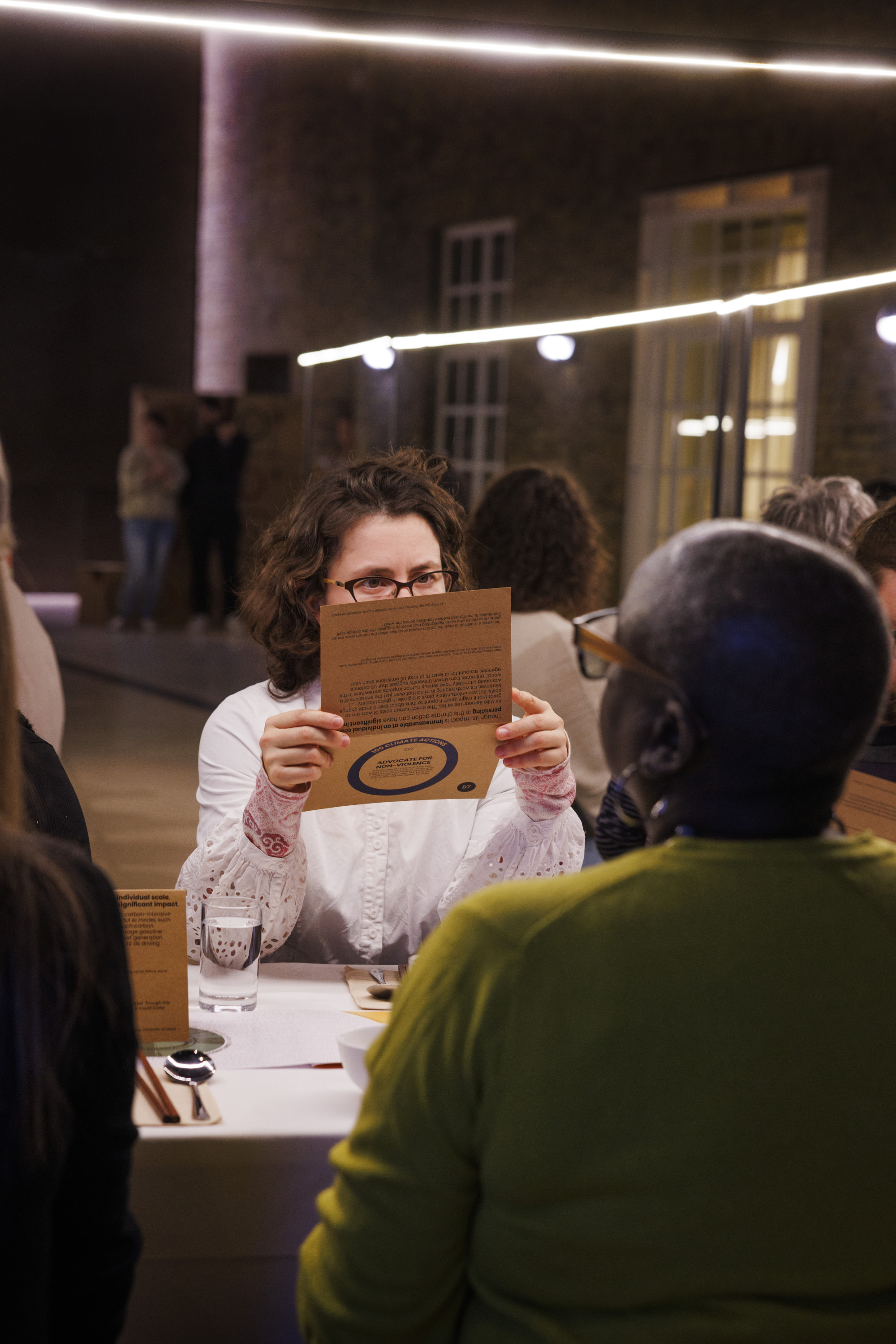
Participants were intentionally seated with strangers to explore what meaningful climate dialogue might look like in practice. Through provocations from project collaborators across culture, science, farming, policy, and education, guests challenged one another openly, debating how we respond to the climate crisis, how willing we truly are to act, and what enables climate action to endure rather than fade.
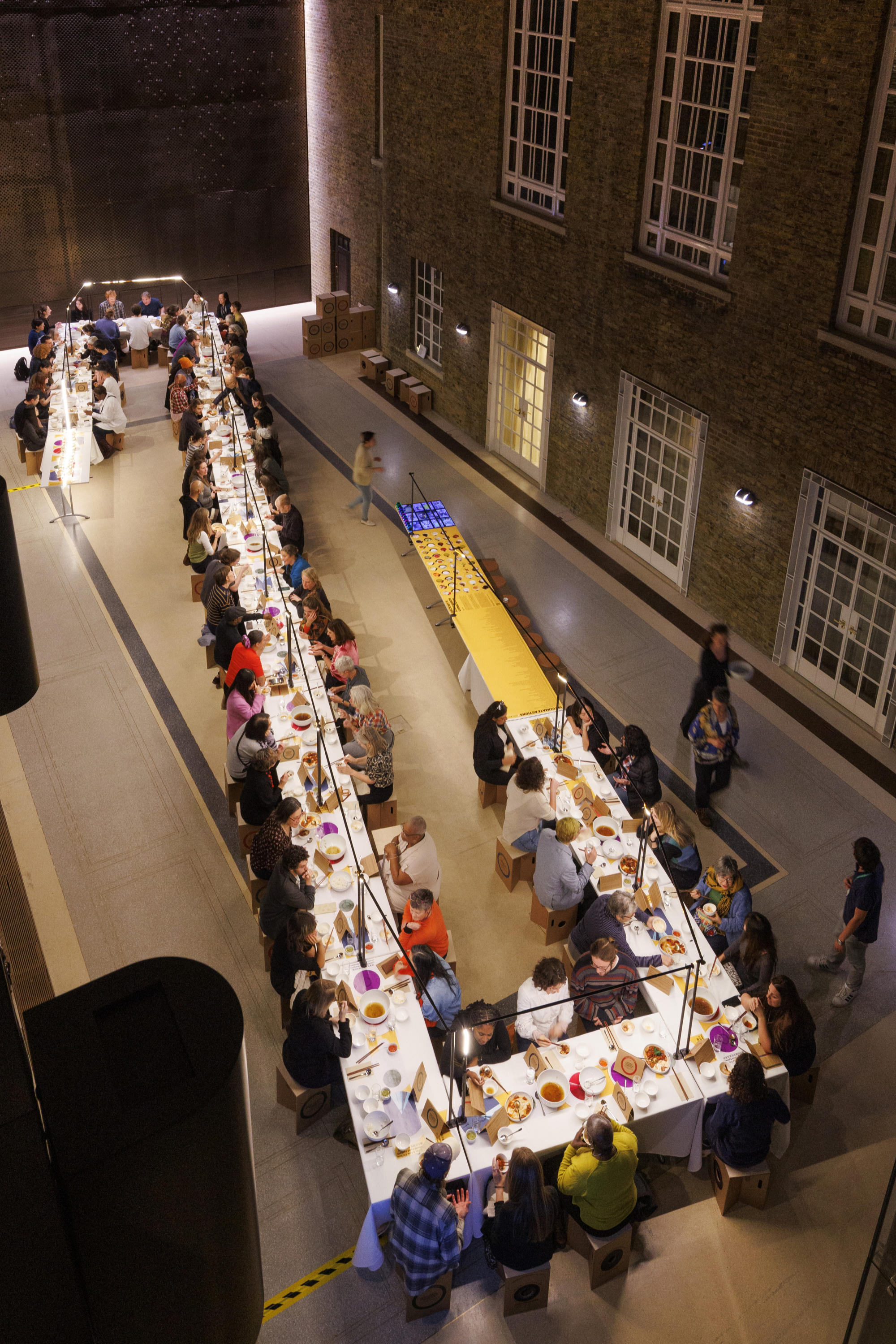
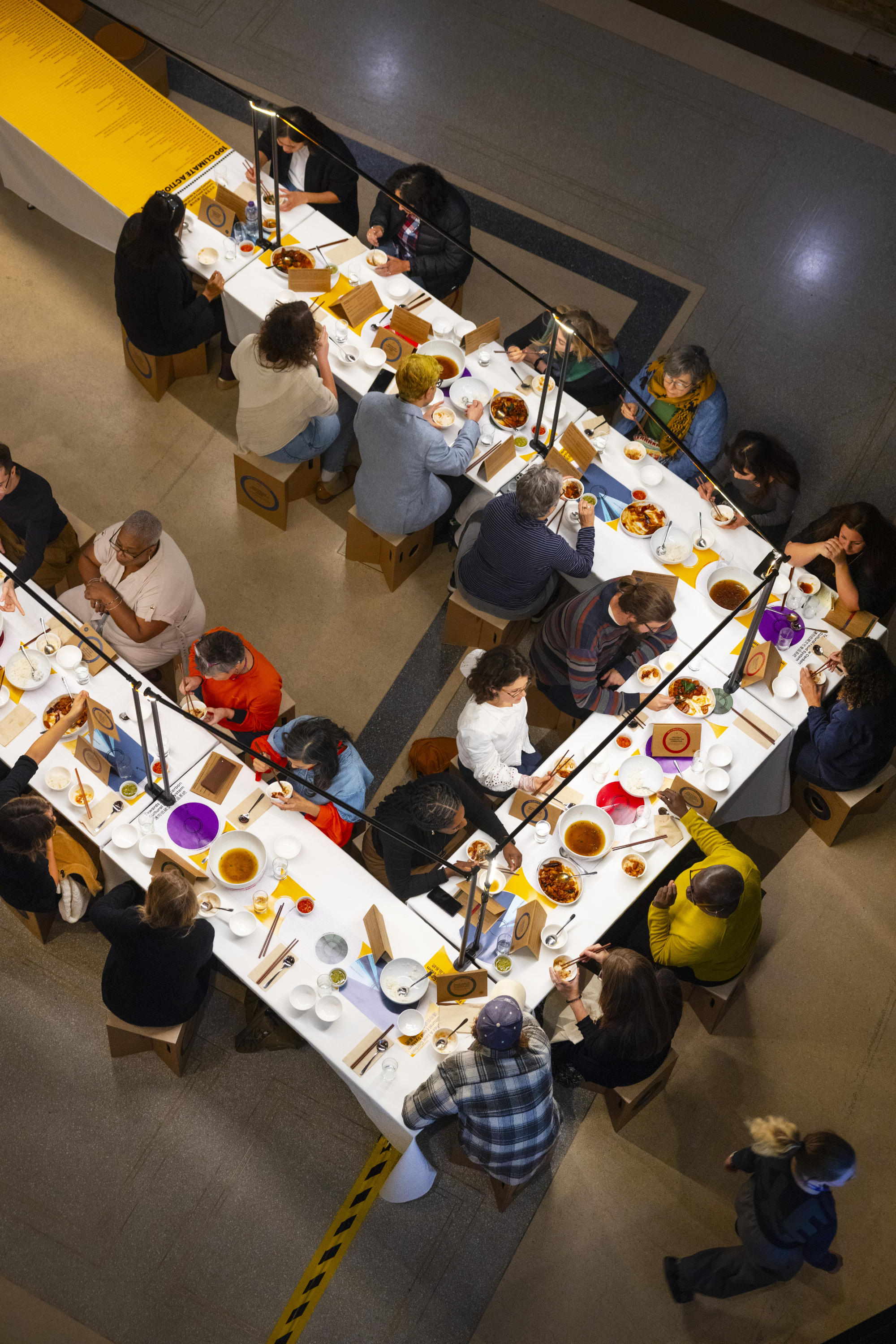
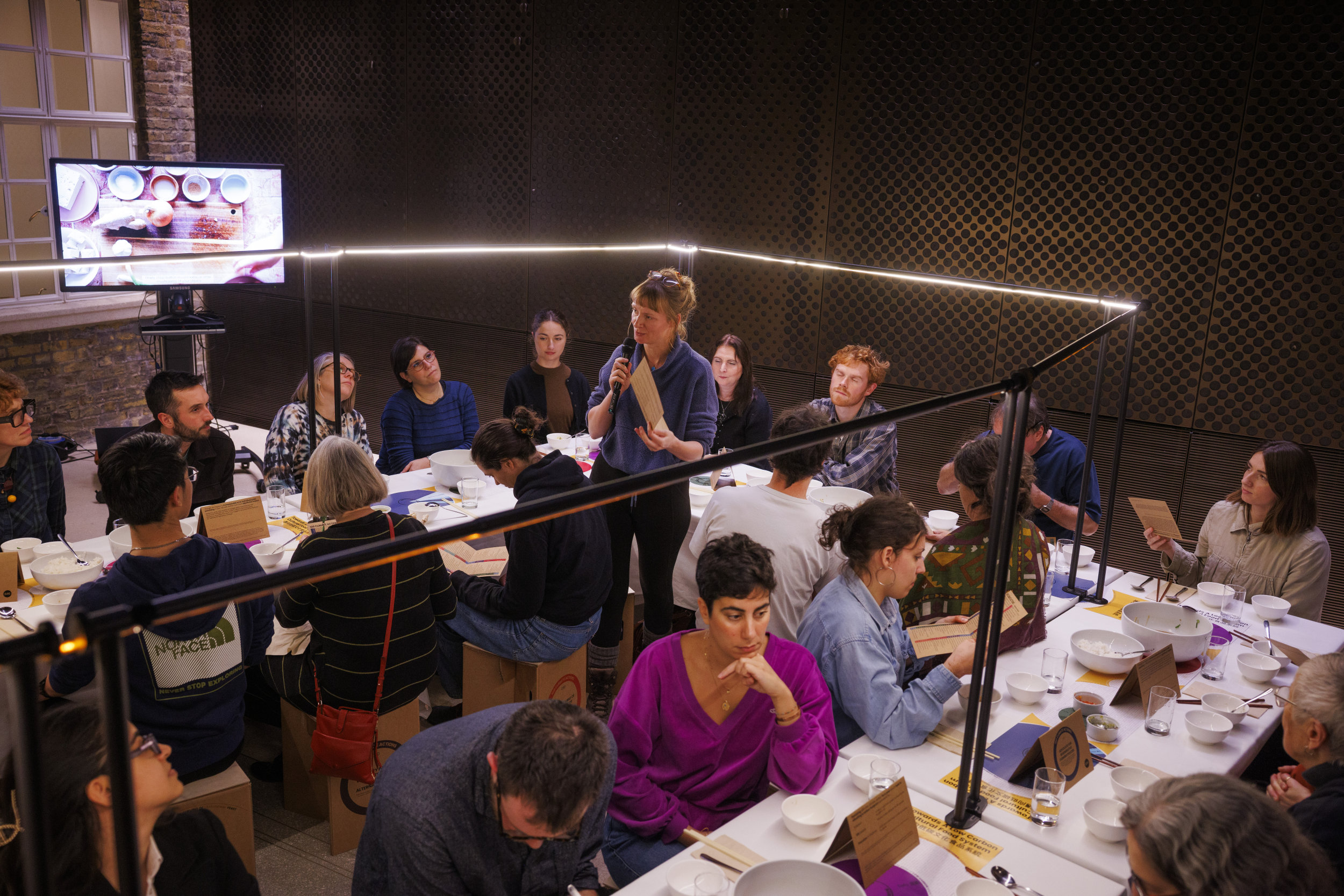
Sharing a meal created a rare social space where disagreement did not fracture the group. Instead, it revealed that progress does not depend on total consensus, but on the ability to remain at the table, accepting difference, holding tension, and recognising that collective action can move forward even without full agreement.
“It was really exciting to be at the dinner and experience the flow of food, provocations, and conversation. There’s so much to think about and to explore together.”
— Lucy McMenemy, Cultural Lead, Hackney Council
“The Low Carbon Banquet perfectly demonstrated what a culturally inclusive conversation about low carbon eating can look like.”
— Councillor Carole Williams, Cabinet Member for Employment, Human Resources and Equalities
“Amazing to be there, to learn and to be in community with people and good food. Such a great way to bring climate action to a human and actionable level.”
— Sanjiv Lingayah, Director at Reframing Race
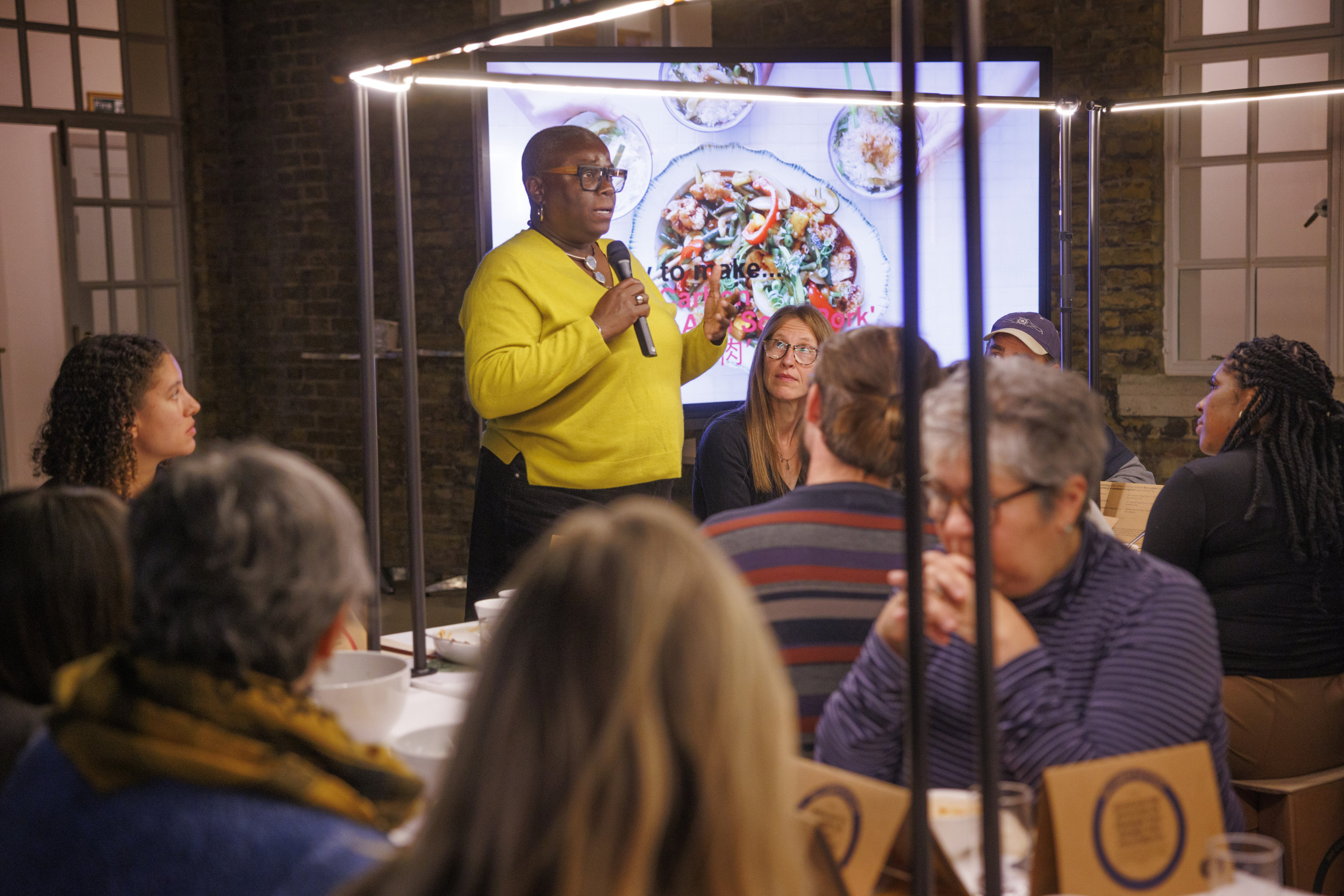
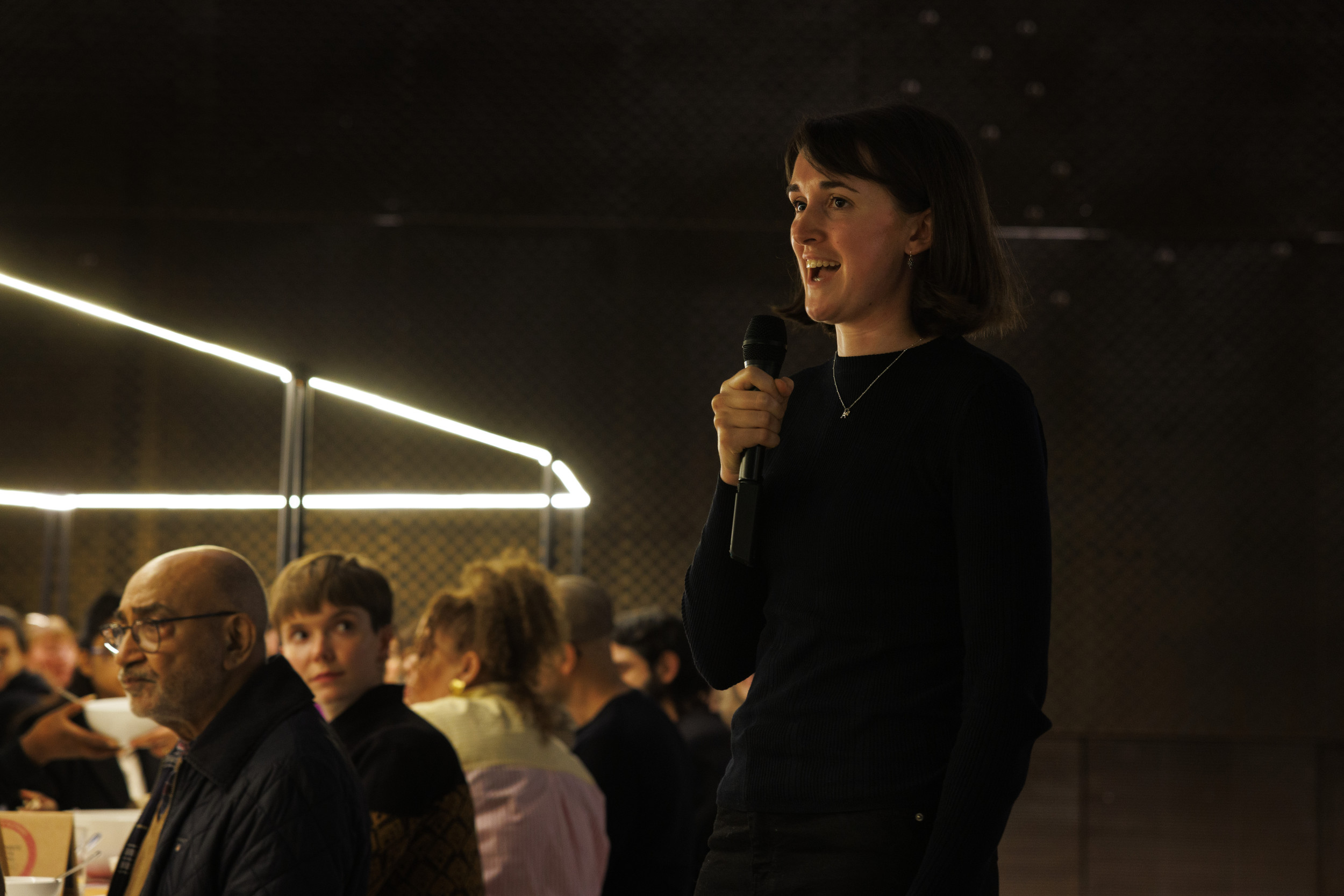


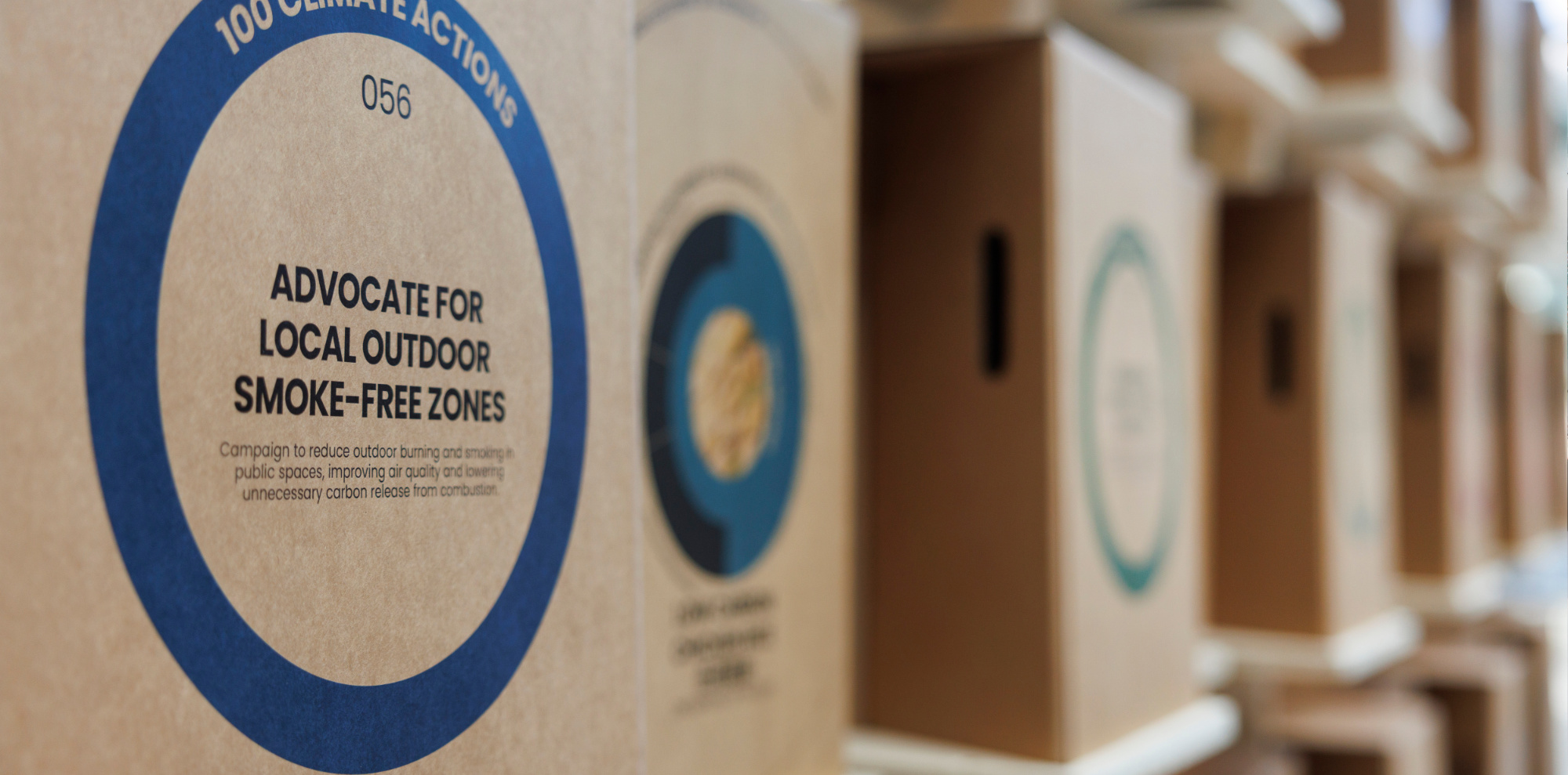
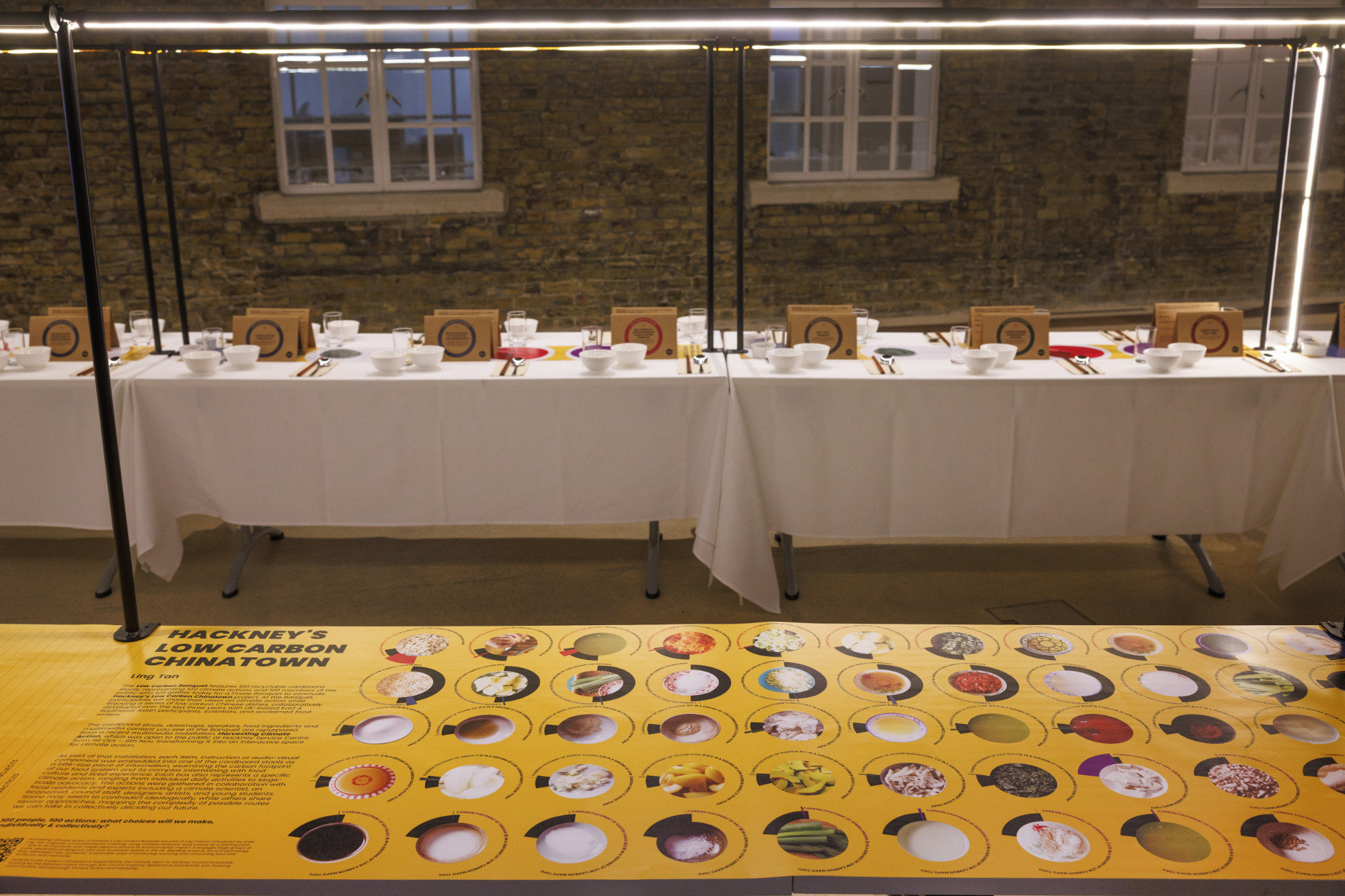
The Banquet’s physical structure translated these ideas into material form. One hundred recyclable cardboard stools, deconstructed from the exhibition Harvesting Climate Action, represented both the 100 participants and 100 possible climate actions. Each participant “harvested” a stool that guided them to a specific seat at the table.
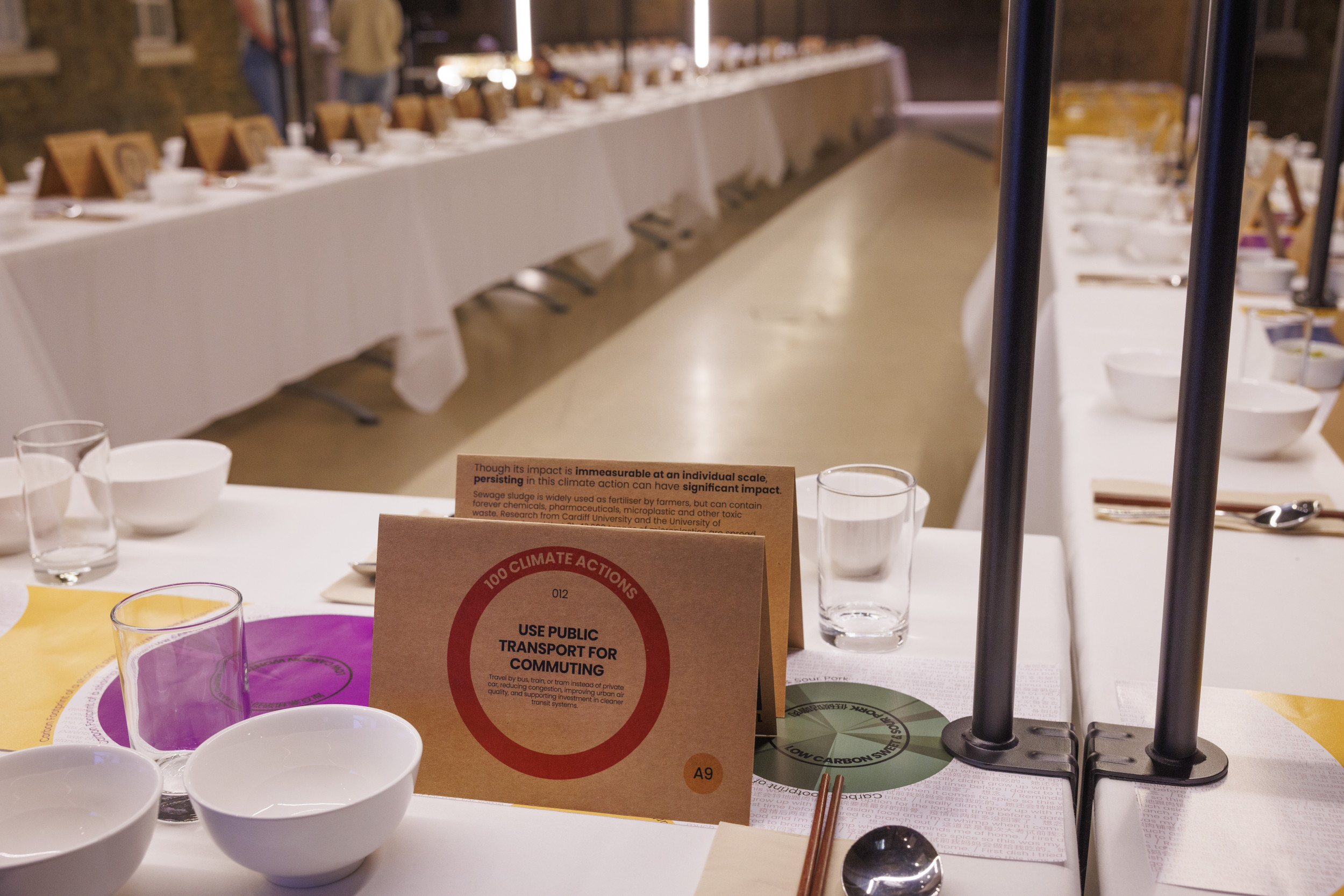
At their place, each guest received a climate action card visualising the potential impact of their assigned action if carried out individually, among a group of one hundred people, and at the scale of the borough. The 100 Climate Actions ranged from everyday personal choices to large-scale advocacy, gathered in collaboration with local residents and experts including climate scientists, a climate economist, council staff, designers, artists, and young students. Some actions appeared to contradict one another ideologically, while others overlapped or reinforced similar approaches, reflecting the complexity of the paths available to us in collectively shaping our future.
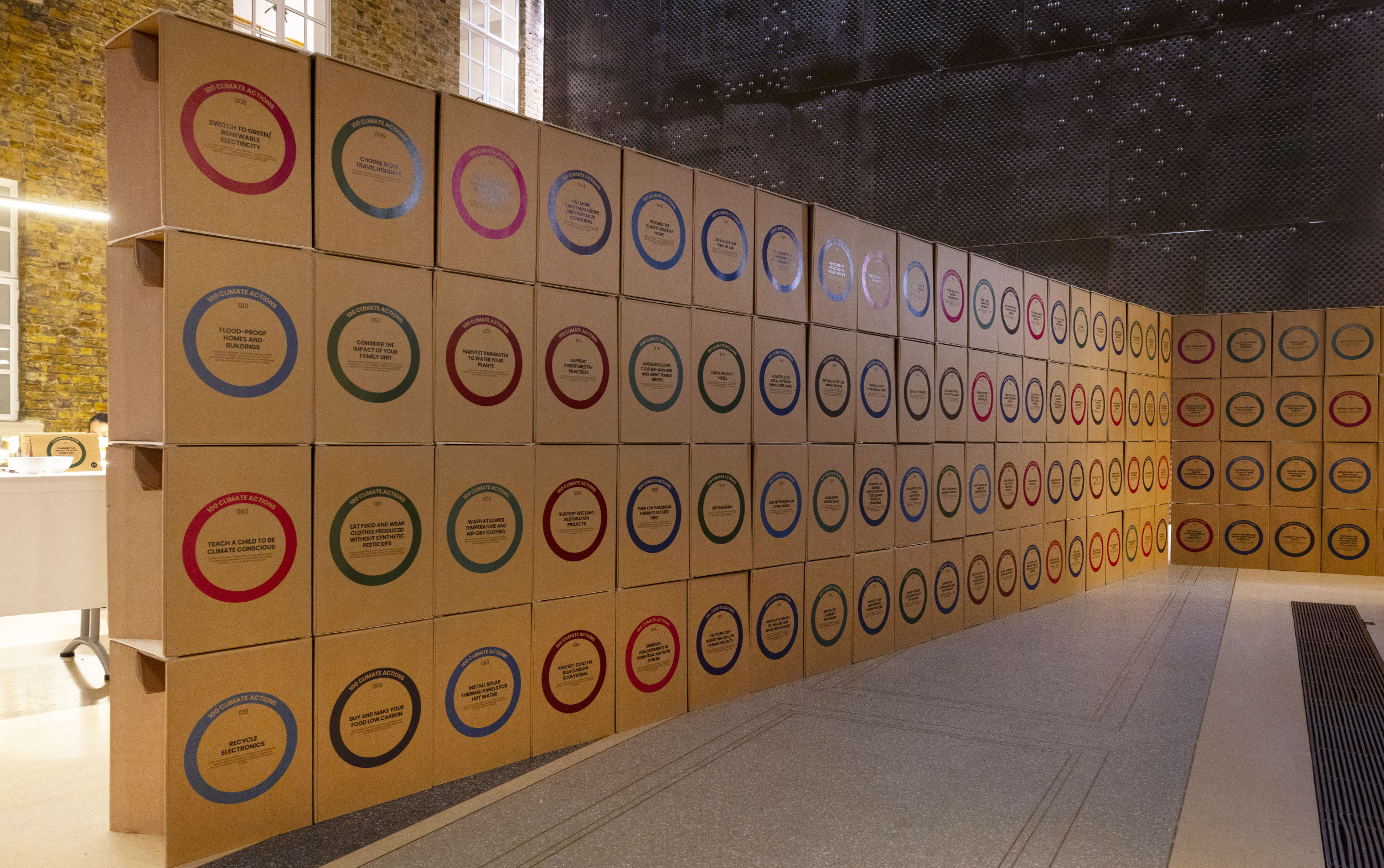
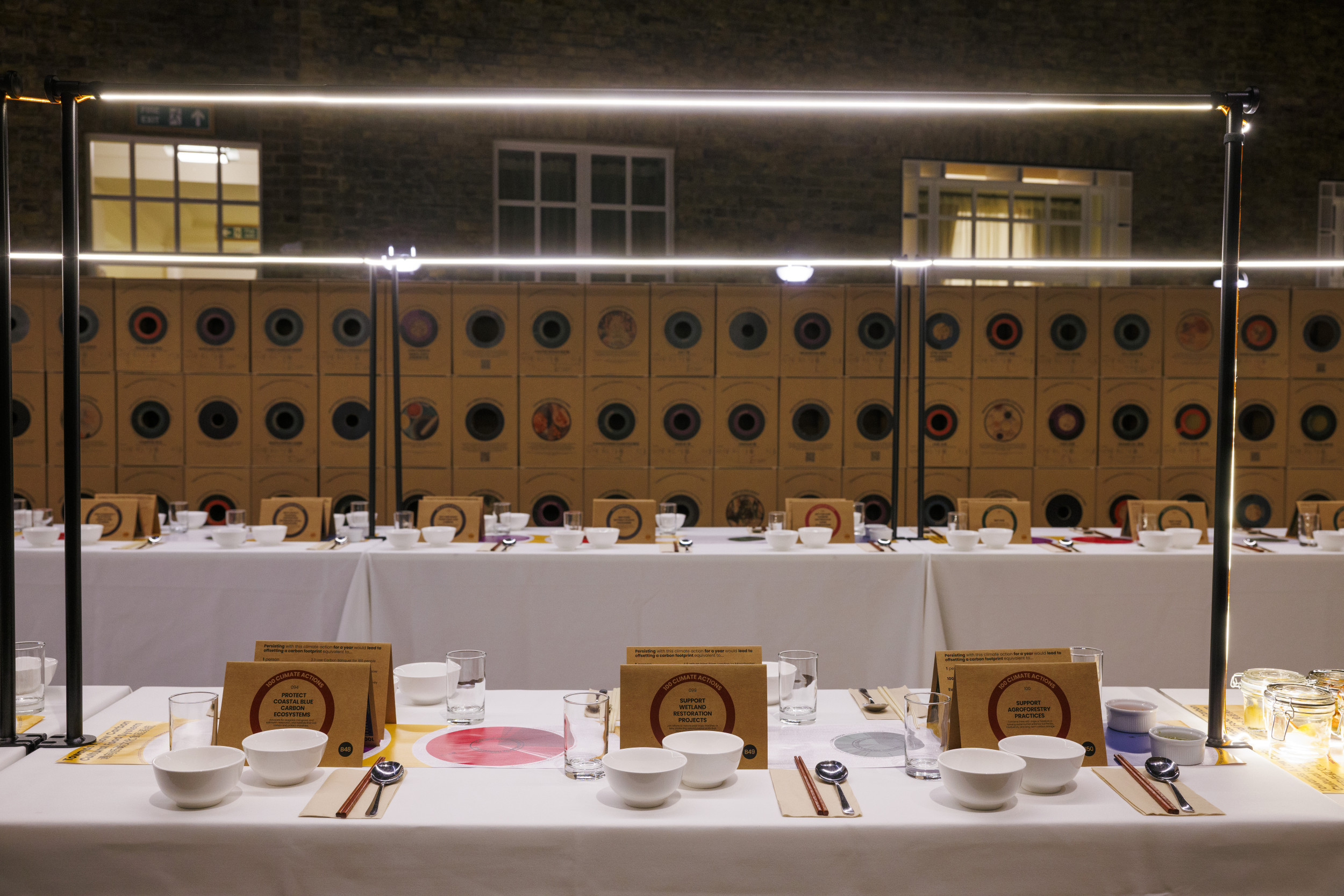
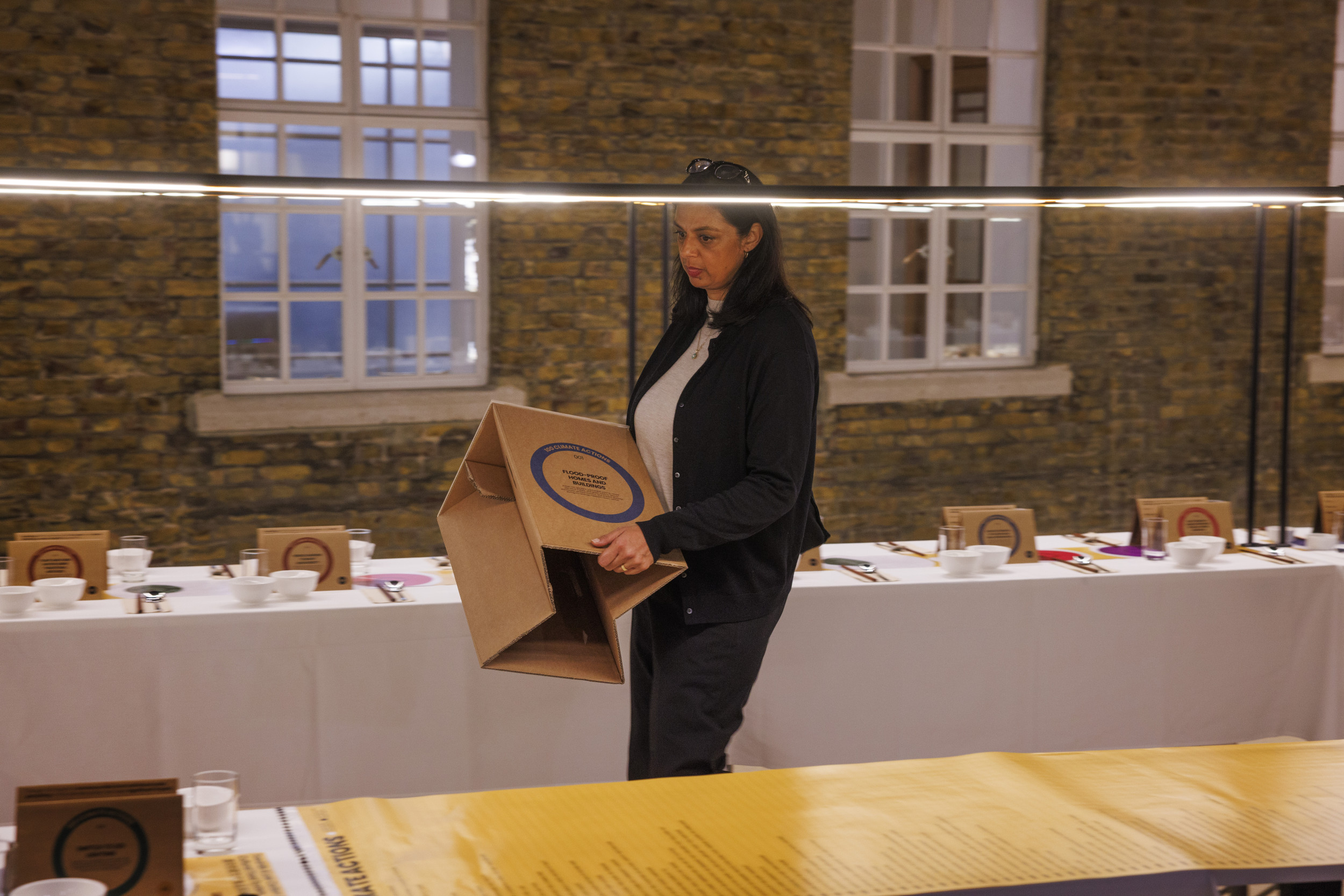
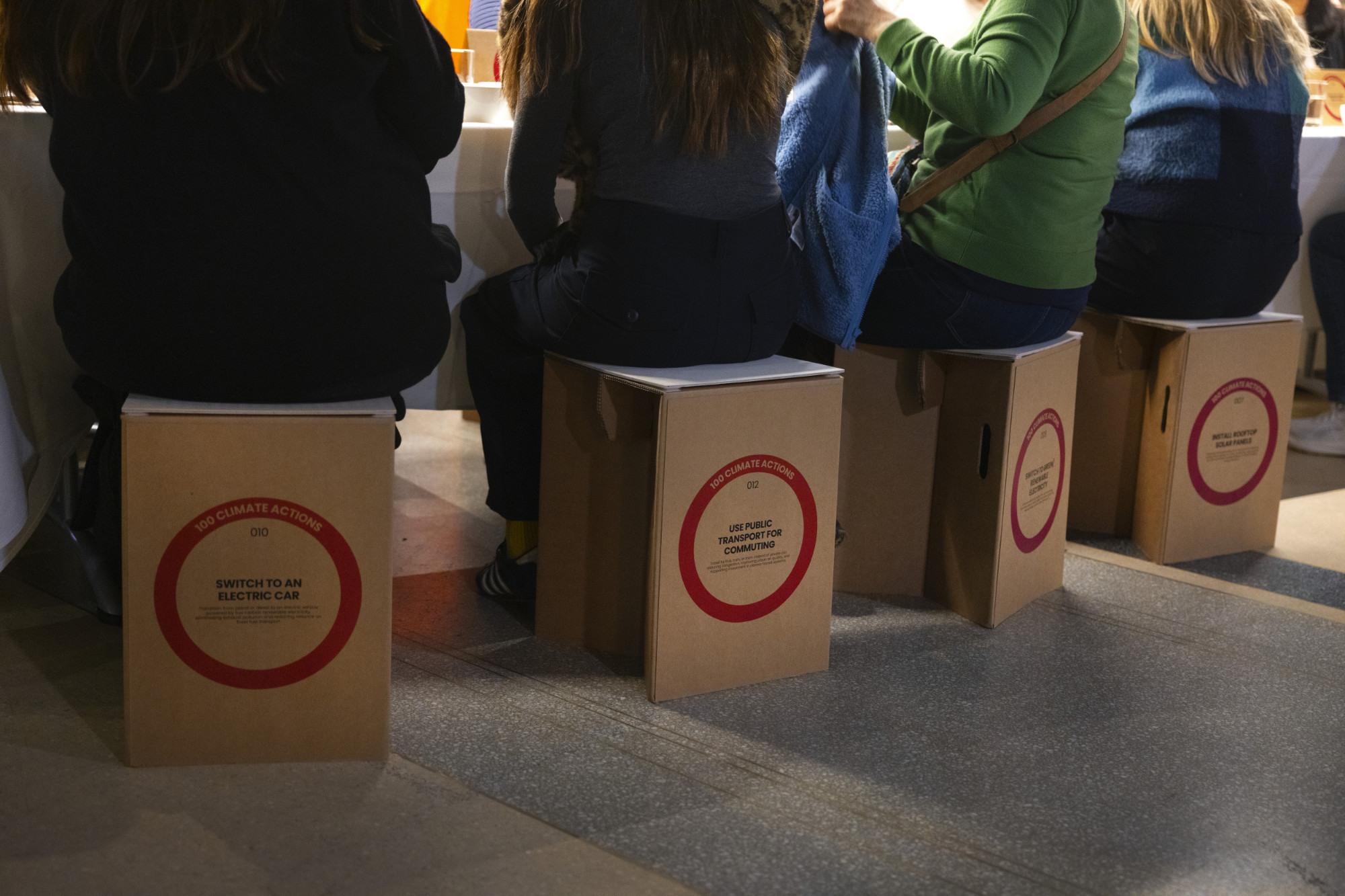
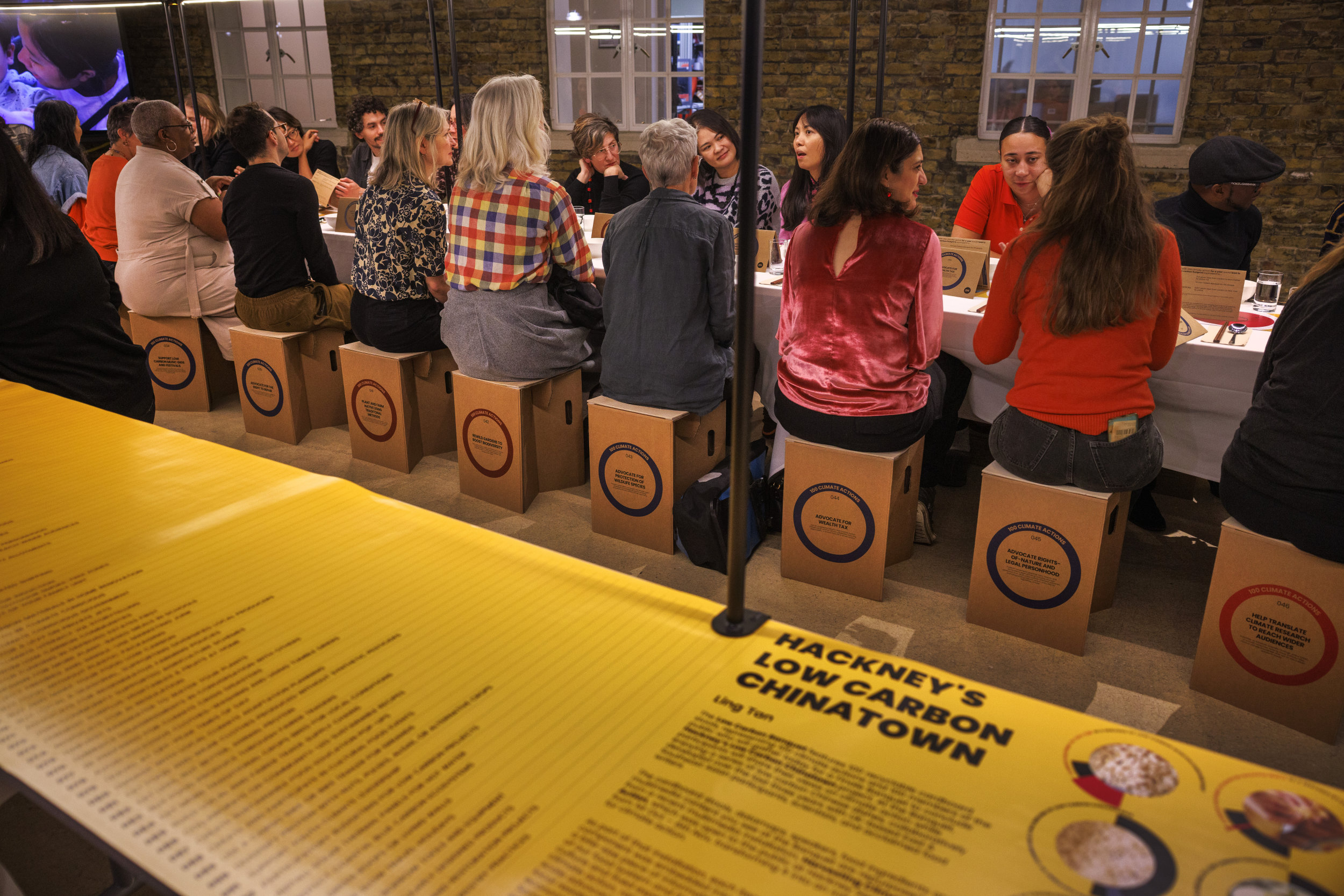
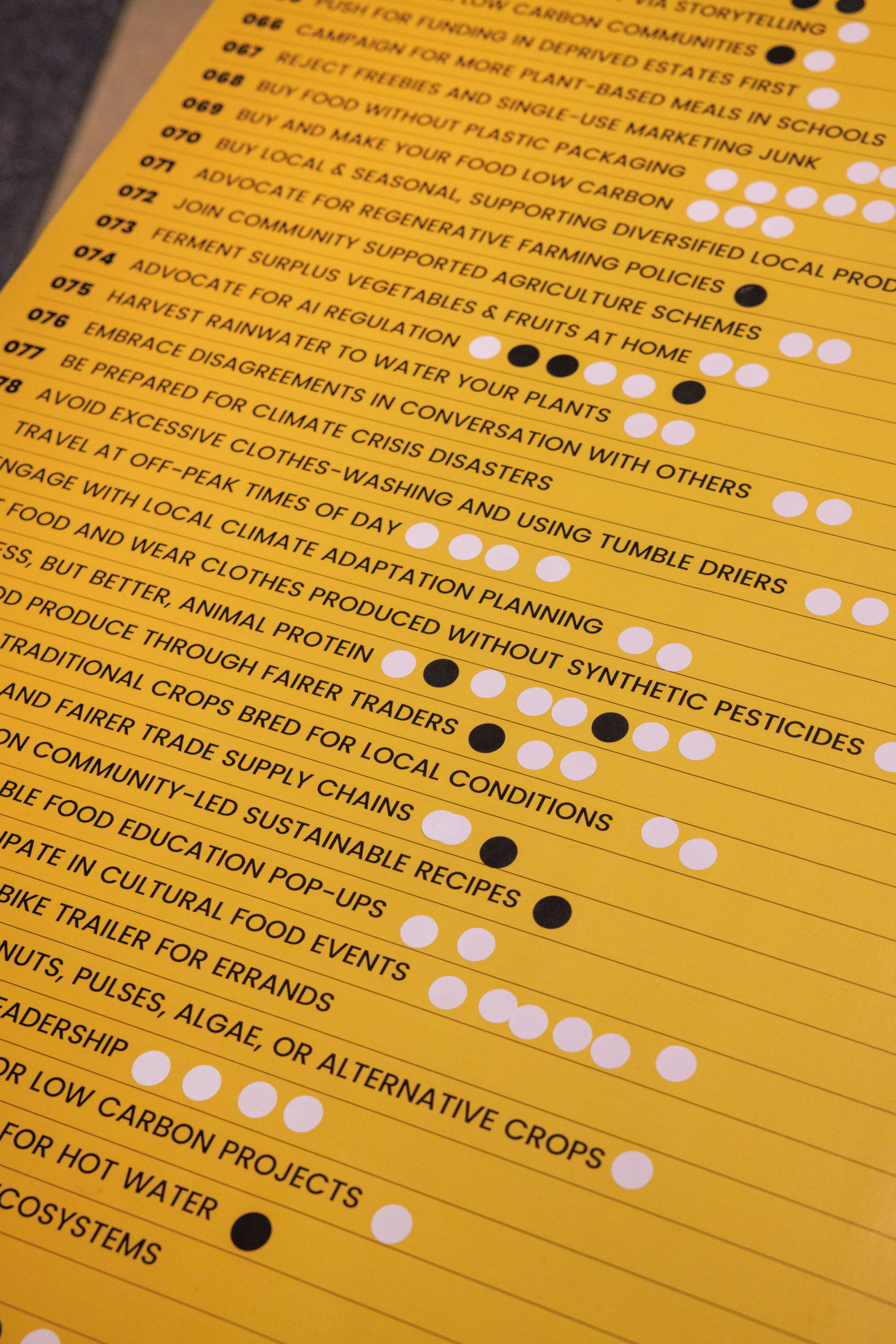
Among the 100 Climate Actions, quantifiable actions highlighted their carbon savings at individual, collective, and borough scales, while non-quantifiable actions, such as advocacy, drew on scientific research to communicate their potential impact when enacted collectively. Each climate action card included a quote from a climate scientist situating the action within broader environmental systems.
At the end of the Banquet, participants were invited to vote on each action in terms of its perceived environmental impact and likelihood of daily adoption. Through the shared experience of eating, debating, and voting, participants learned about and embodied their chosen climate action. They took their stools home as a lasting reminder of the encounter, and of the actions and choices we can make, individually and collectively.

– Photography by Nick Turpin –
Harvesting Climate Action
Hackney Service Centre, Borough of Hackney, London, 2025
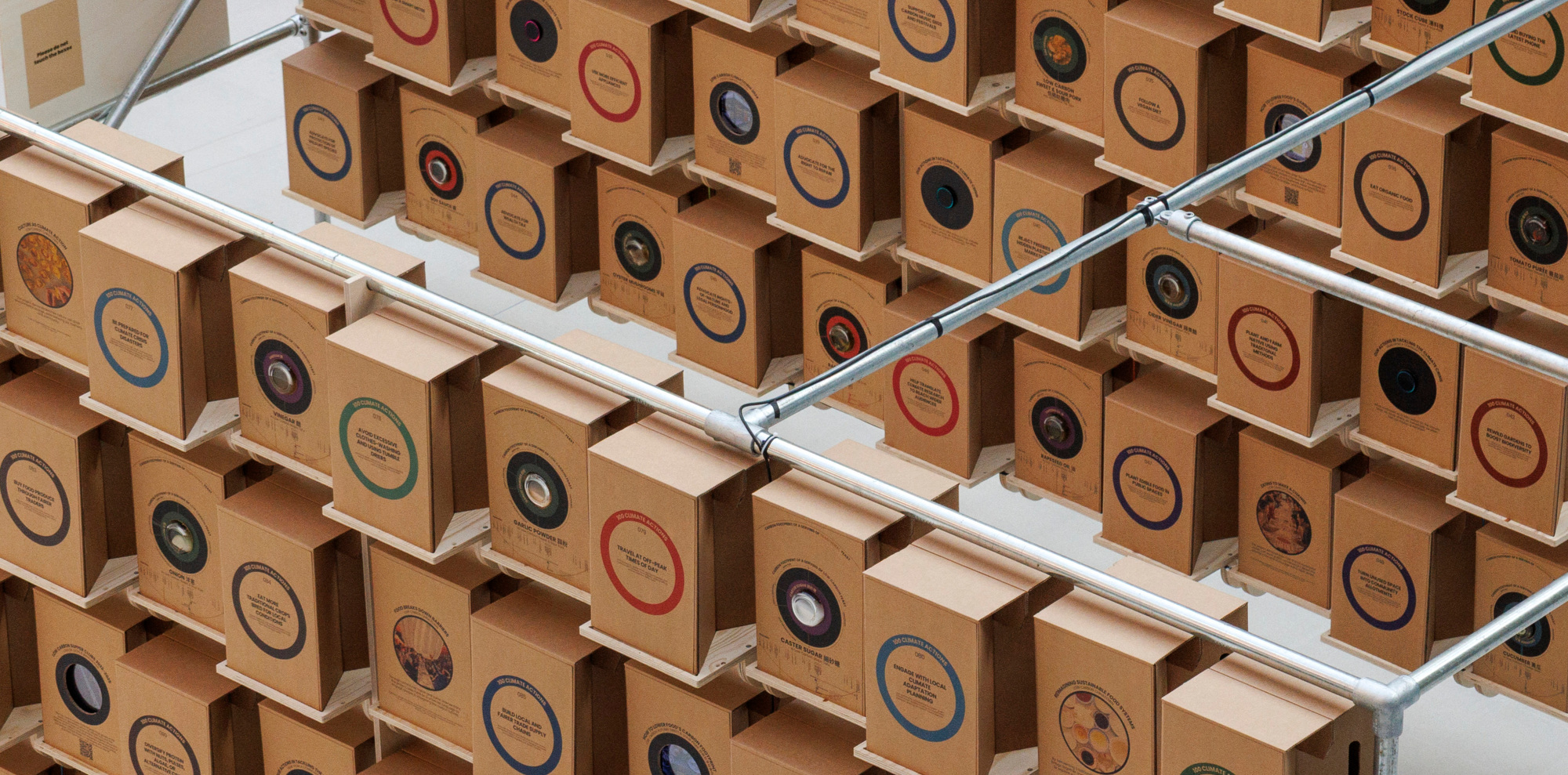
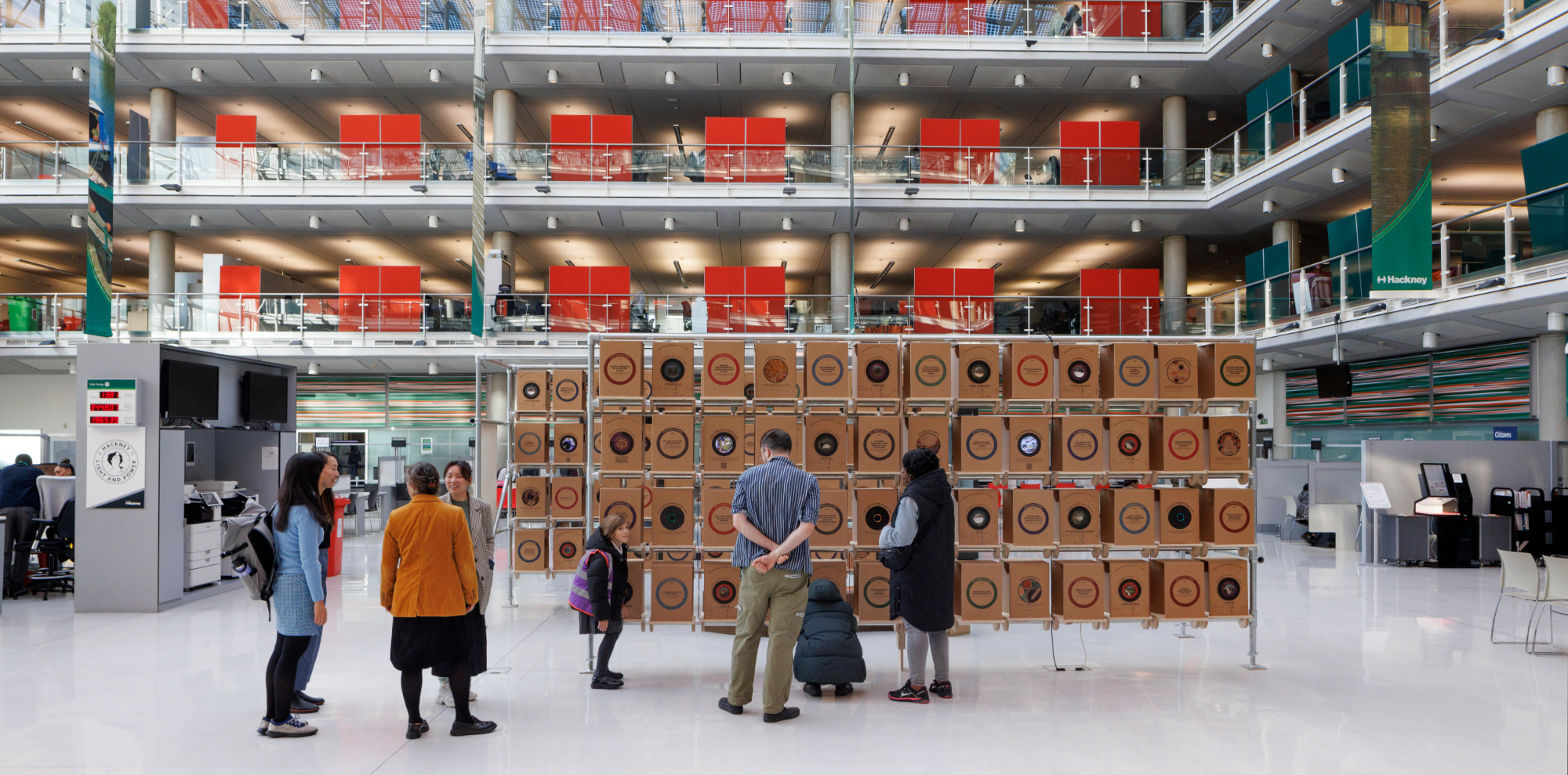
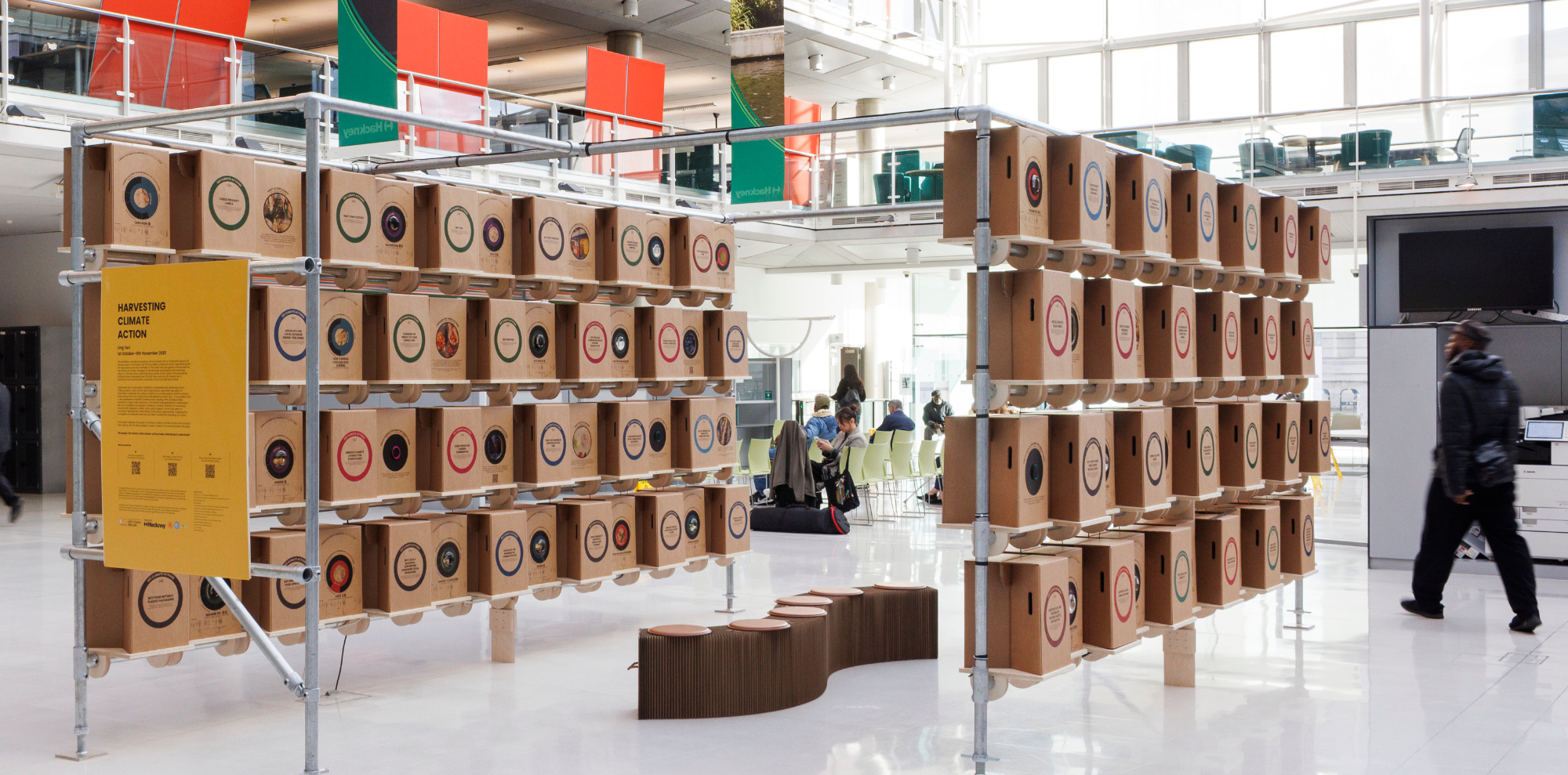
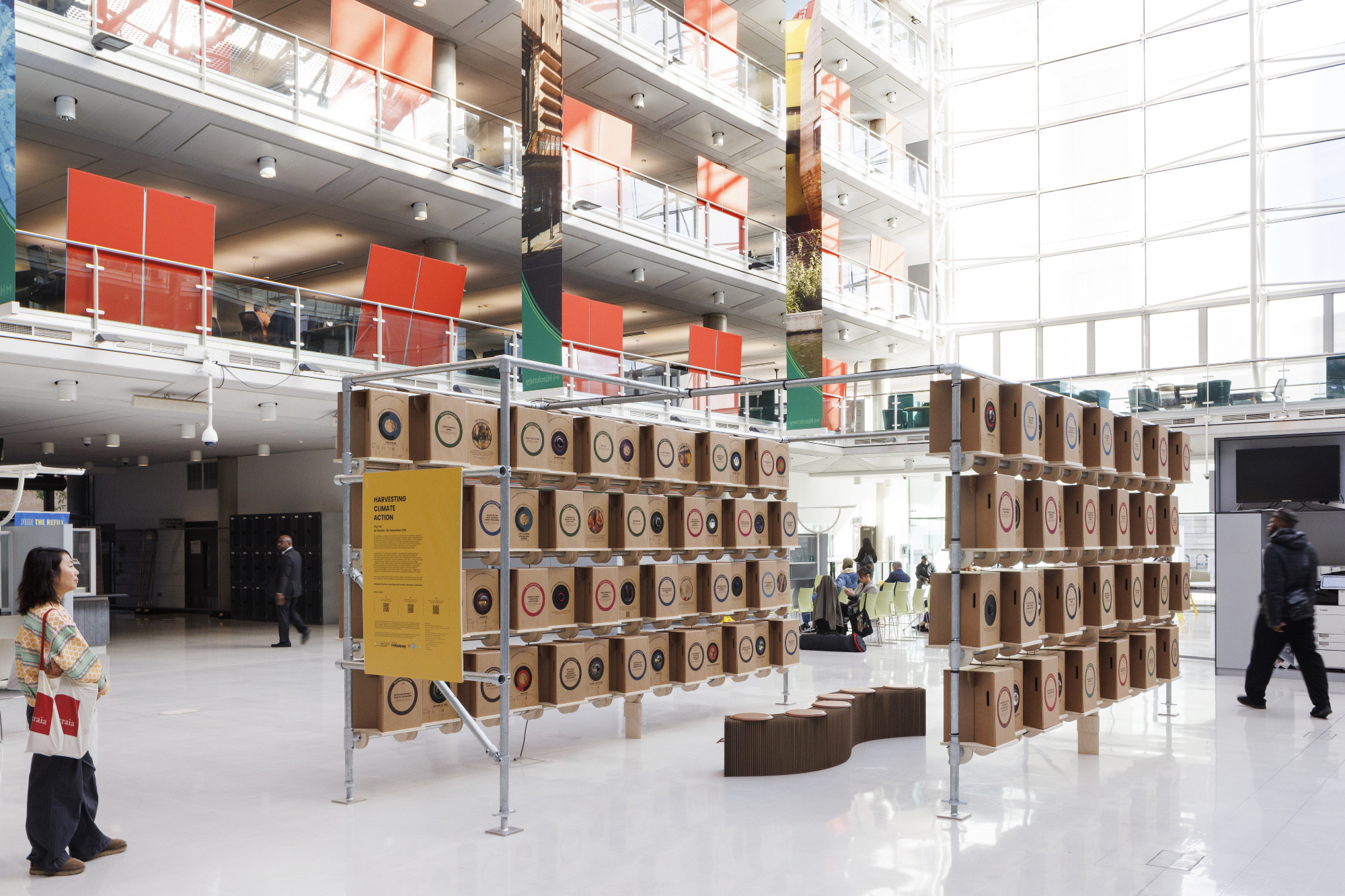
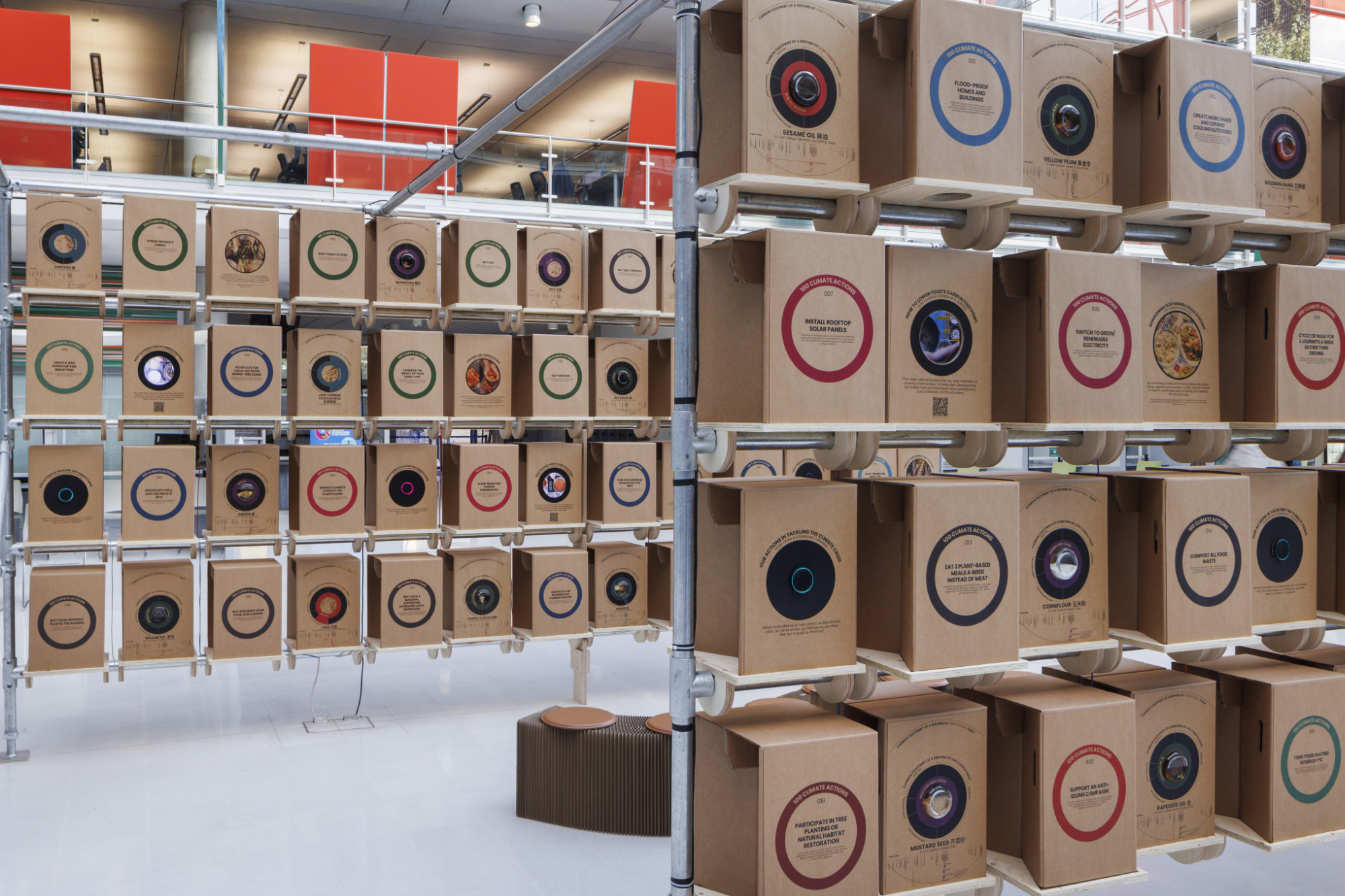
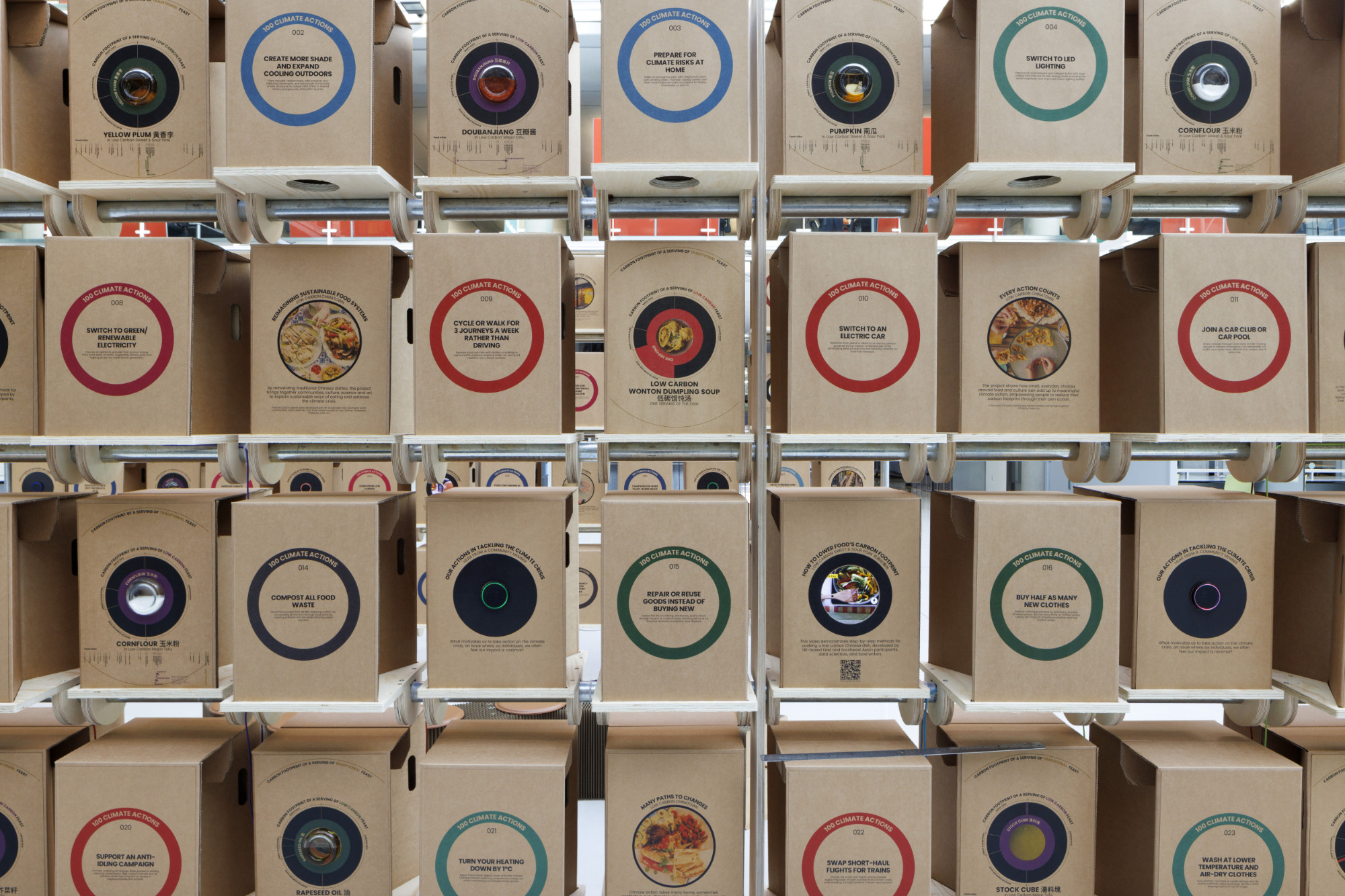
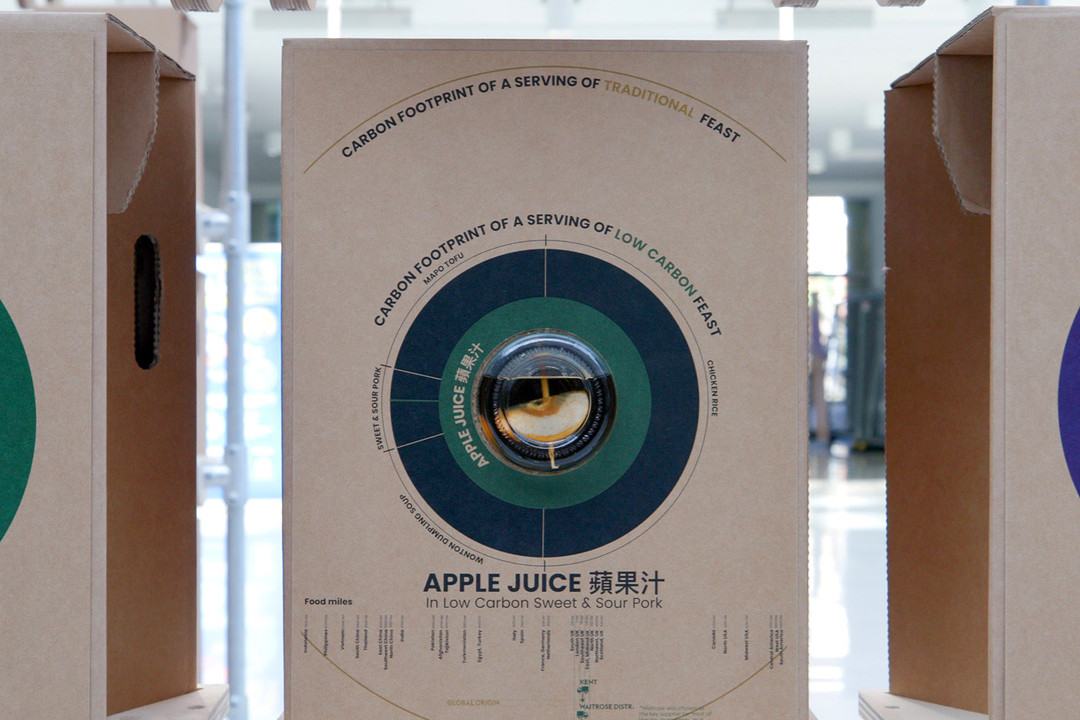
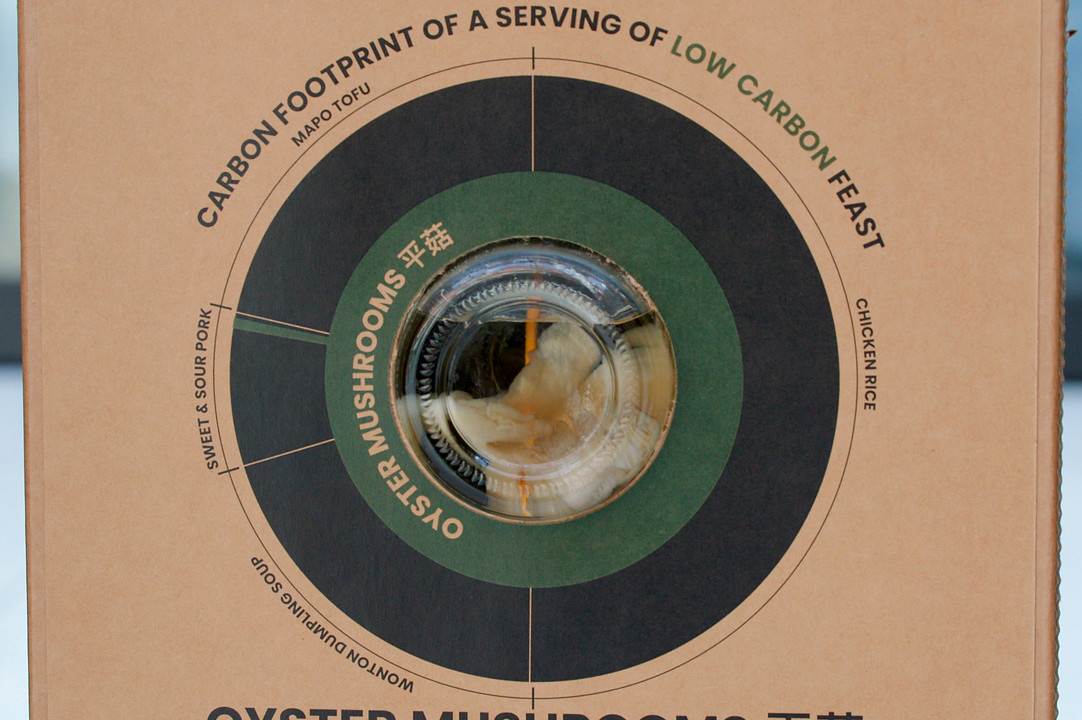
As part of Hackney’s Low Carbon Chinatown, Harvesting Climate Action transformed Hackney Service Centre into a six-week-long interactive space for climate action. At its heart were 100 recyclable cardboard stools, representing 100 climate actions and 100 members of the public who later gathered in November 2025 for the finale Low Carbon Banquet For A Hundred. At the Banquet, participants took part in climate discussions and provocations while enjoying a series of low carbon Chinese dishes, collaboratively developed over three years with UK-based East and Southeast Asian participants, scientists, and acclaimed food writers.
– Video of Harvesting Climate Action. Videography by Nick Turpin. –
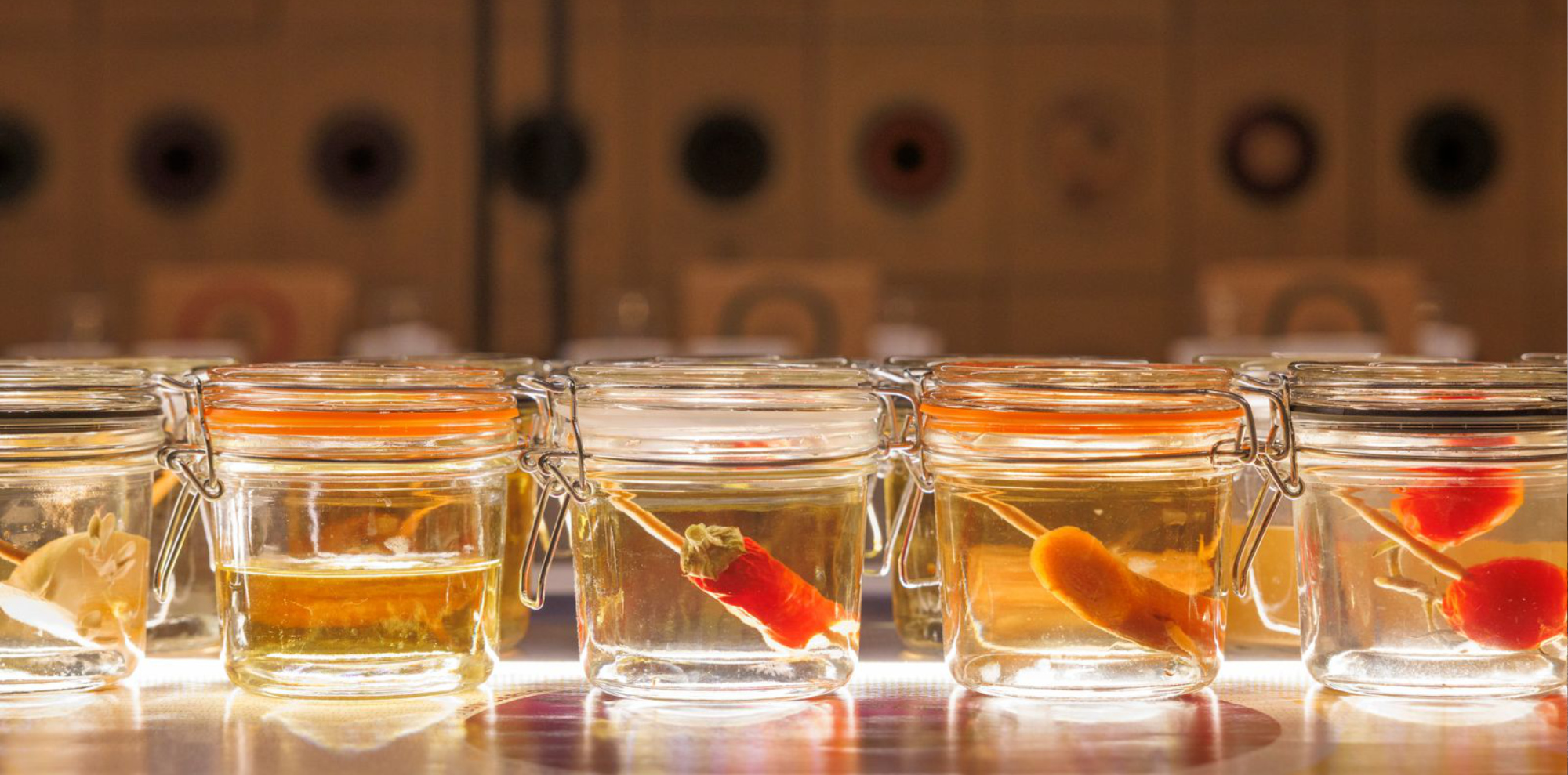
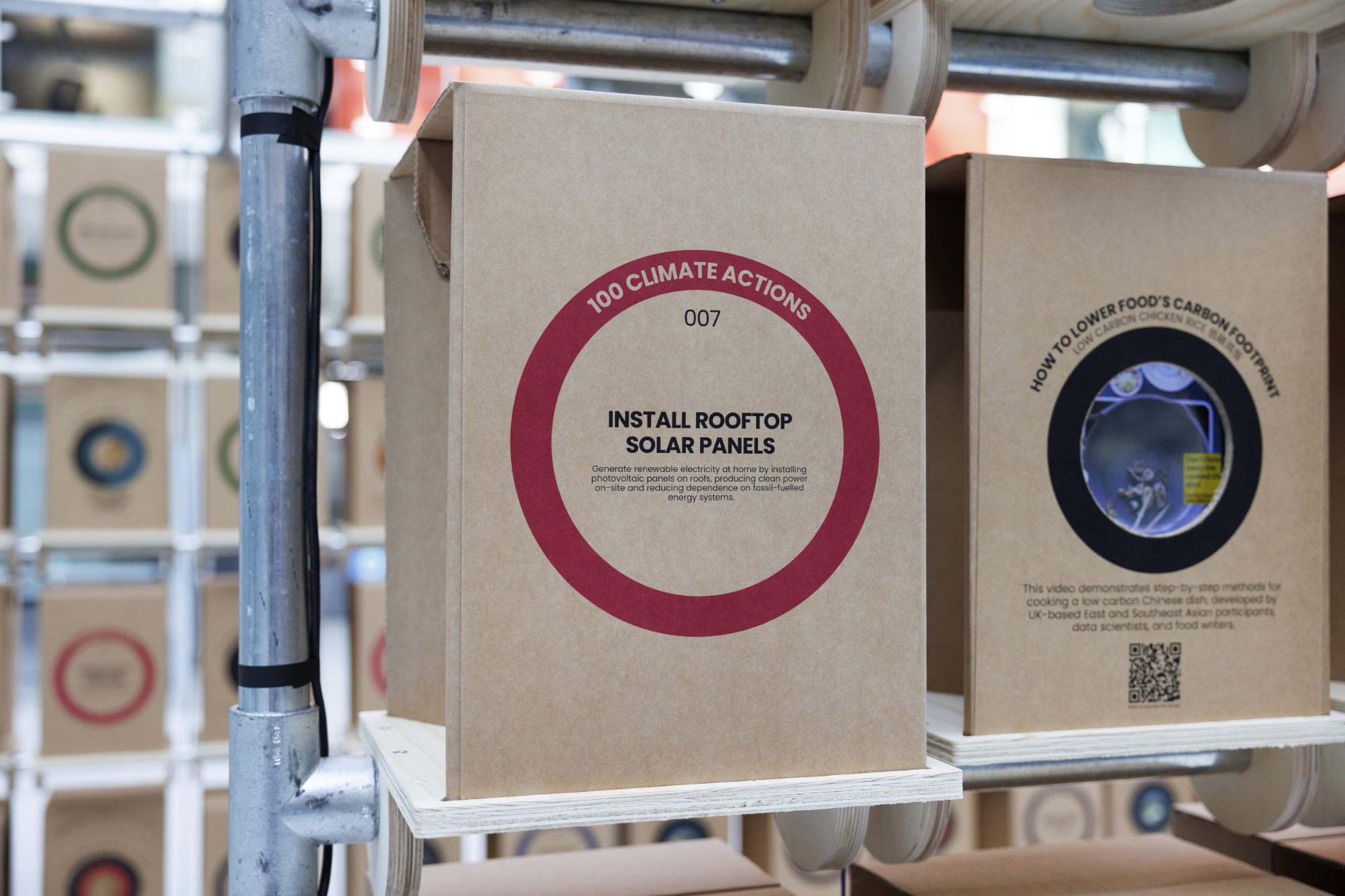
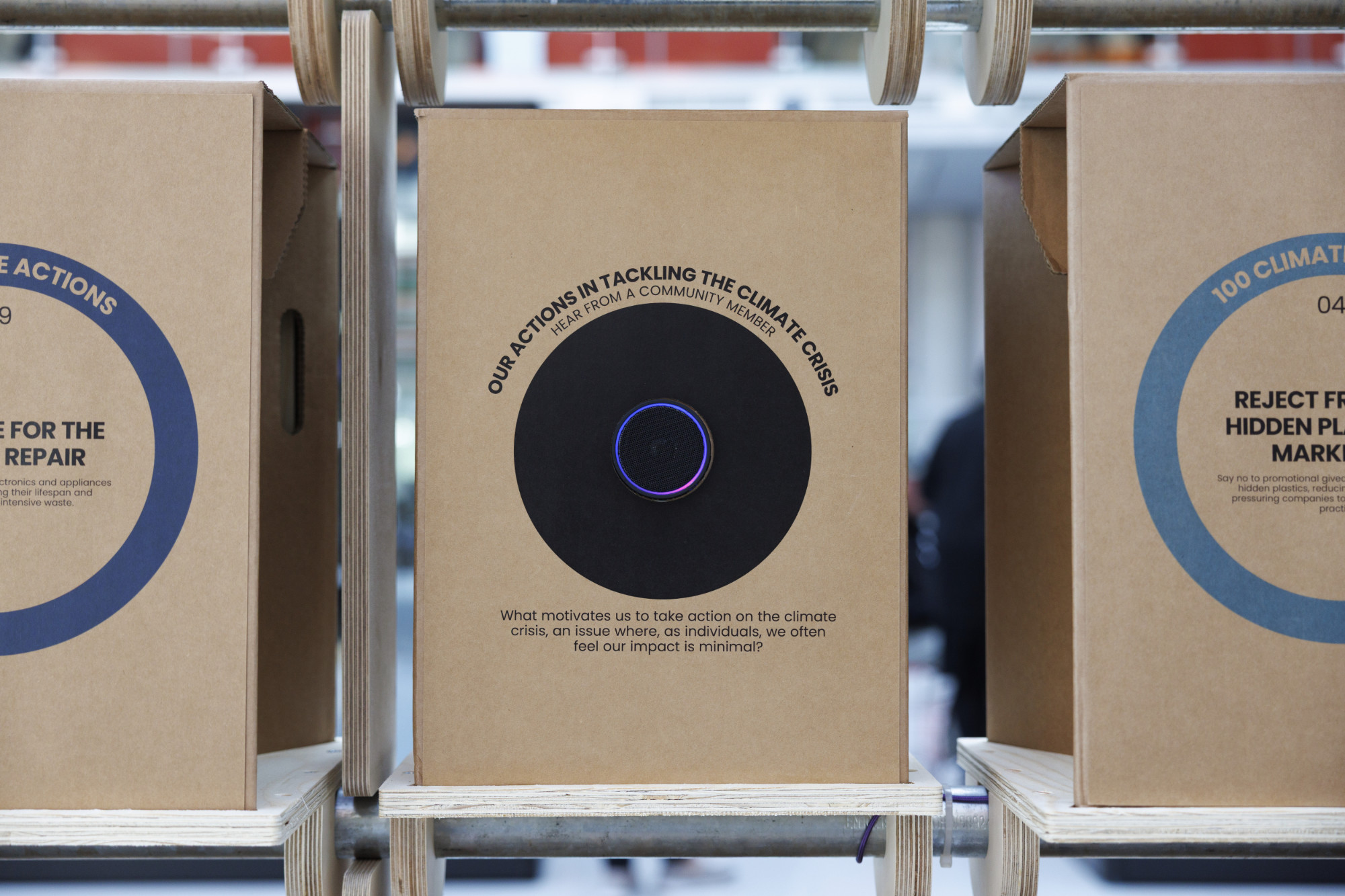
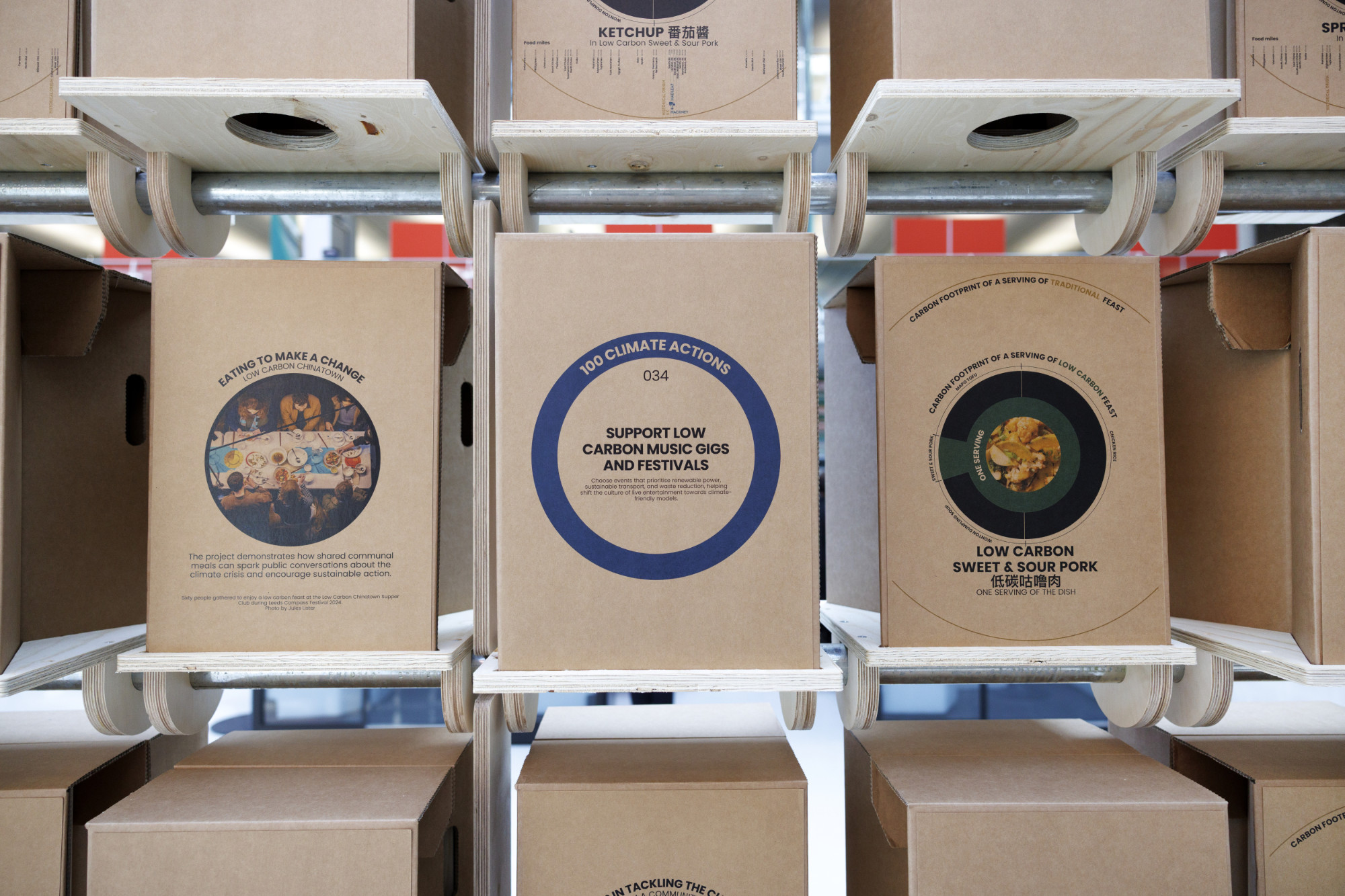
As a multimedia installation, the exhibition brought together datamaps, food-making videos, audio stories, and living produce. Each bite-sized element examined the carbon footprint of our food system and its complex entanglement with food culture, identity, and lived experience. Visitors encountered information not as instruction, but as something to sit with, listen to, and reflect on.
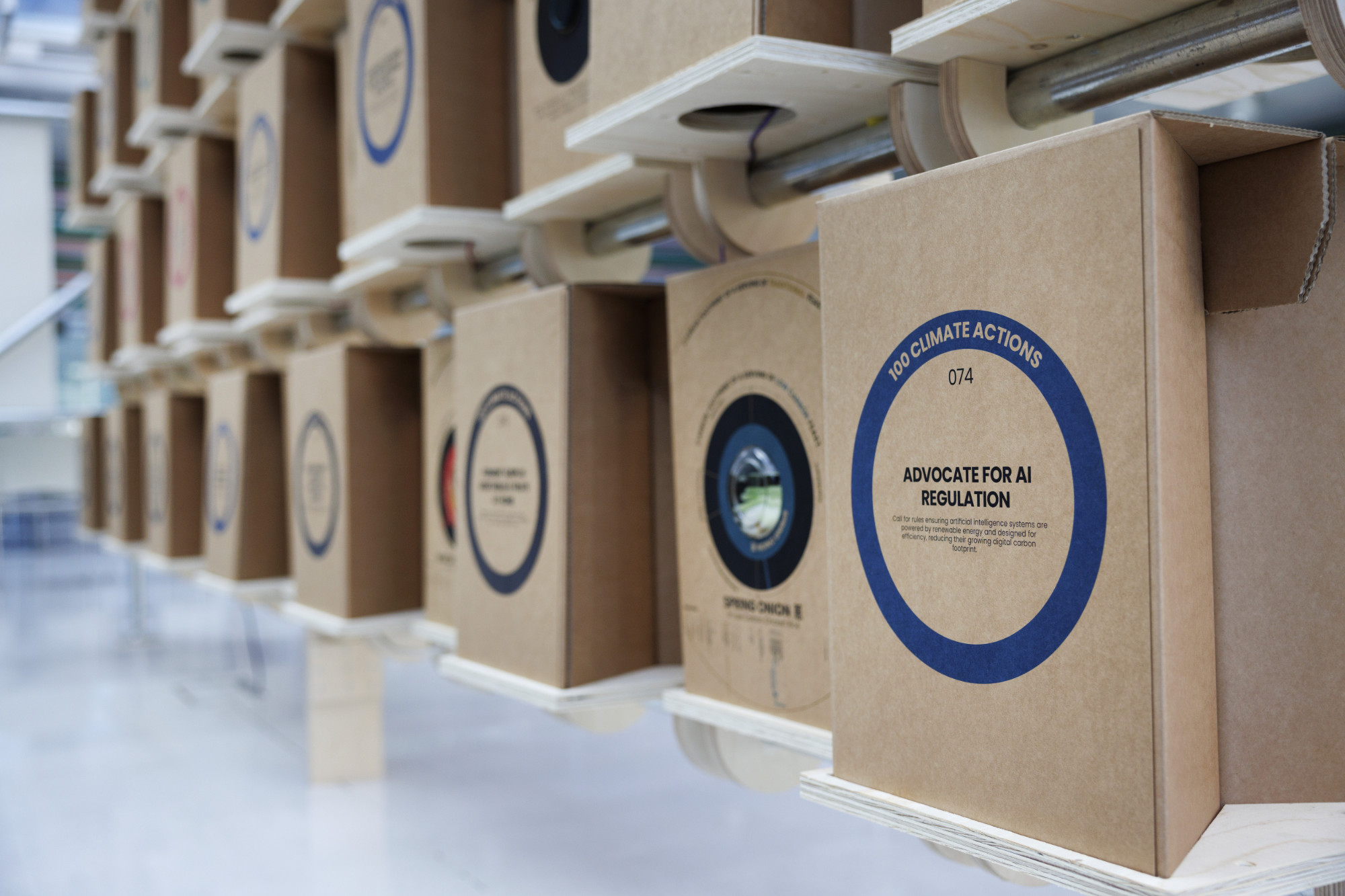
Each box – a recyclable stool – also represented a specific climate action, ranging from everyday personal choices to large scale advocacy. The 100 Climate Actions were developed in collaboration with local residents and a cross-disciplinary group of experts, including climate scientists, an economist, council staff, designers, artists, and young students. Some actions appear to contradict one another, while others overlap or reinforce similar approaches, mapping the complexity—and tension—of the routes available to us as we collectively decide our future.
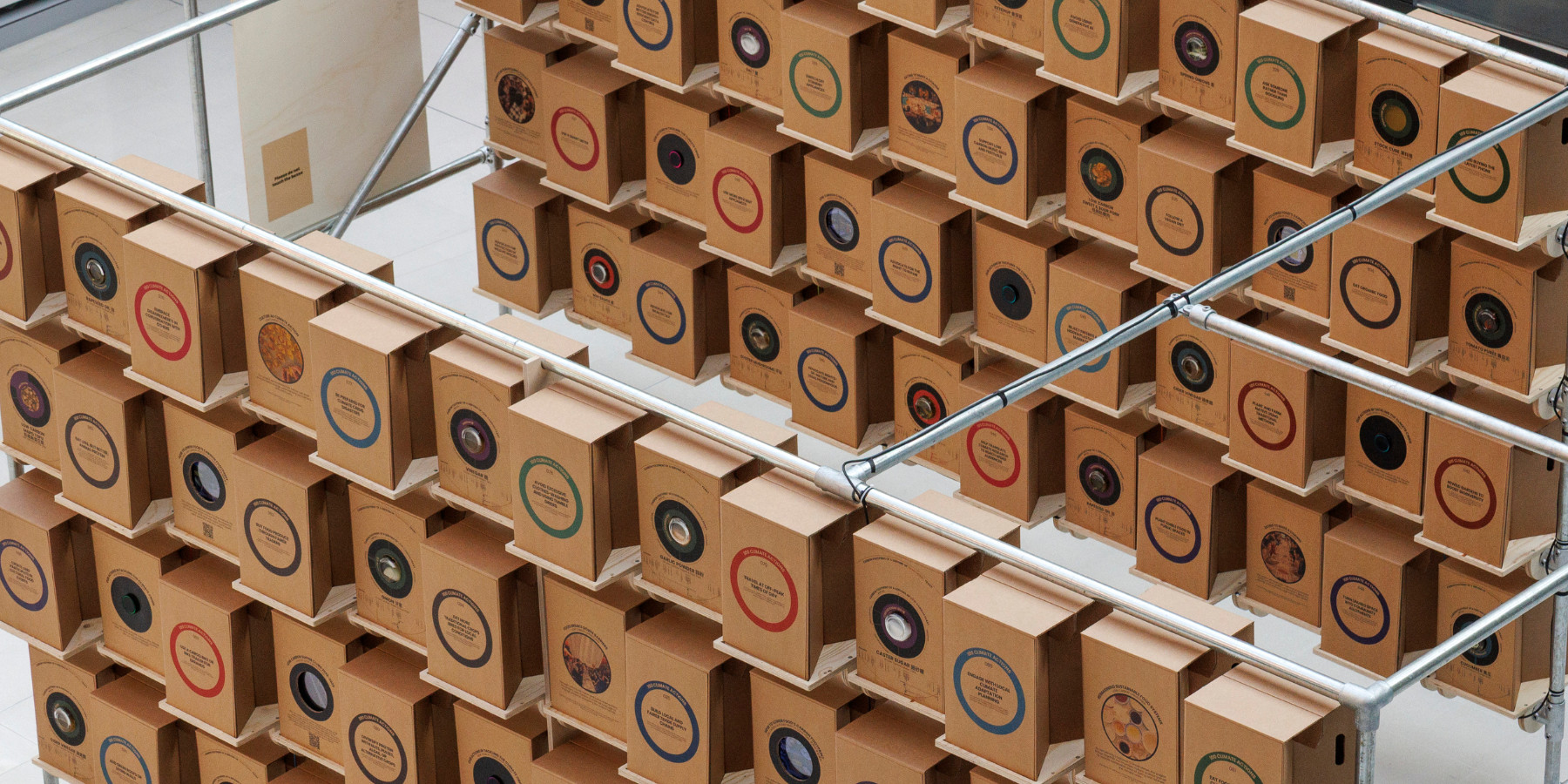
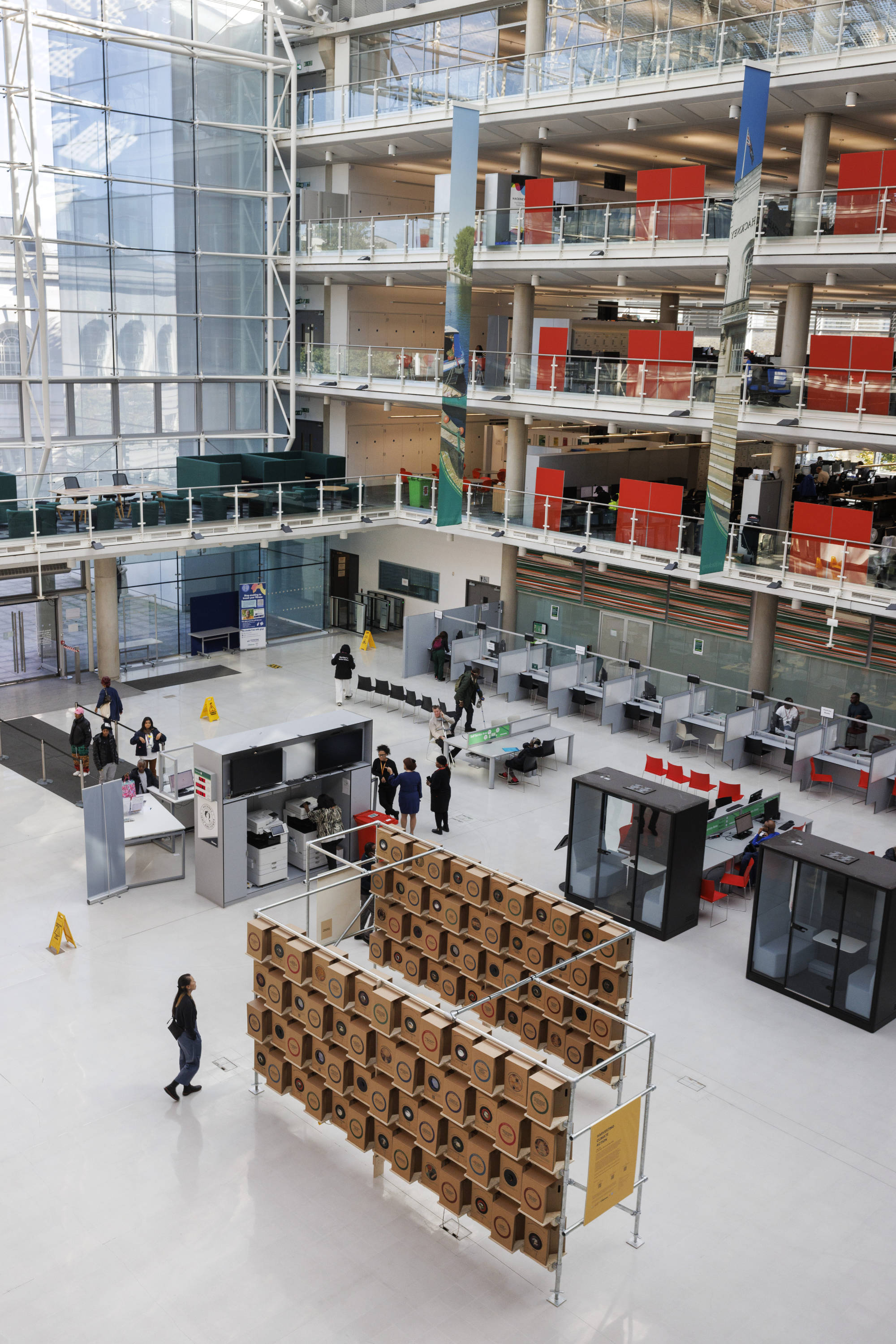
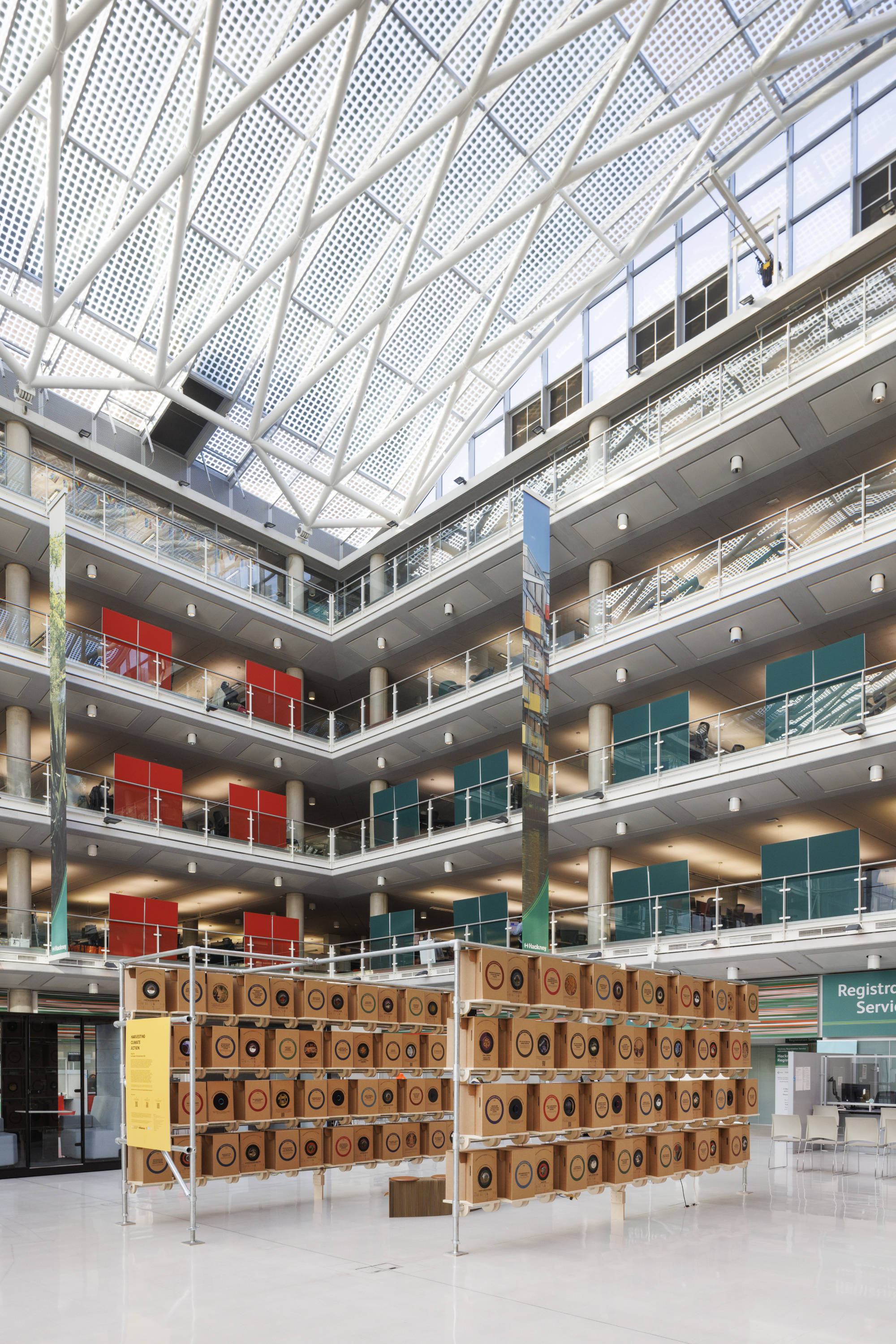
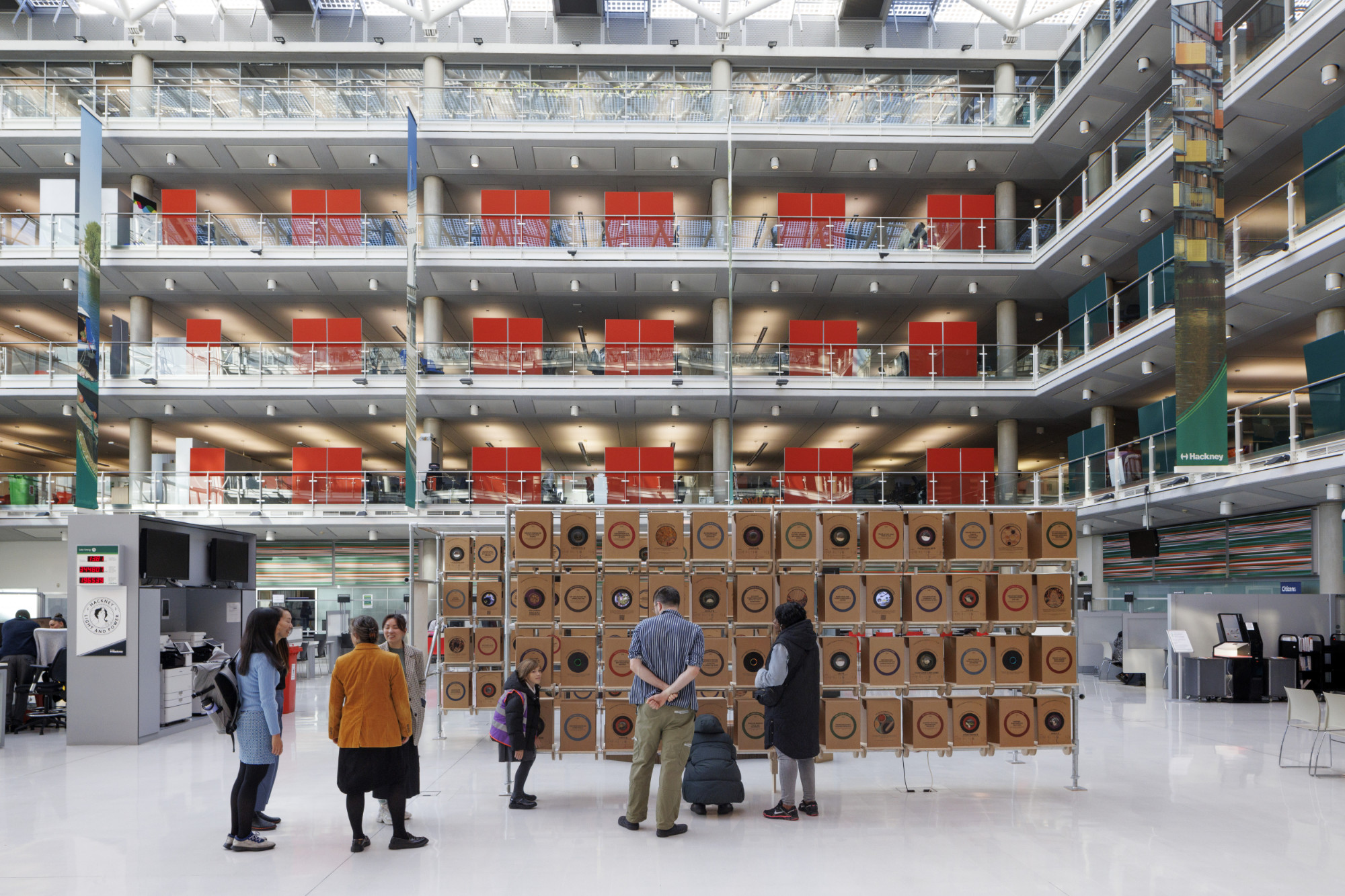
100 people, 100 actions: what choices will we make, individually & collectively?
The project explores the agency of the ordinary citizen: what one person can do, what becomes possible when 100 people act together, and how those actions might scale to the level of an entire borough. Rather than prescribing solutions, Harvesting Climate Action asks how climate responsibility can be shared, debated, and sustained over time.
“I love that the artwork gives you little nuggets and ideas of how to go home and implement a kinder way of living and live a much lower carbon life.”
— Uyen Luu, Food writer and photographer
“I think the exhibition is absolutely brilliant. It communicates so much about the different levels of climate actions we can take—some you can do today, others that require collective effort. An artwork like this can make a huge difference.”
— Richenda Wilson, Growing Communities
– Photography by Nick Turpin –
Low Carbon Pop-Up Structure
London Design Festival 2022
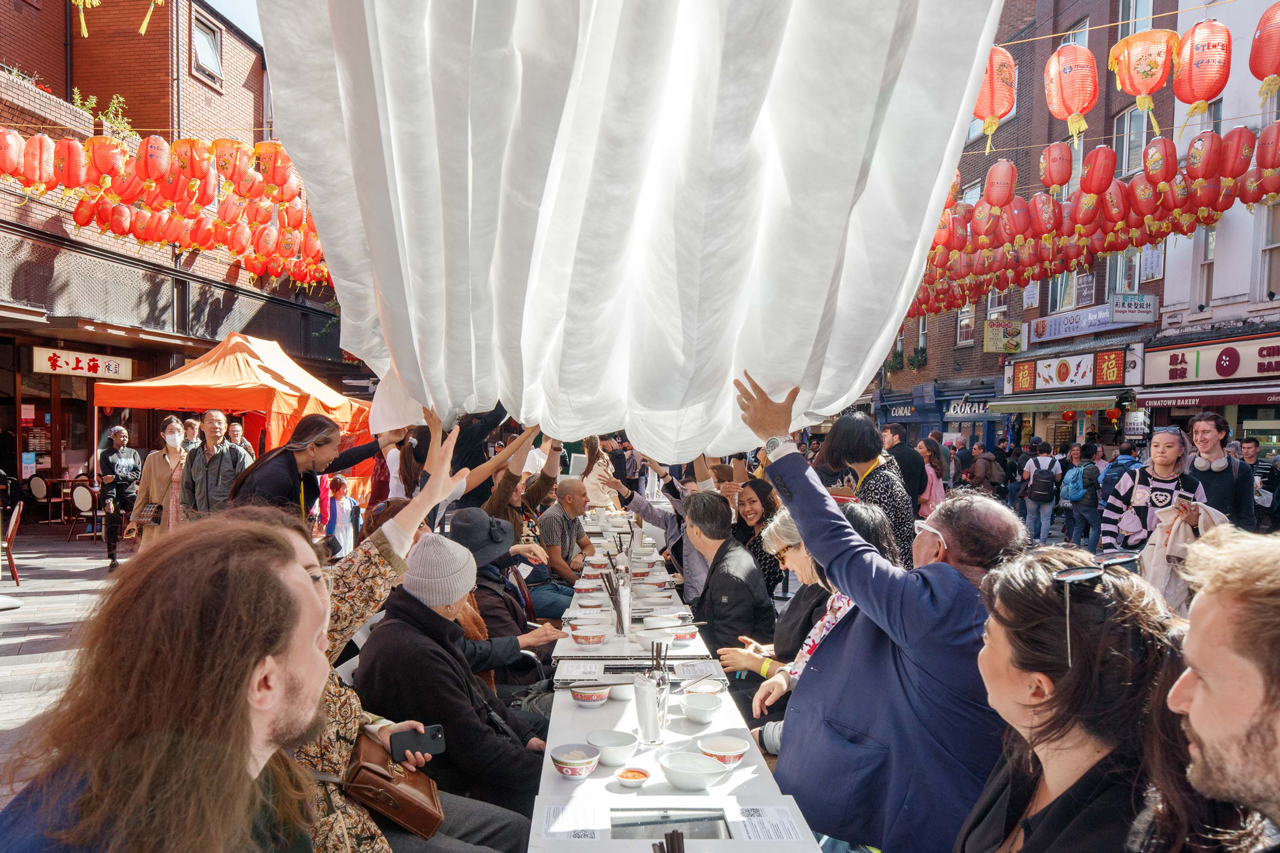
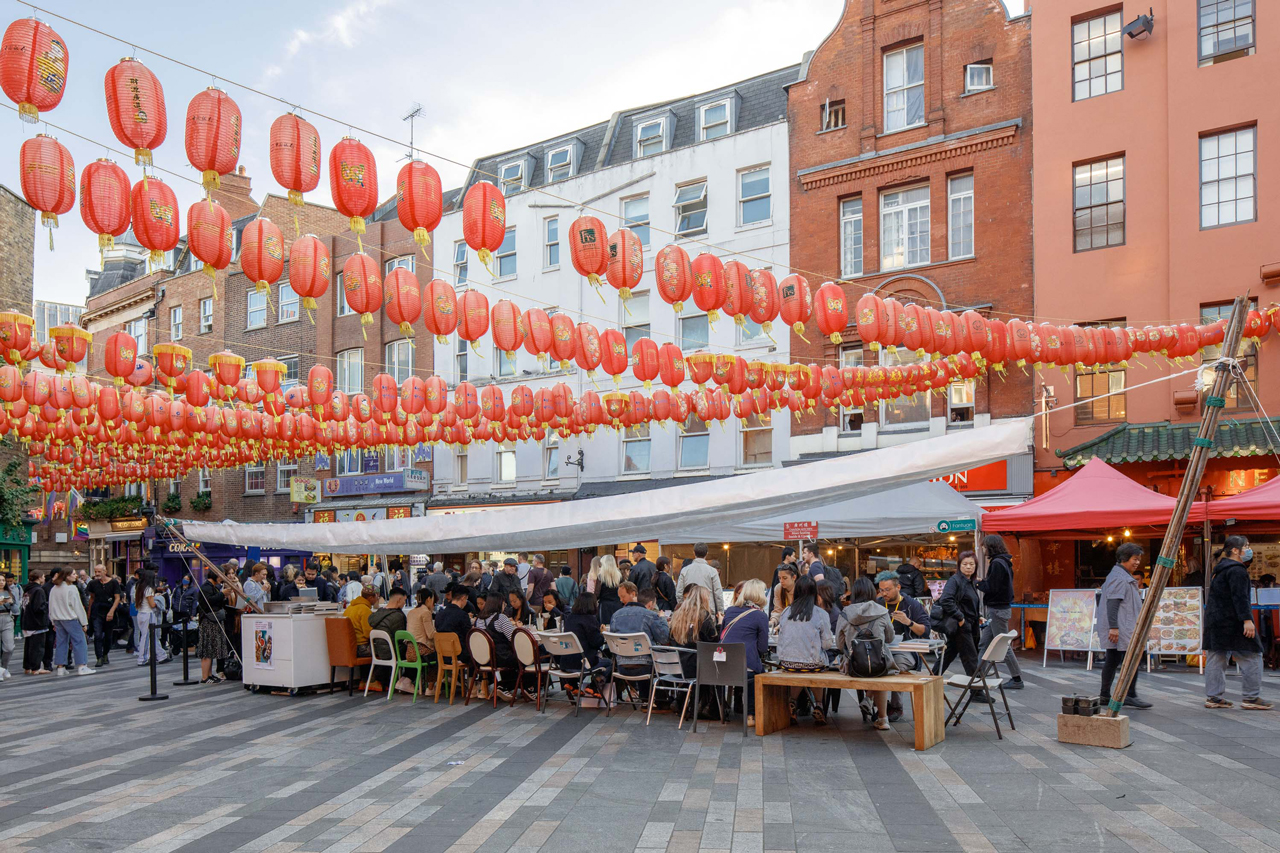
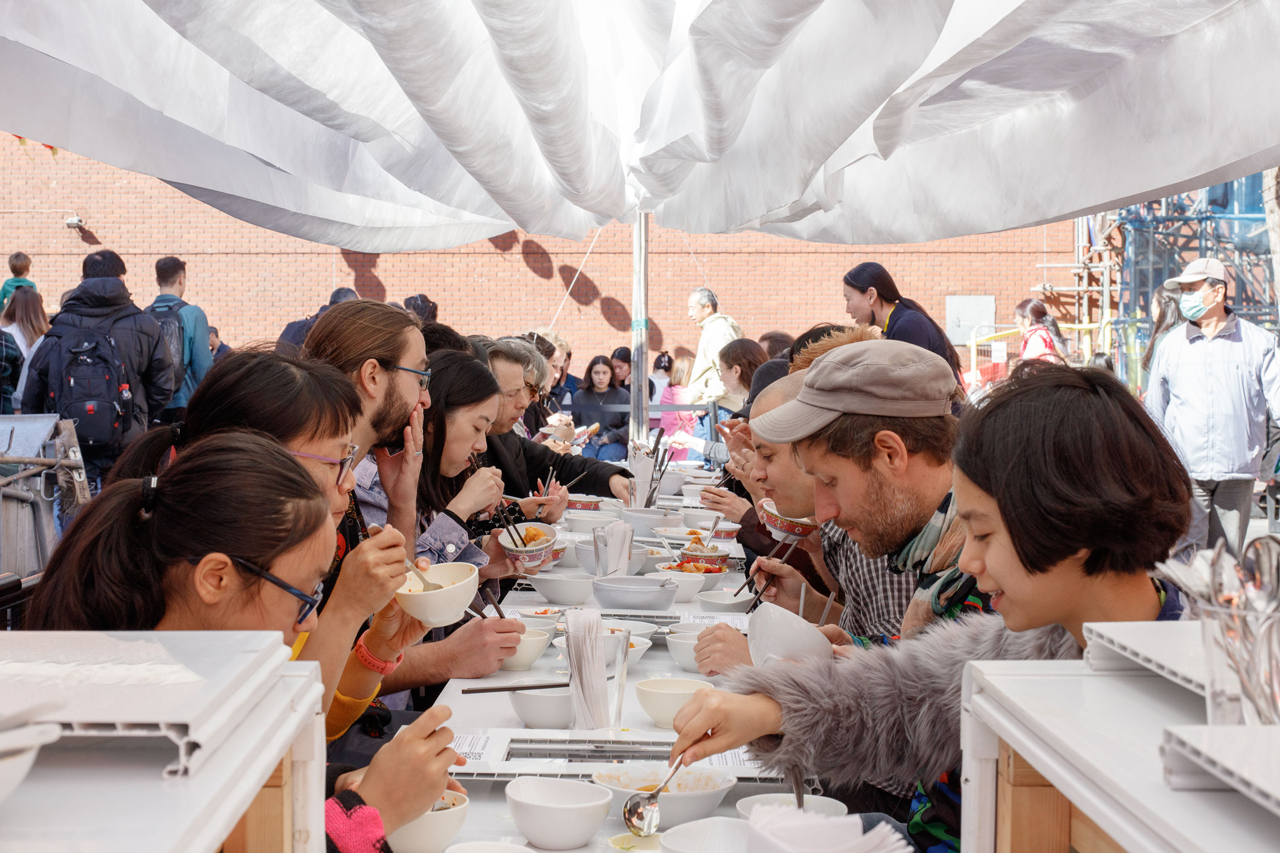
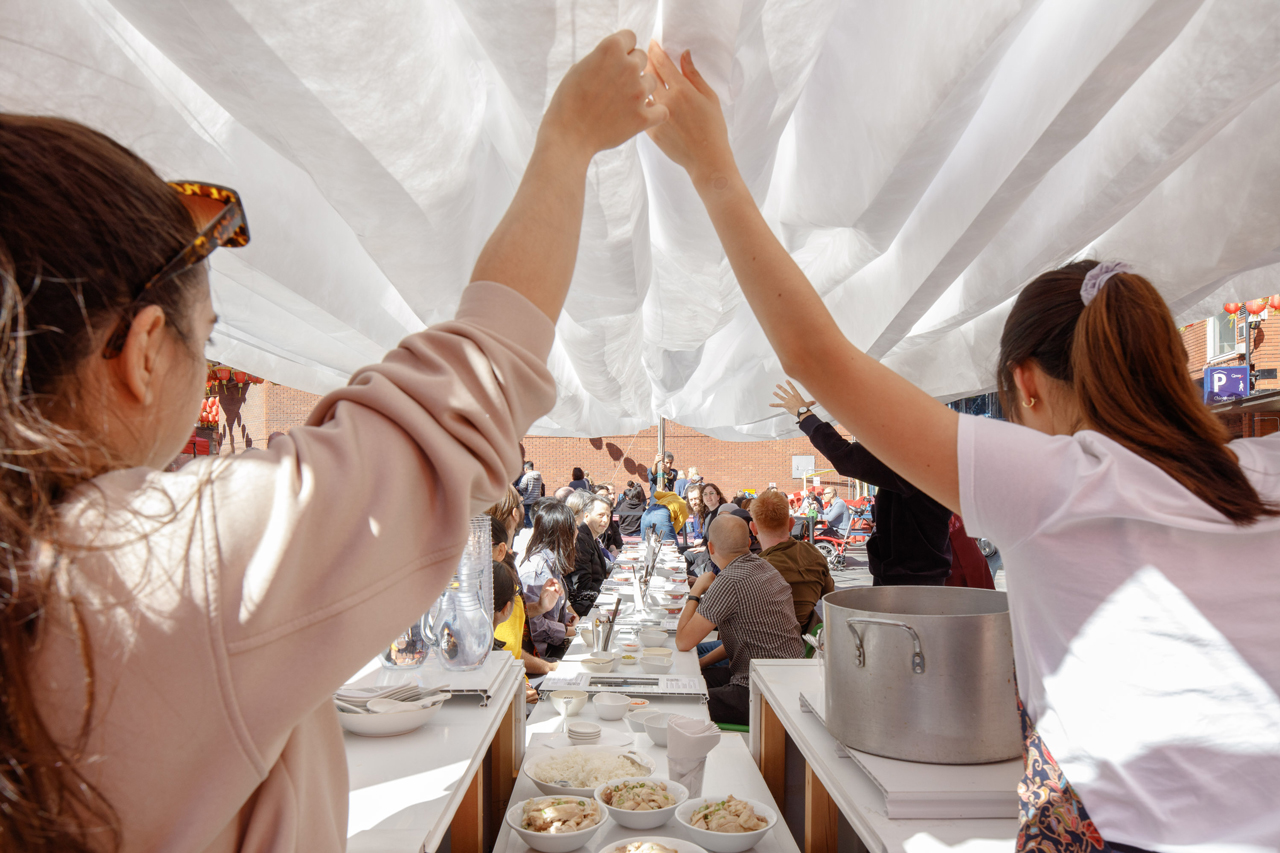
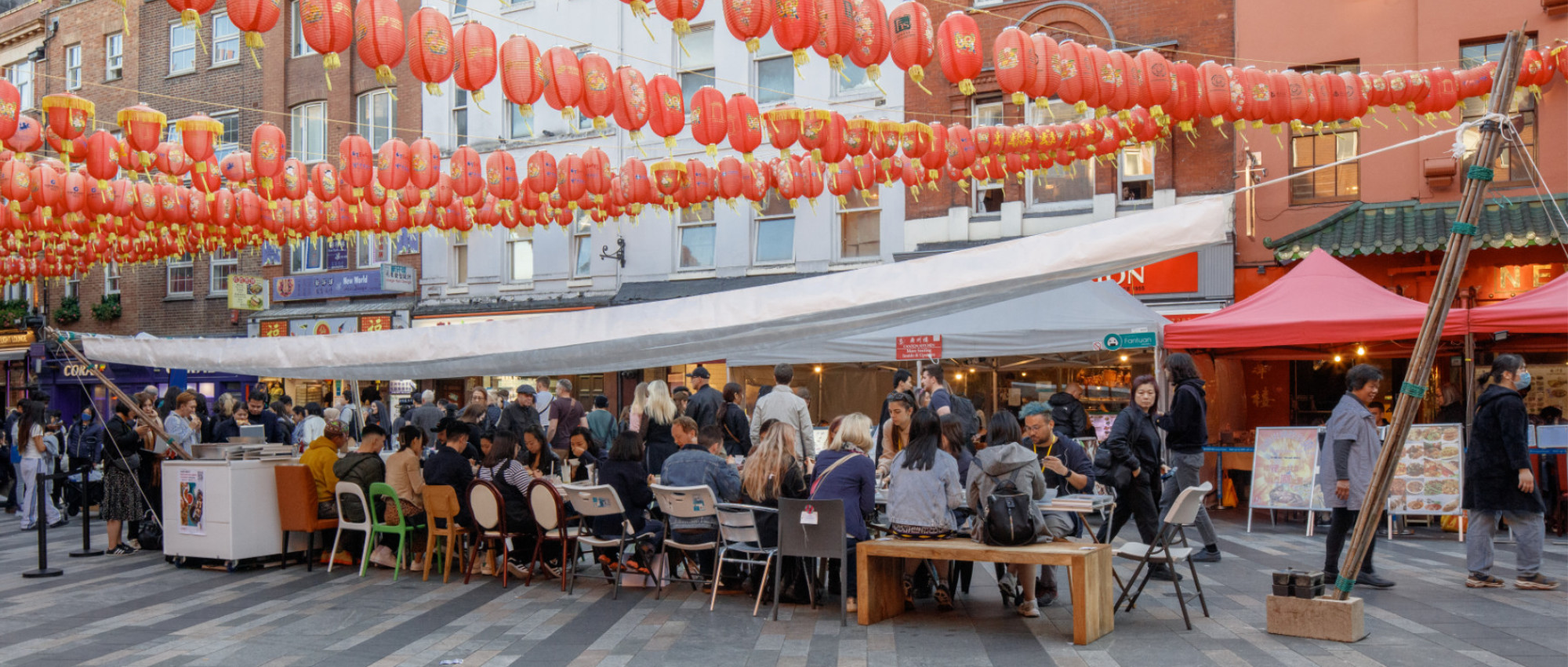
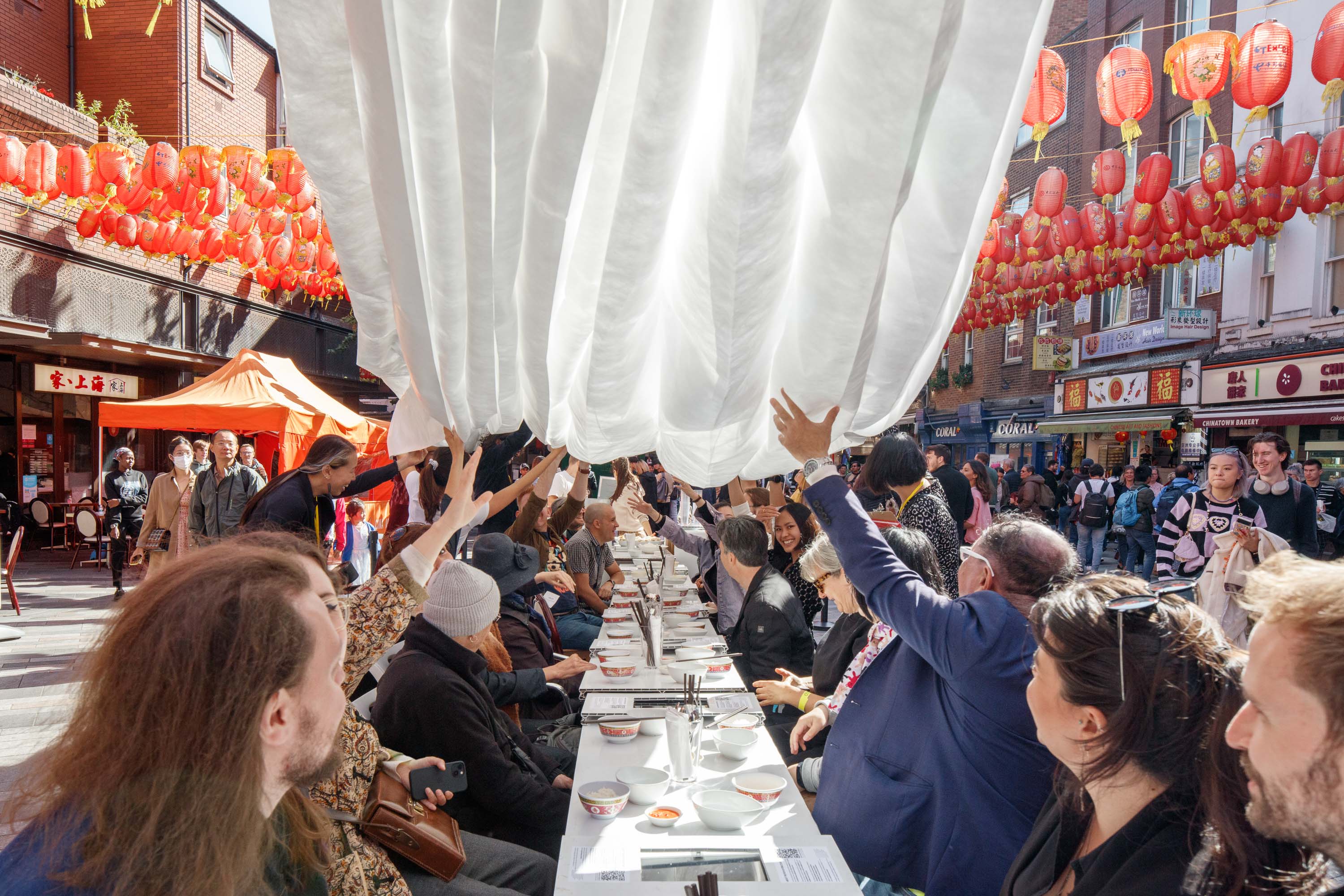
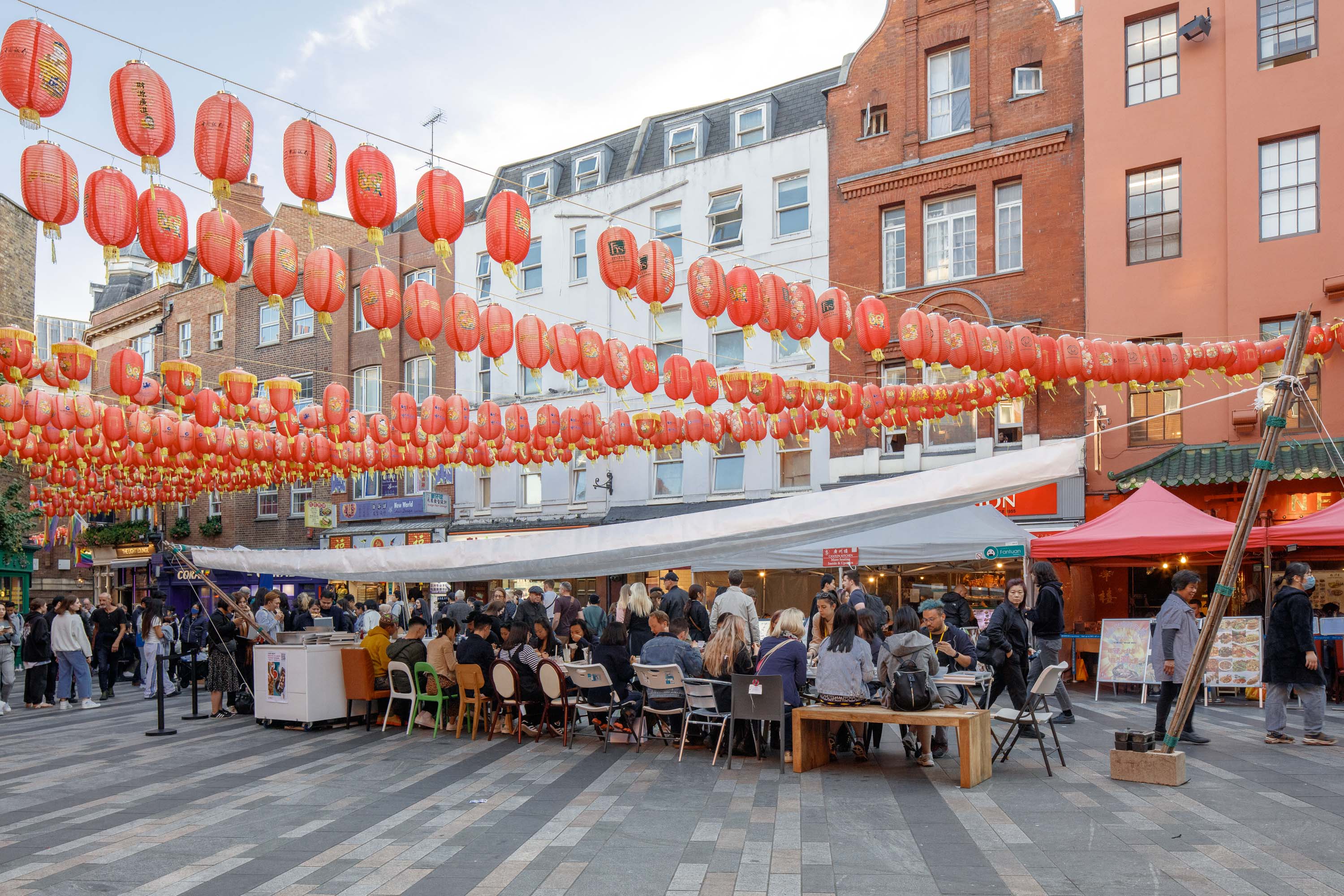
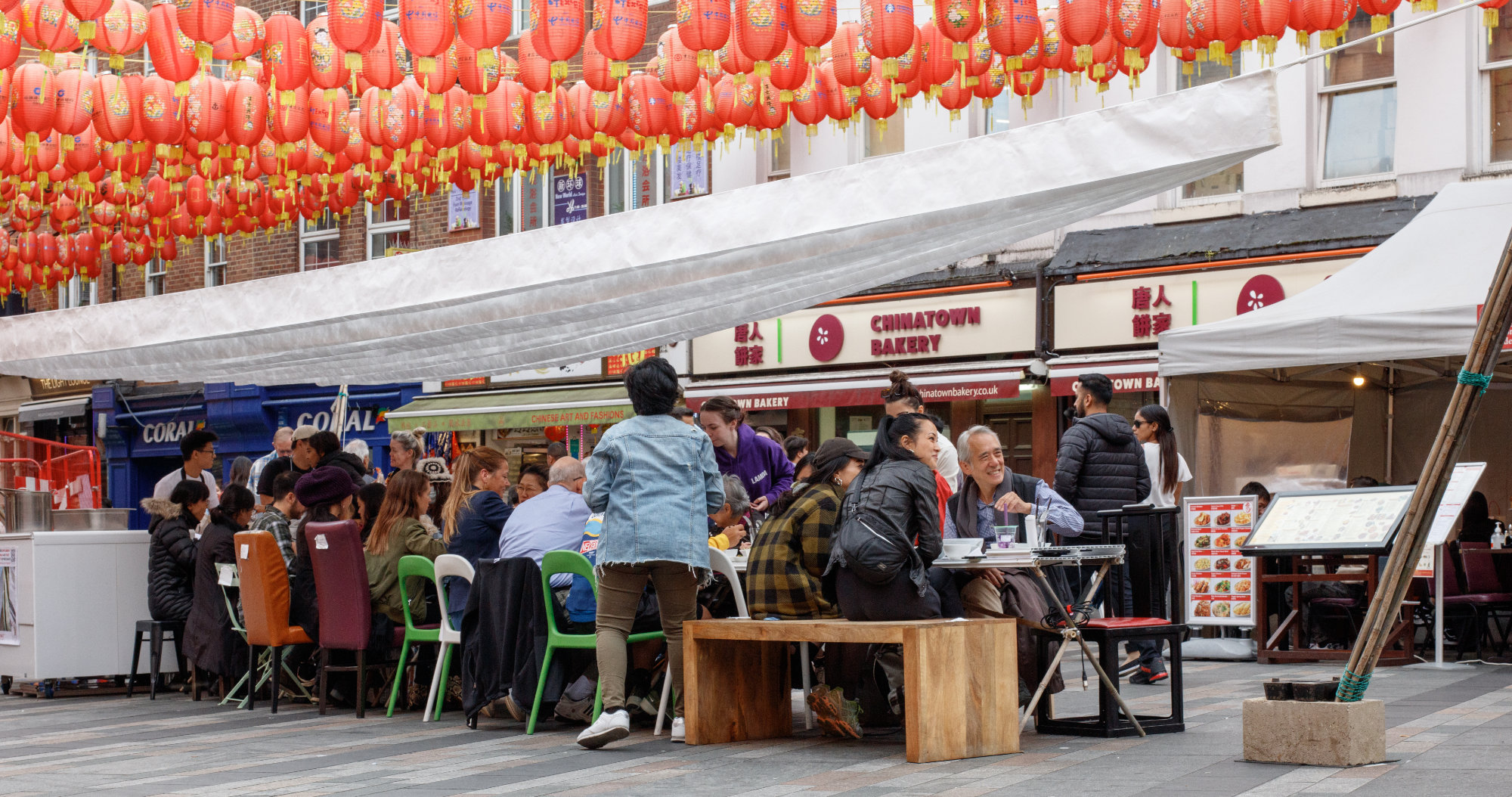
The first iteration of Low Carbon Chinatown premiered at the London Design Festival in 2022. A temporary pop-up structure, built using low carbon materials and processes including UK-grown bamboo, recyclable hoarding panels, and Tyvek was installed along the public streets at the heart of Chinatown.
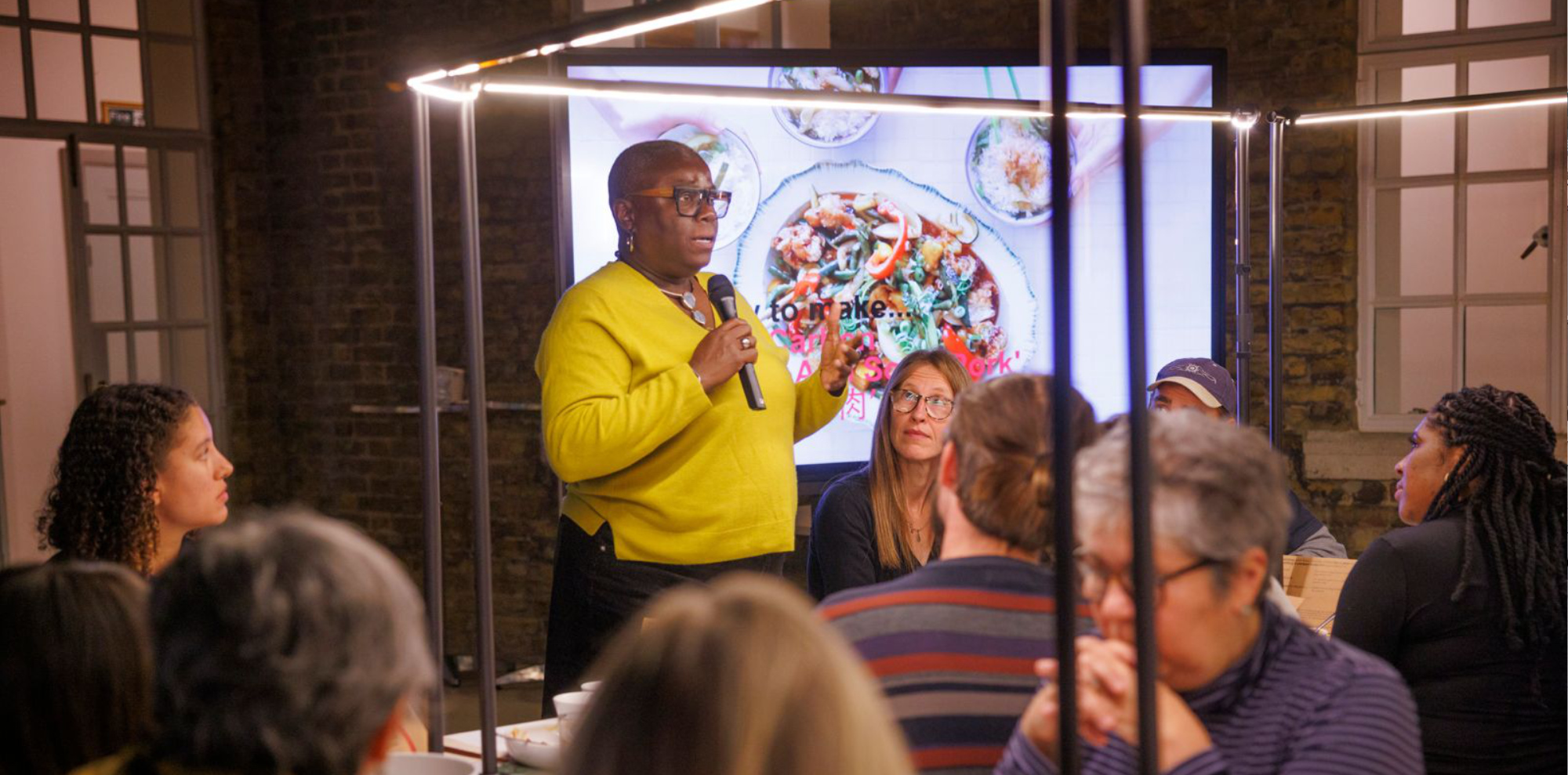
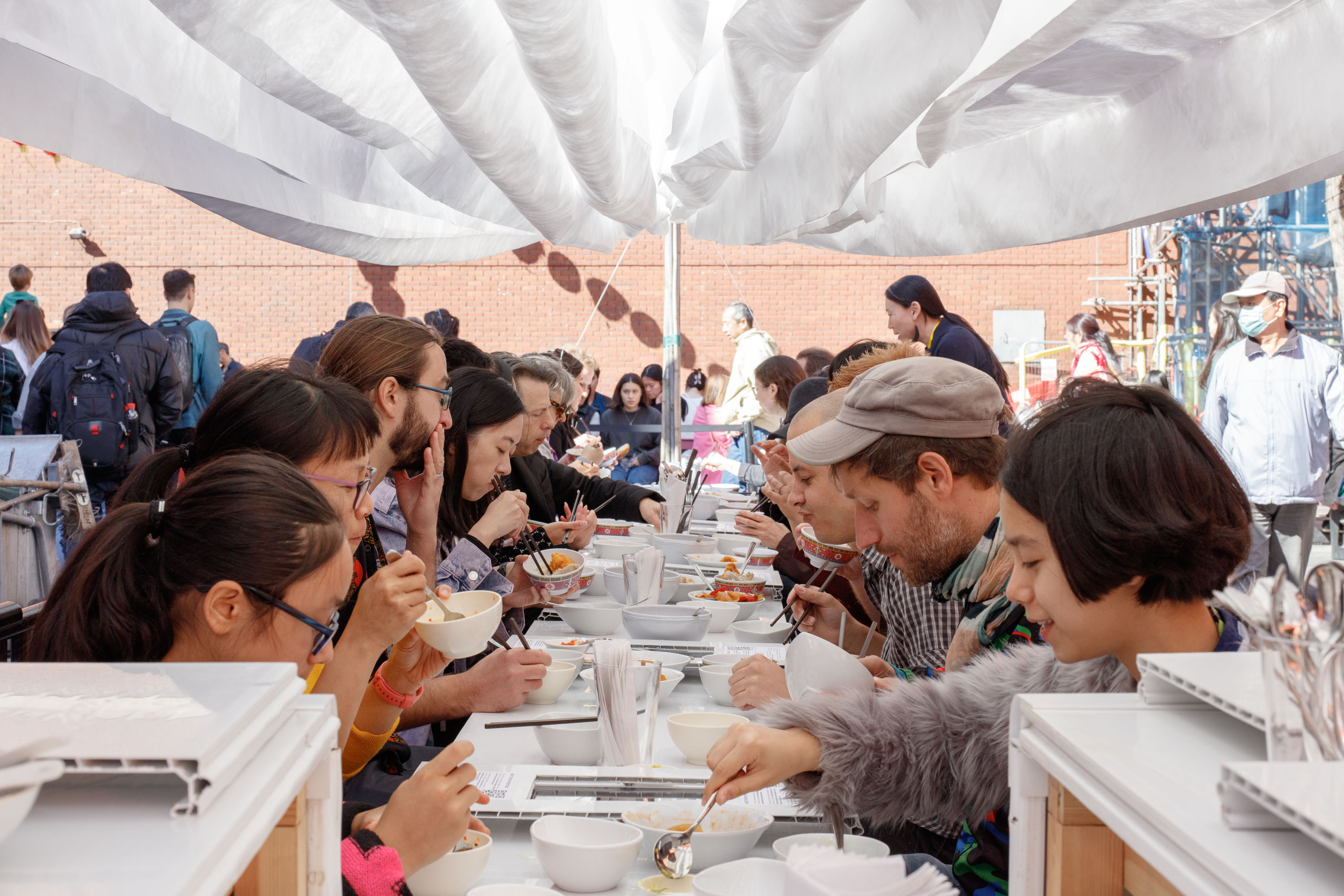
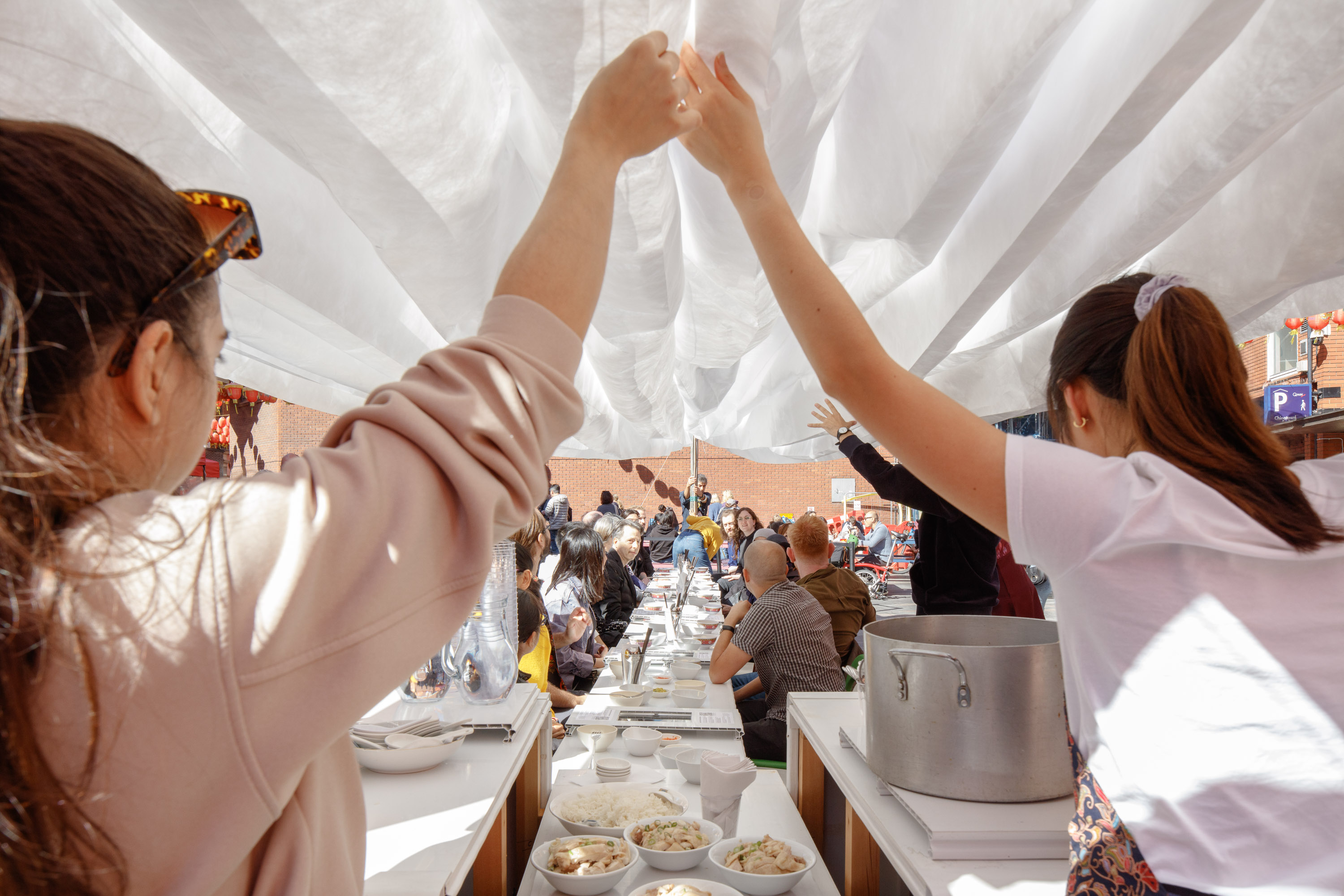
Over four days, the structure hosted a series of communal sit-down tastings, welcoming more than 300 members of the public. Visitors were invited to enjoy low carbon dishes developed in collaboration with London’s East and Southeast Asian communities, a data scientist, and acclaimed Asian food writers. Situated in a prominent public and cultural space, the pop-up made a visible statement of the diasporic East and Southeast Asian community’s commitment to addressing the climate crisis collectively, in dialogue with wider audiences across Britain.
The pop-up structure was designed by Ling Tan and Usman Haque as part of HAQUE TAN, with structural support from Atelier One.
– Video of Low Carbon Chinatown at London Design Festival 2022 –
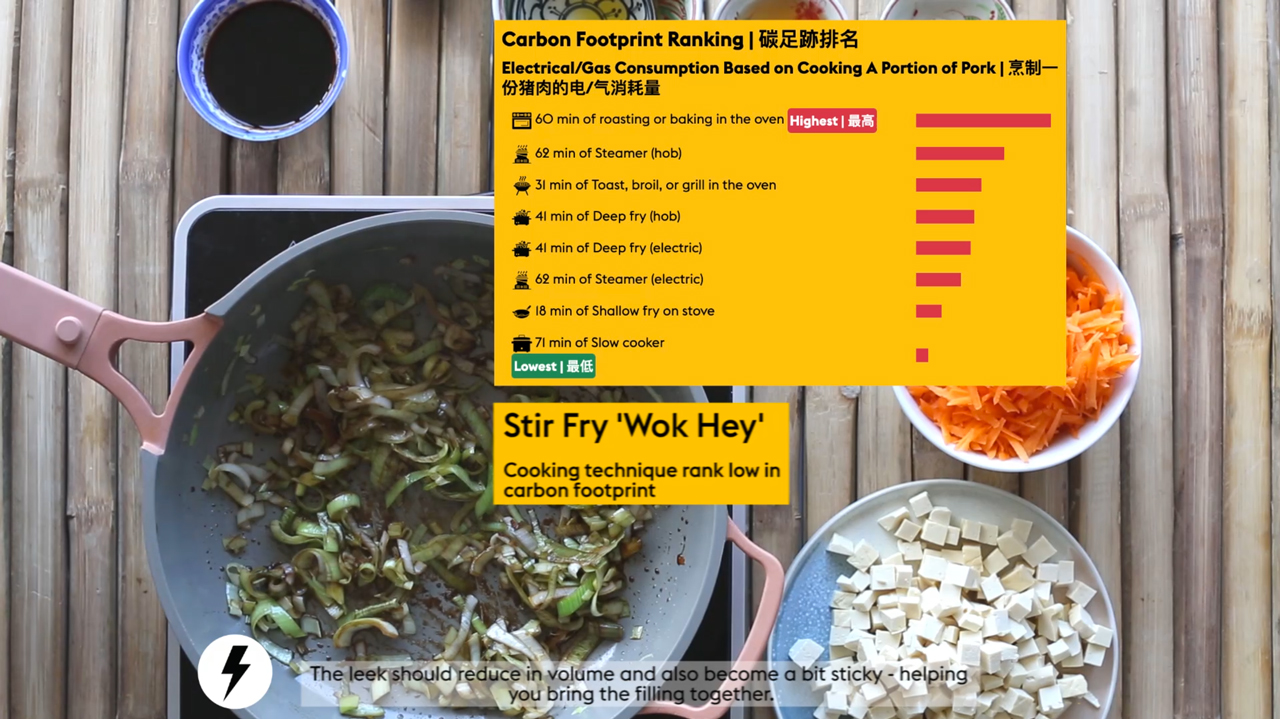
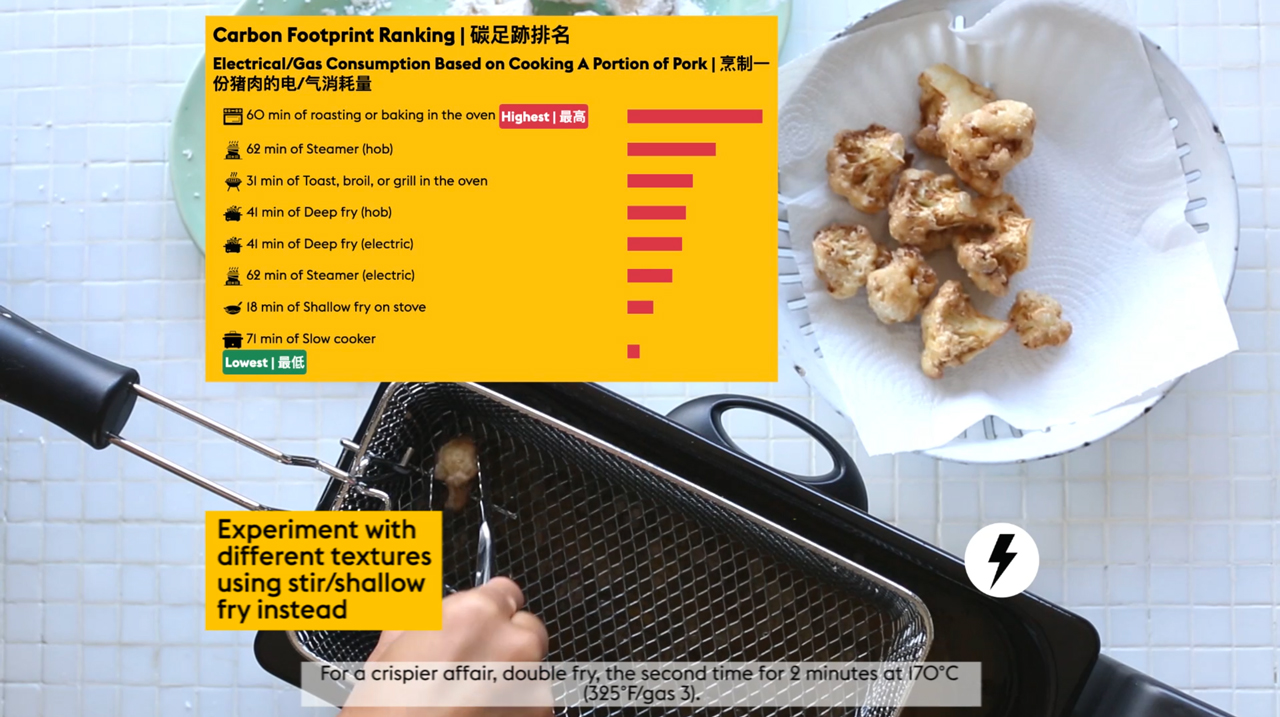
Each tasting featured a guest speaker from the design, minority community, environmental, activism, or art sectors, who offered short reflections on their role in responding to the climate crisis. Embedded multimedia screens within the tables showcased the making of the low carbon Chinese dishes and visualised their carbon footprint from sourcing and production to preparation and cooking.
“I love having the whole setup here in Chinatown and the food is amazing and super tasty. Food is cultural, and here in the project, we are learning the knowledge to make these low carbon food at home from other people.
And most importantly, having the pop-up structure in Gerrard street where historically it has always been a gathering space for people is especially meaningful.”
— Gianfranco Chicco, Head of Content & Digital, London Design Festival
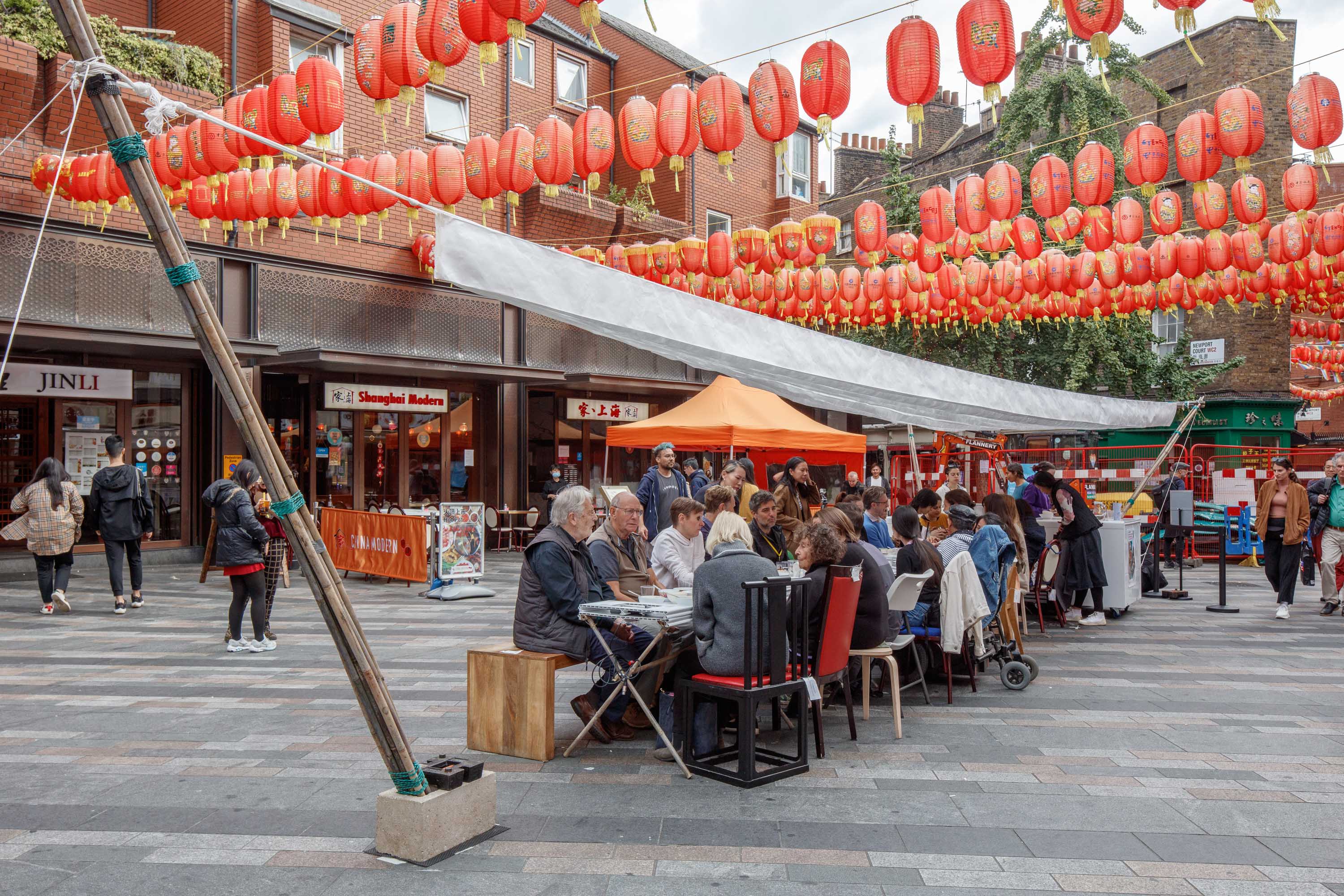
– Photography by Luke O'Donovan –
The Pop-Up Structure is intended to showcase other aspects of tackling the Climate Crisis by adopting low carbon approaches to designing and fabricating sustainable touring works. Designed to be easily assembled/disassembled and transported by a small electric van, the structure is made from a range of materials that are sustainable/low-carbon or easily recyclable in existing facilities once touring ends.
The Structure has four key components: a Preparation Unit, a long Banquet Table, a Pleated Canopy, and borrowed chairs from the Chinatown community. These are made primarily from three materials:
• UK grown Bamboo for structural members
• EnviroHoard™ for cladding and surfaces
• Tyvek for sun/rain protection
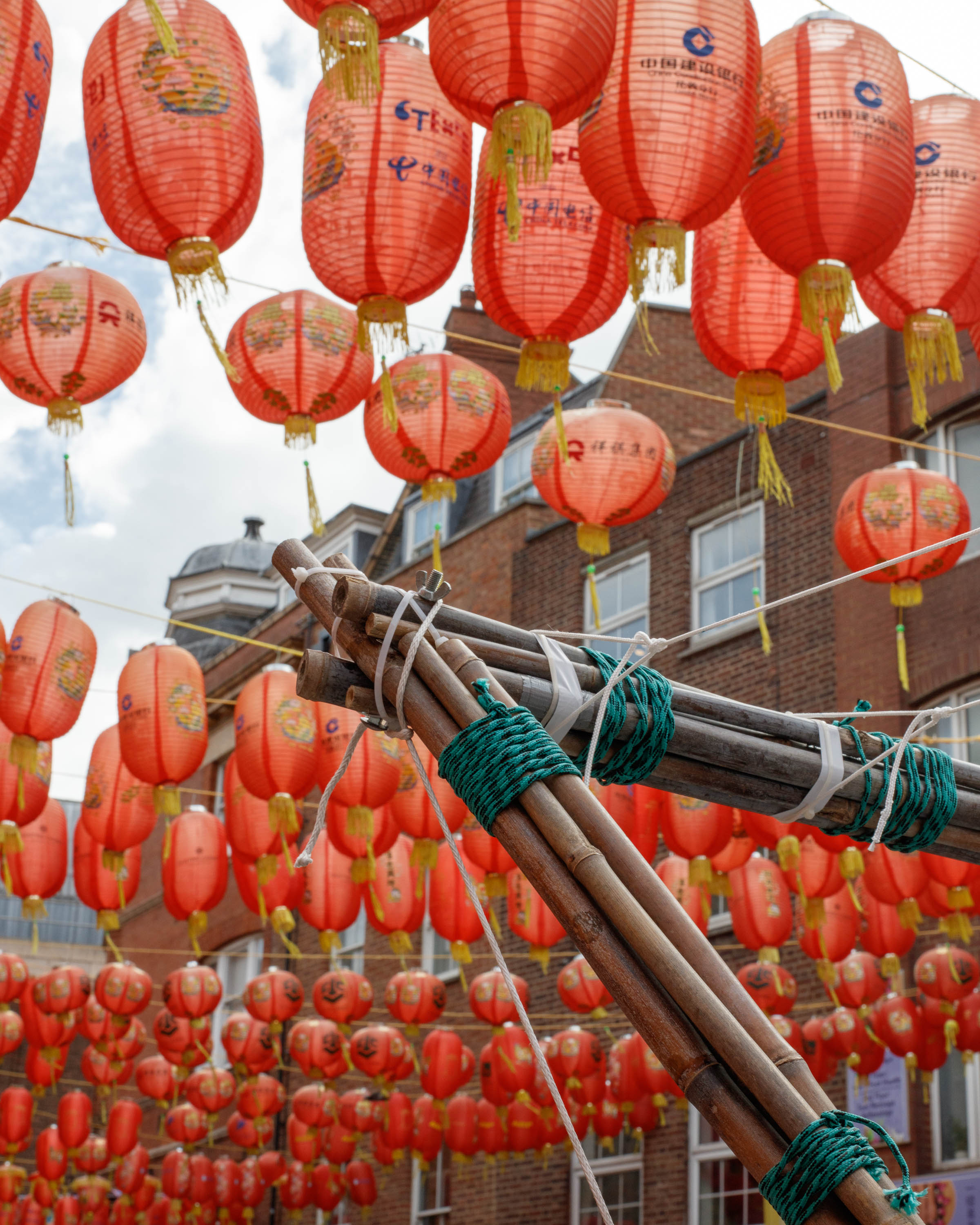
UK Grown Bamboo
The bamboo used in the Pop-Up Structure was grown and harvested from Ness Botanic Gardens in Liverpool (UK).
Borinda bamboo originated from mountainous Tibet and was first propagated in Shropshire (UK) many years ago by one of a few UK bamboo experts, Michael Brisbane. Borinda bamboo is a hardy plant that thrives in different climates. When harvested, it is a strong and sustainable material with many uses in different industries such as construction and design. It has a powerful capacity for capturing carbon, particularly as a result of its growth rate. In contrast to trees, bamboo plants regenerate quickly after being harvested. There is a growing initiative in the UK to explore the use of bamboo as a future sustainable building material for the planet. The bamboo used in the Pop-up was kindly donated by Liverpool City Region.
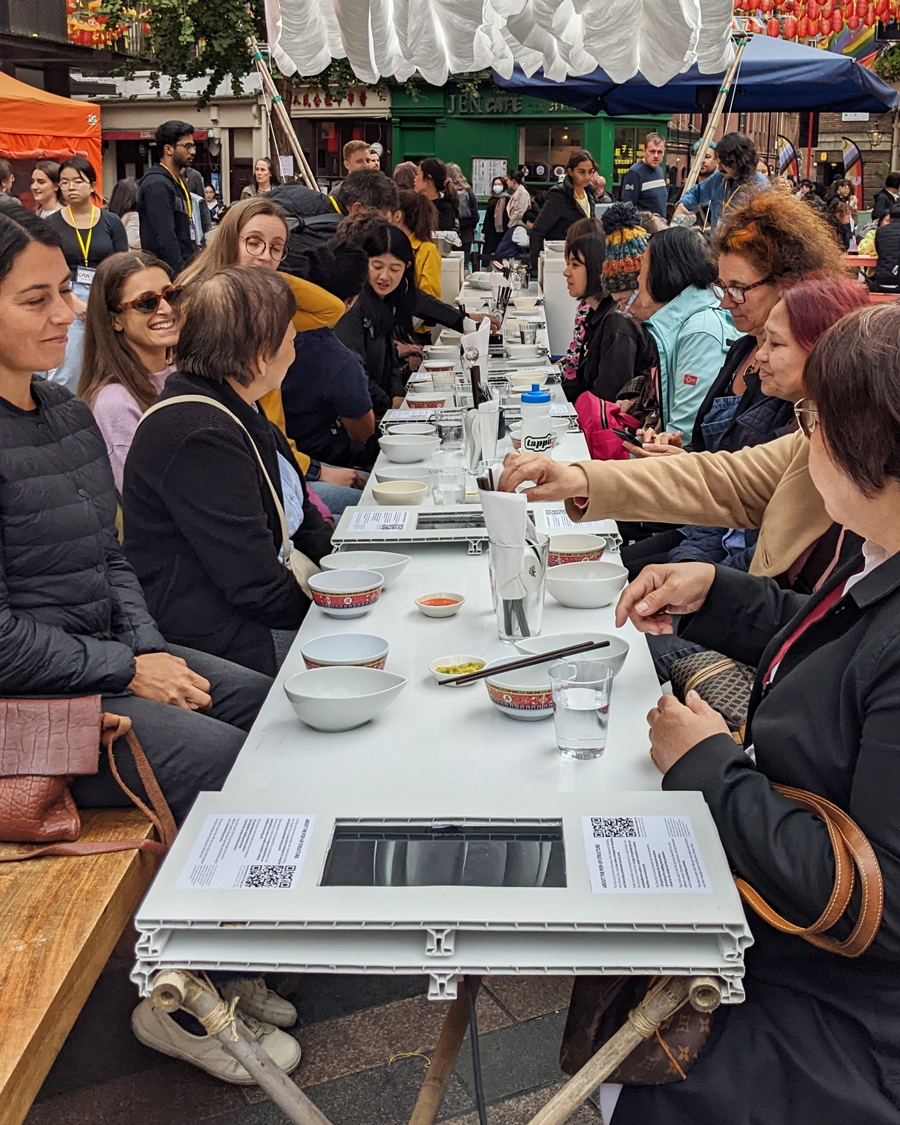
EnviroHoard
The surfaces, counters and cladding of the Pop-Up Structure are fabricated using EnviroHoard™ panels, a recyclable alternative to typical construction hoarding panels.
Developed by UK-based Panthera Group, and normally used in construction sites as hoarding, the panels are made of post-production recycled PVC. In contrast to normal plywood hoarding, they are typically reused up to three times on different sites over several years , and then recycled and processed again to be used as new hoarding panels. Panthera Group has kindly donated Class B pre-used EnviroHoard panels to the project.
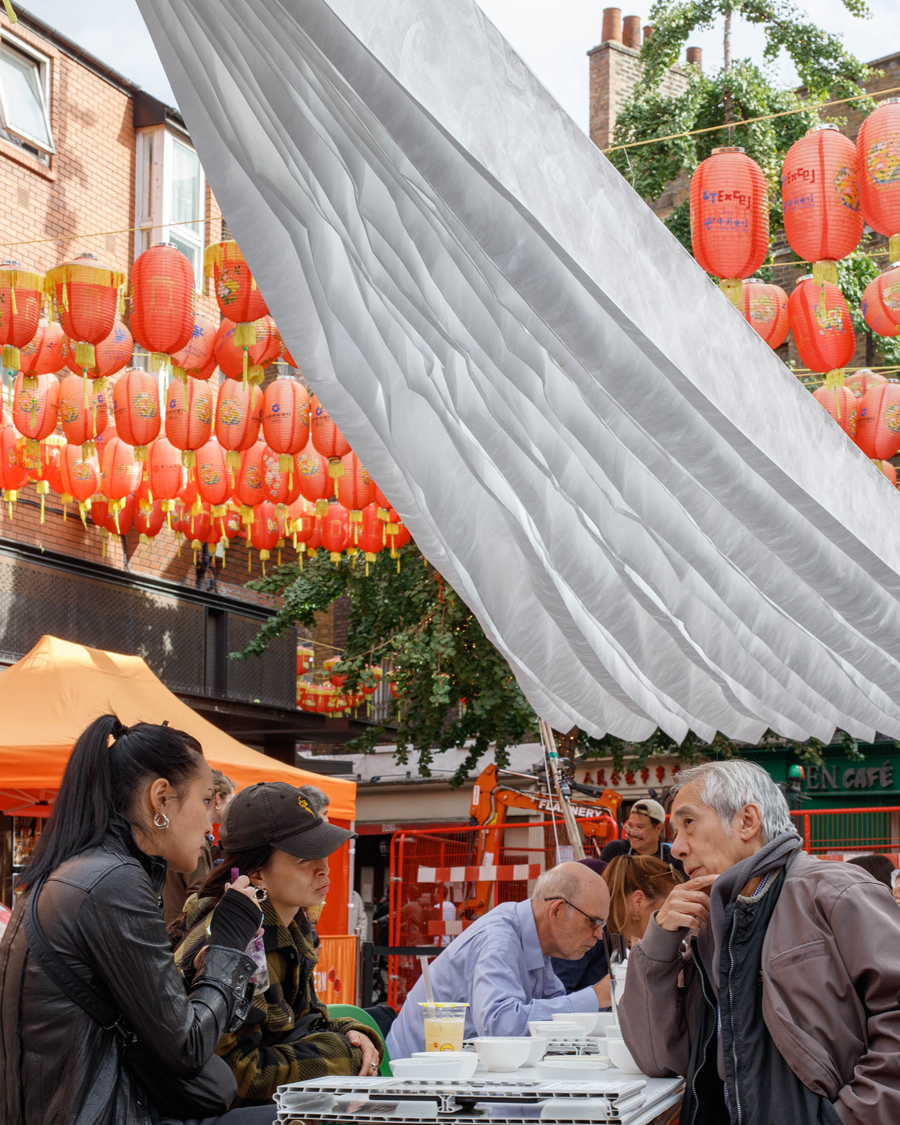
Tyvek
The canopy of the Pop-Up Structure is constructed from pleated Tyvek. While not strictly speaking low-carbon itself, Tyvek is a lightweight paper-like substance that can be easily repurposed and recycled.
It is lightweight, waterproof and a high-value recyclable material, often used in banners and disposable protective wear, which can be mechanically recycled into products such as underground cable protection piping, automotive parts, blown film, packaging cores and trays. Made with 100% HDPE, Tyvek is readily recyclable for its second life in existing recycling facilities. Tyvek from the Pop-up will be repurposed and recycled once it reaches the end of its touring.
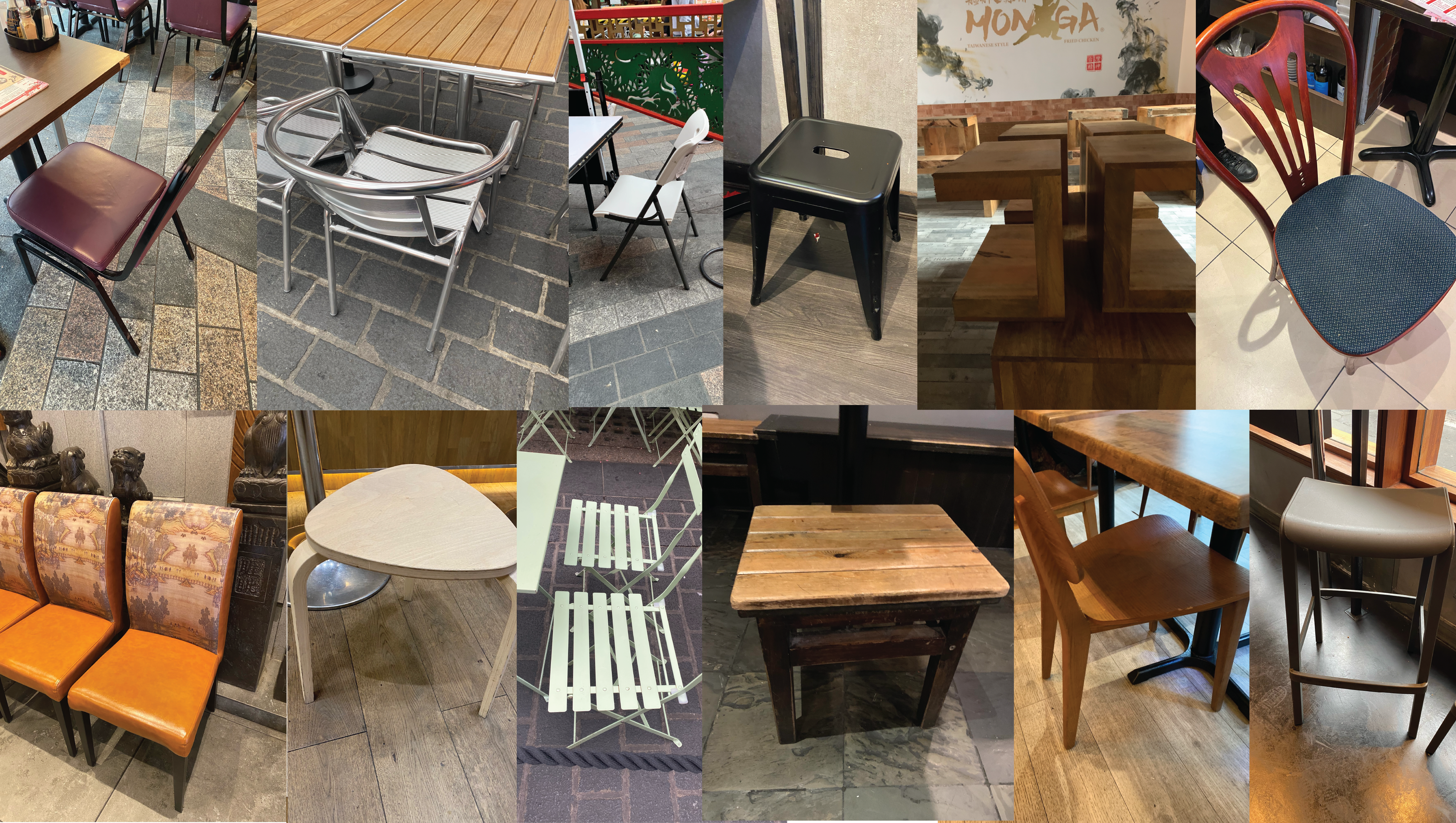
In addition, all the chairs used in the pop-up were generously lent by nearby Chinatown businesses, situating the project within a local sharing economy. Accompanying each chair was a climate message from the business owner, describing their efforts to make their business more environmentally sustainable.
With thanks to Min Tea, Wing Wing, Pot Pot Matatang, Jin Li, New Canton, Ku Bar, Gourmet Kitchen, Shanghai Modern, Candy Cafe, Imperial China, Mi Canteen, Monga, Dumplings’ Legend, Leong’s Legend, Real Beijing, Shu Xiang Ge, Wan Chai Corner, and New China.
Leeds Low Carbon Pop-Up
Compass Festival 2024
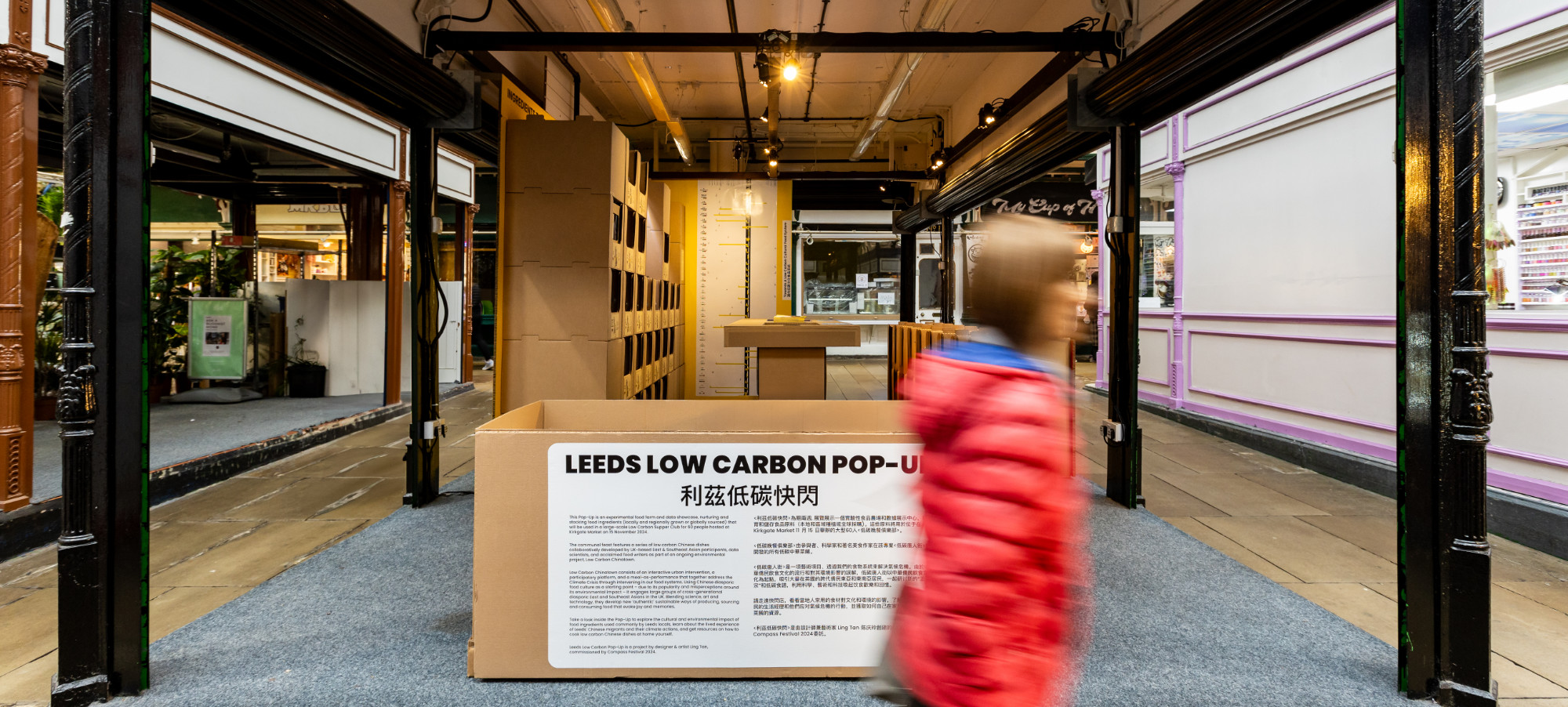
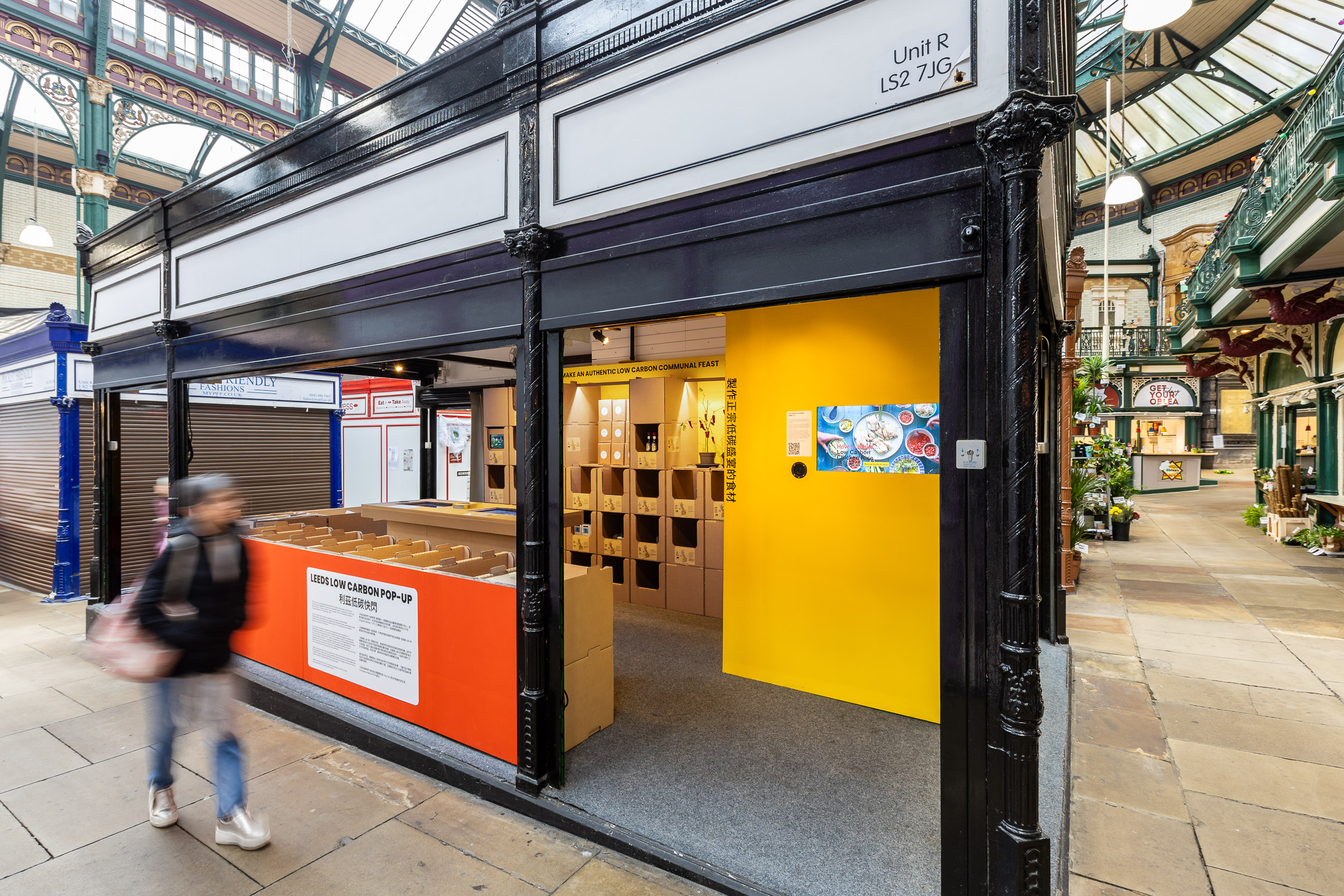
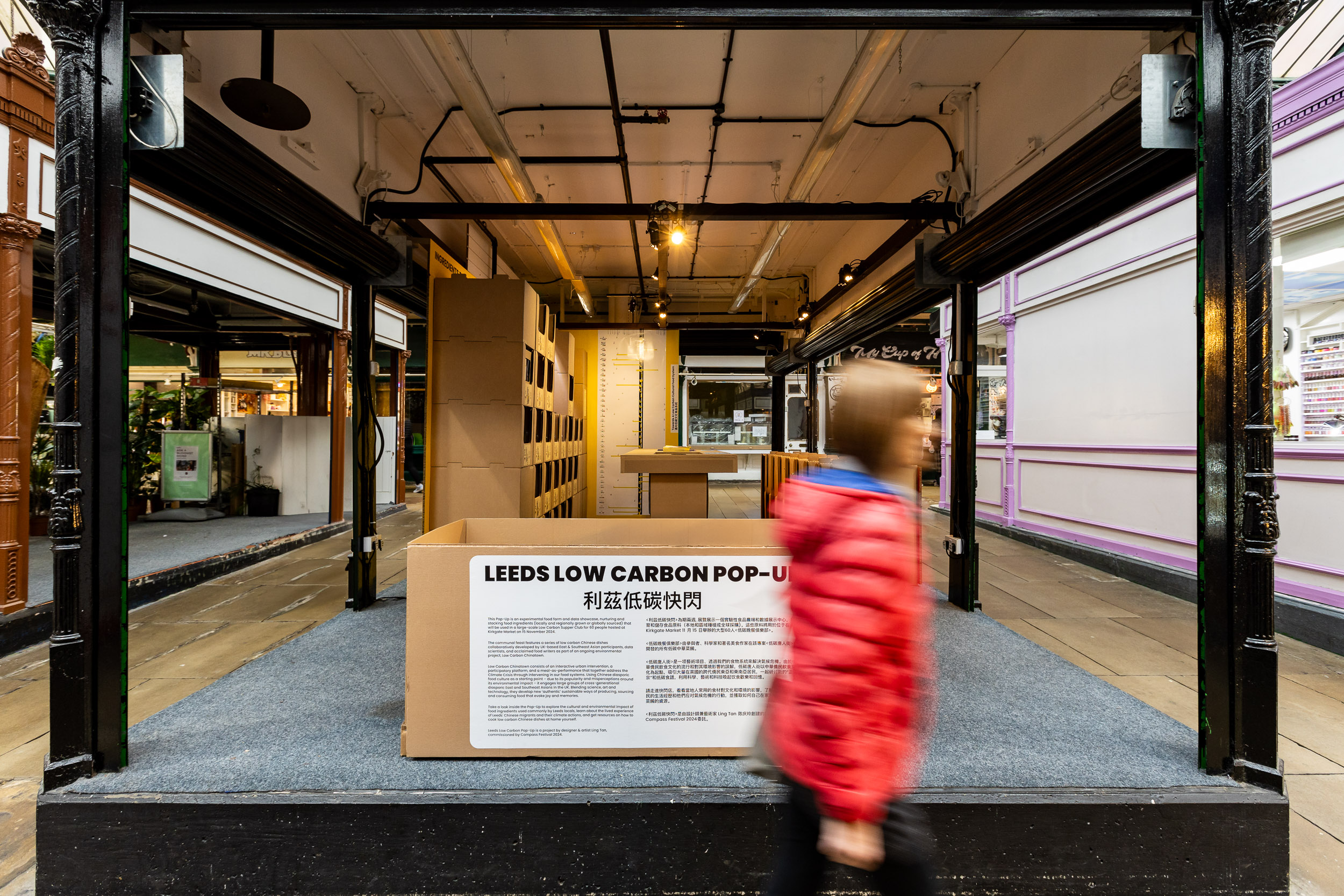
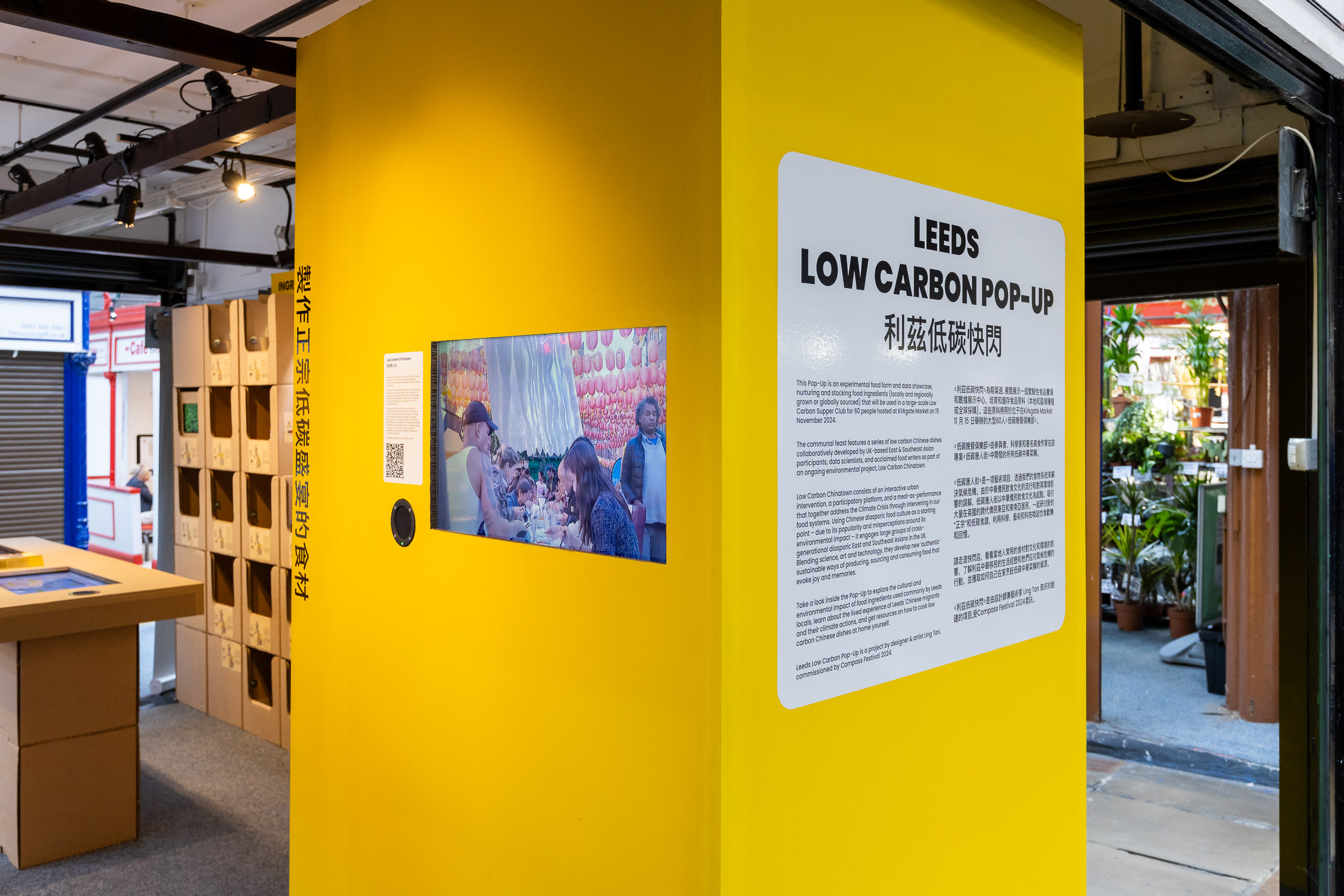
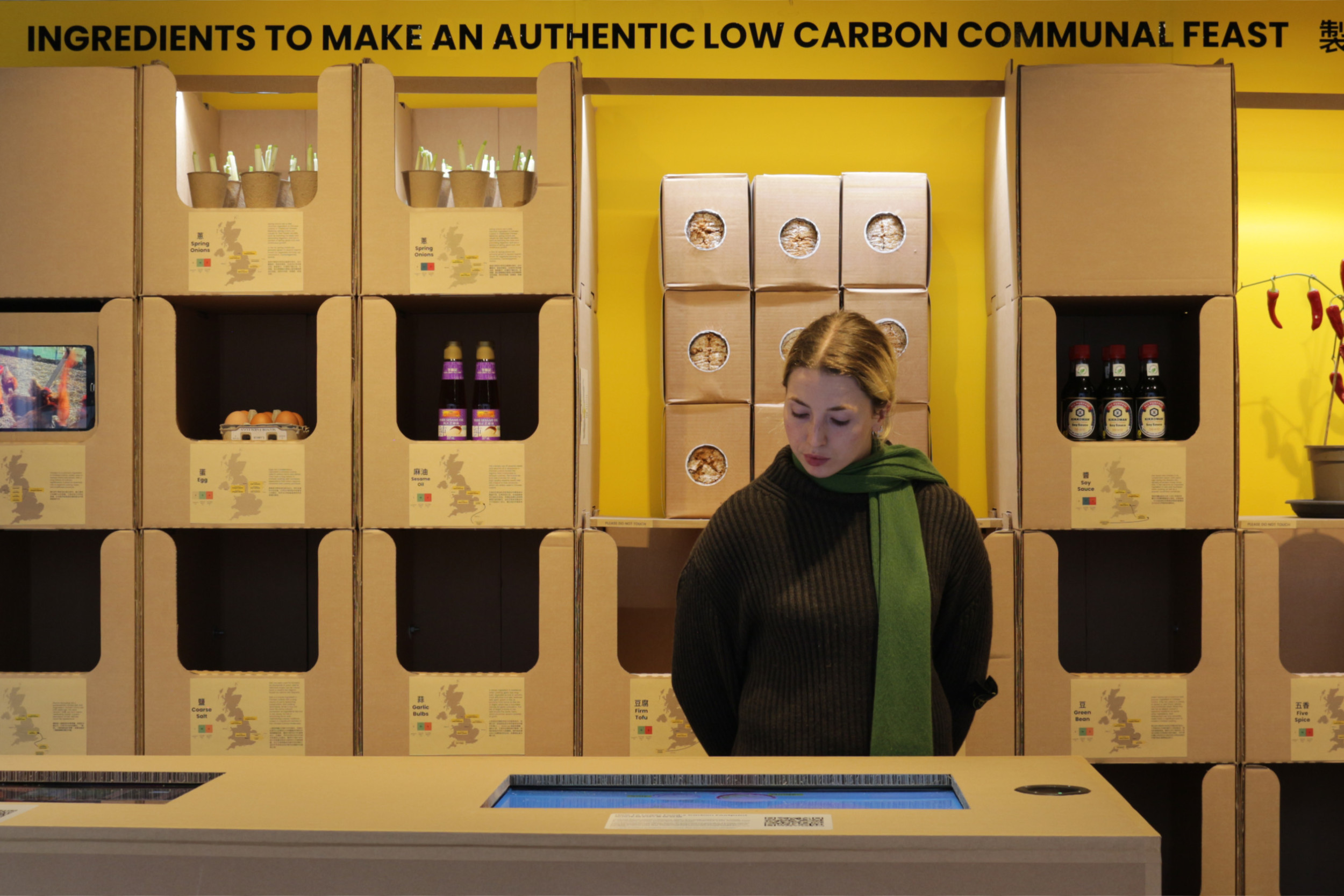
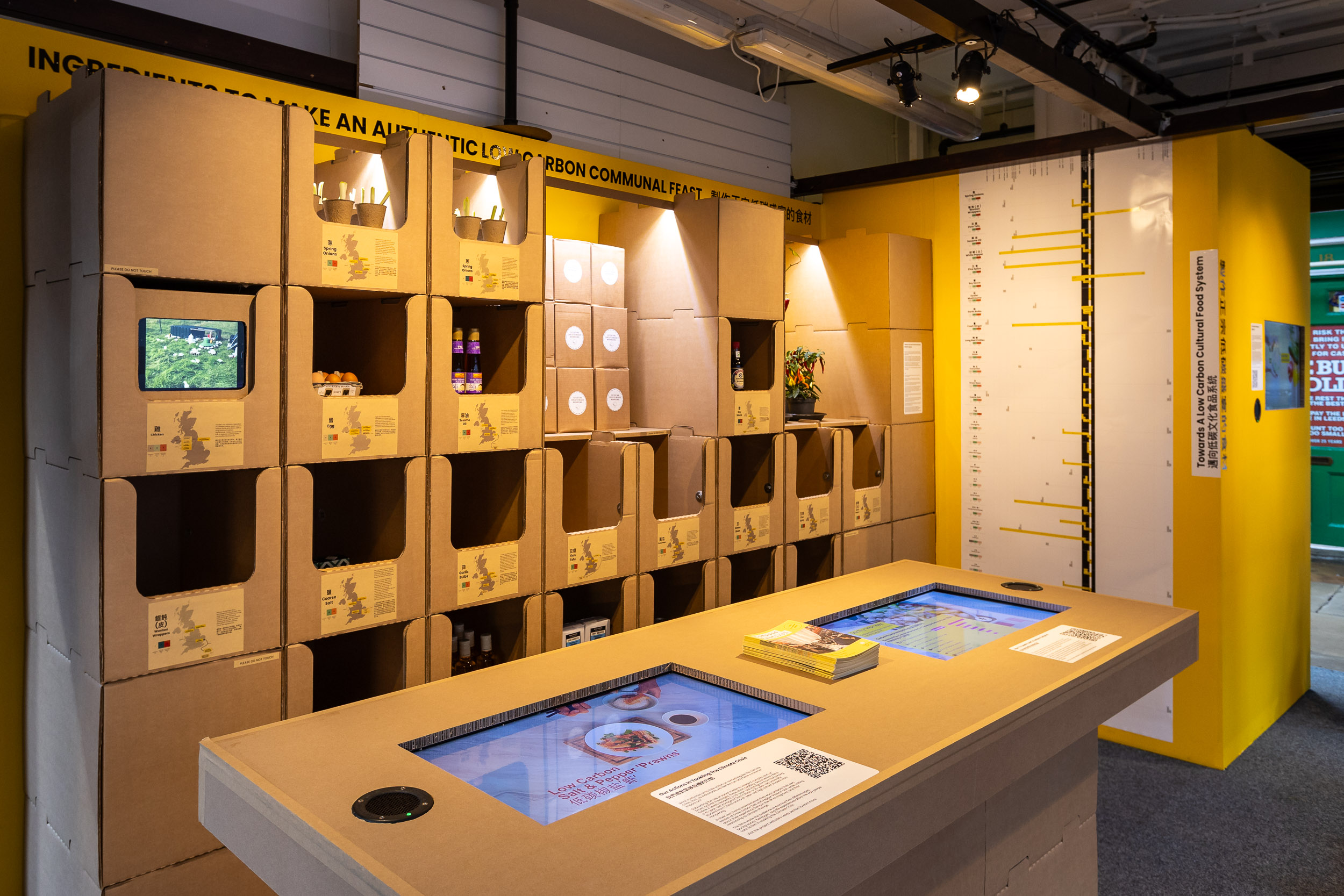
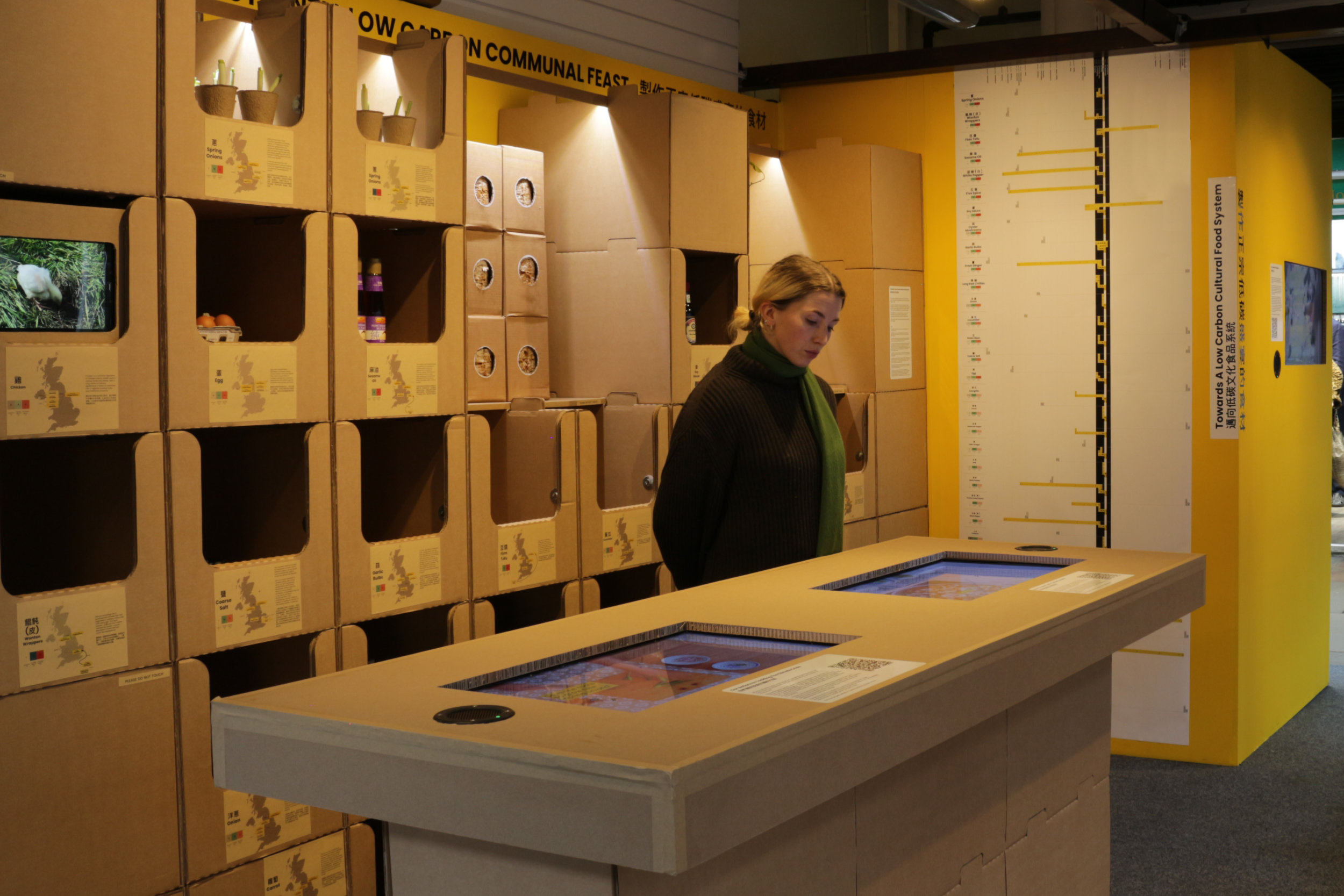
Hosted at Leeds Kirkgate Market, one of Europe’s largest indoor markets, over a two-week period, the Leeds Low Carbon Pop-Up took the form of an experimental food farm and data showcase. The installation nurtured and stocked food ingredients sourced locally, regionally, and globally, which were later used to prepare a large-scale Leeds Low Carbon Supper Club for 60 people, hosted at Kirkgate Market on 15 November 2024. The Pop-Up was presented as part of Compass Festival 2024.
– Photography by Jules Lister –
Made entirely from recycled materials, the Pop-Up was designed and fabricated with minimal material waste. All physical waste generated by the project was carefully documented and displayed on site, making visible the carbon footprint of an art and design production of this kind.
Visitors were invited to explore the cultural and environmental impact of food ingredients commonly used by Leeds residents, learn about the lived experiences and climate actions of Leeds’ Chinese migrant communities, and access resources on how to cook low carbon Chinese dishes at home.
“It is a very interesting exhibition. A lot of interesting insight and illustrate the importance of sustainability but the need to balance it with other requirements.”
— Visitor to the Low Carbon Pop-Up
The Leeds Low Carbon Pop-Up was designed by Ling Tan and fabricated by Matthew Sykes-Hooban, with production support from Compass Festival.
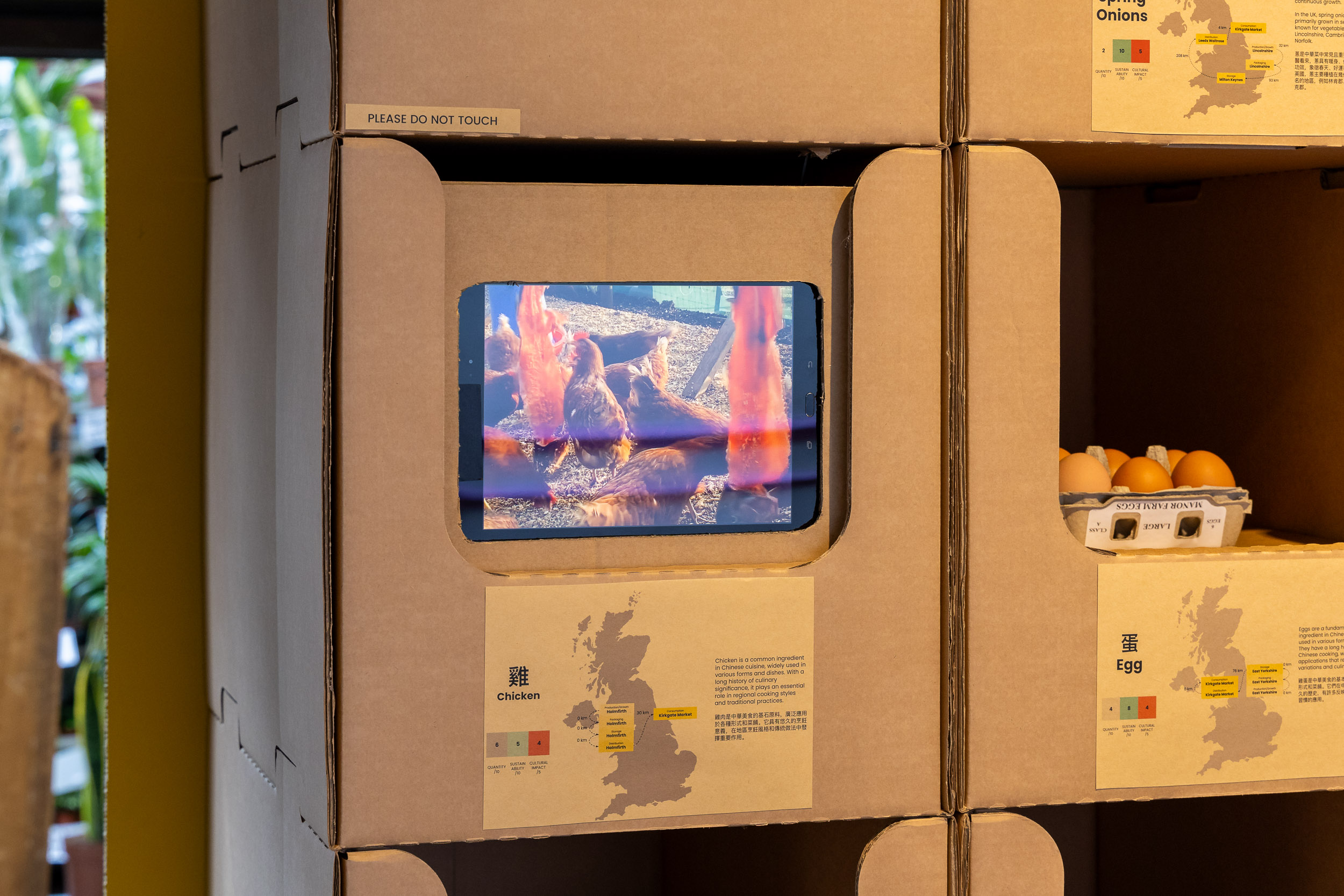
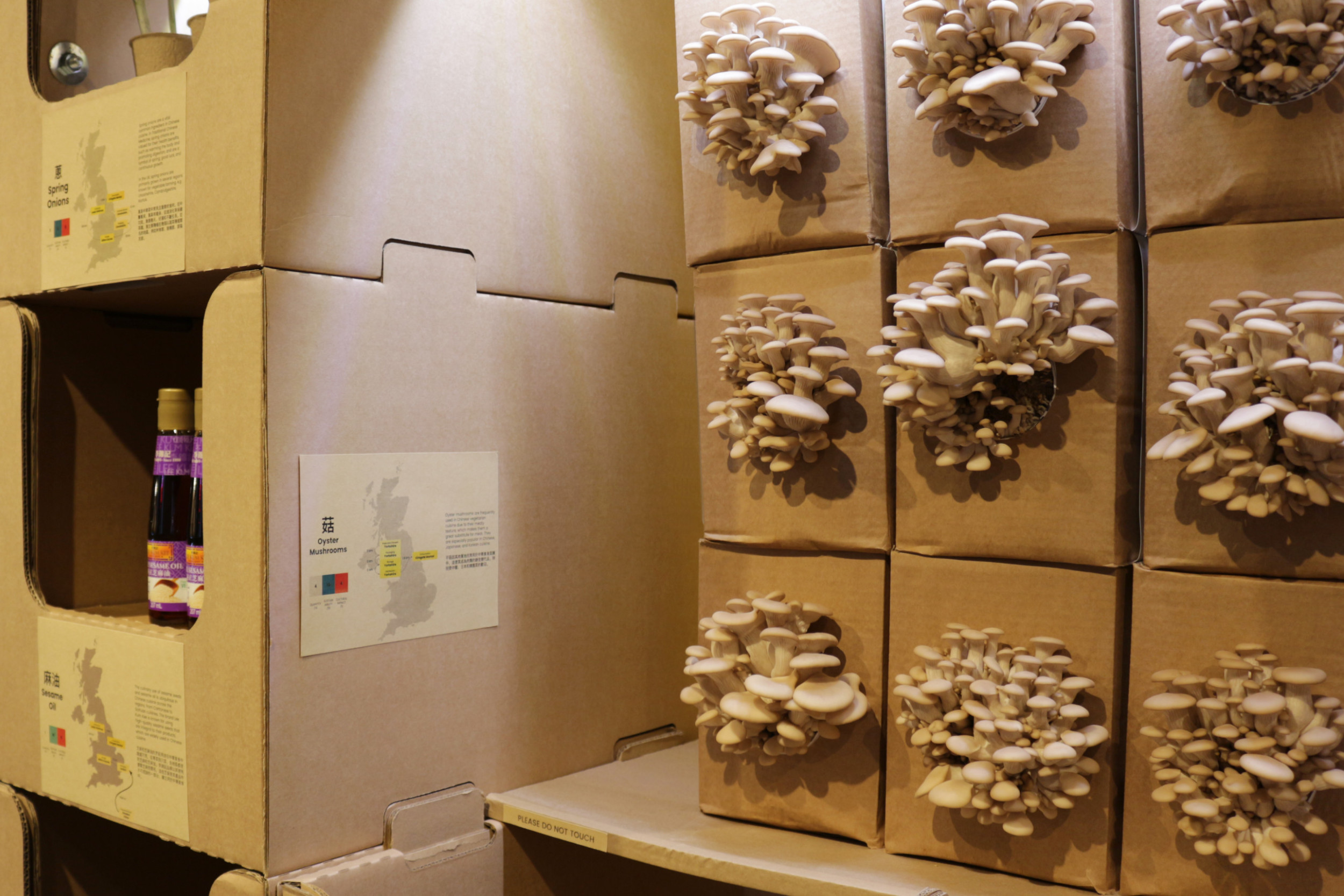
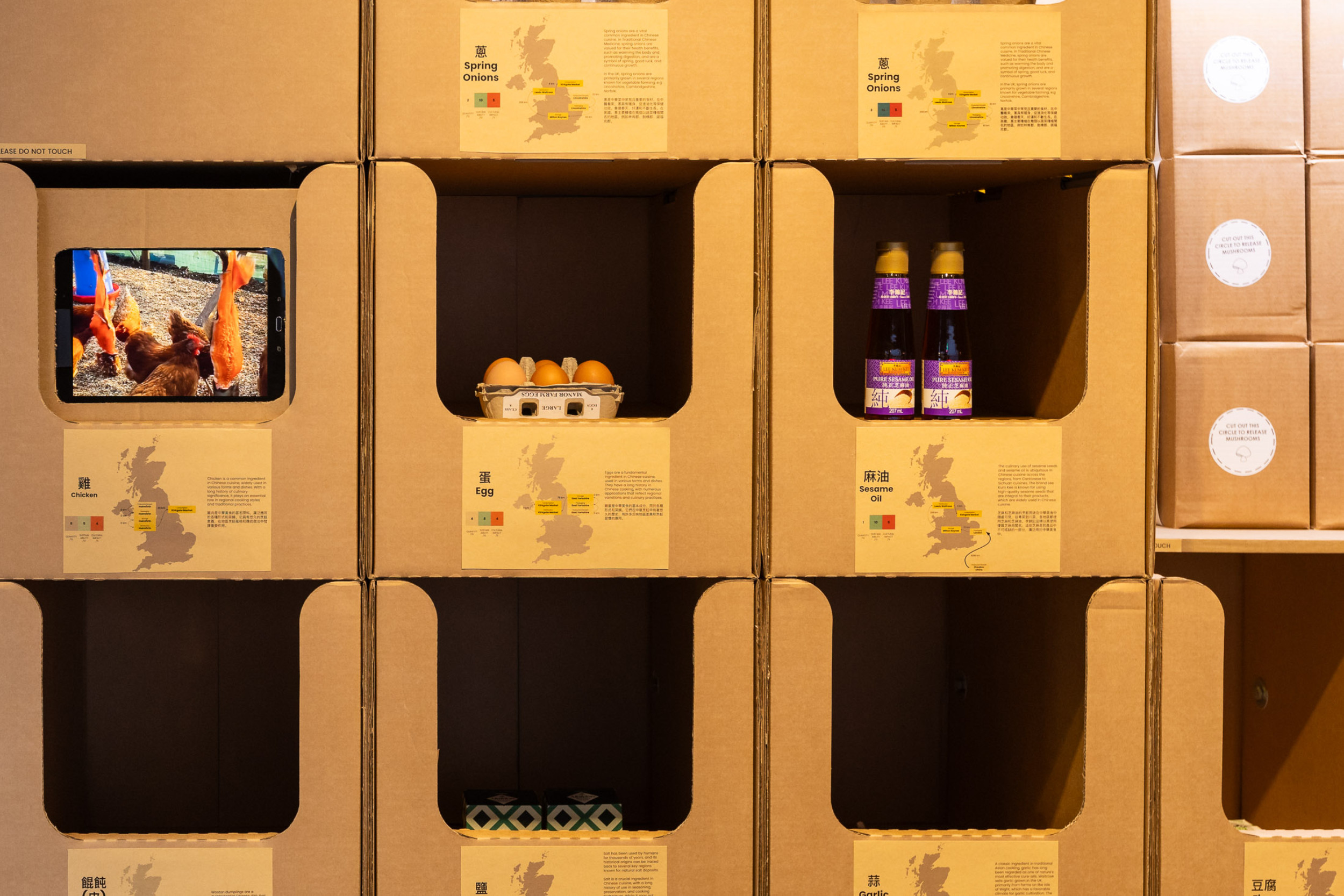
– Photography by Jules Lister –
Leeds Low Carbon Supper Club
Compass Festival 2024
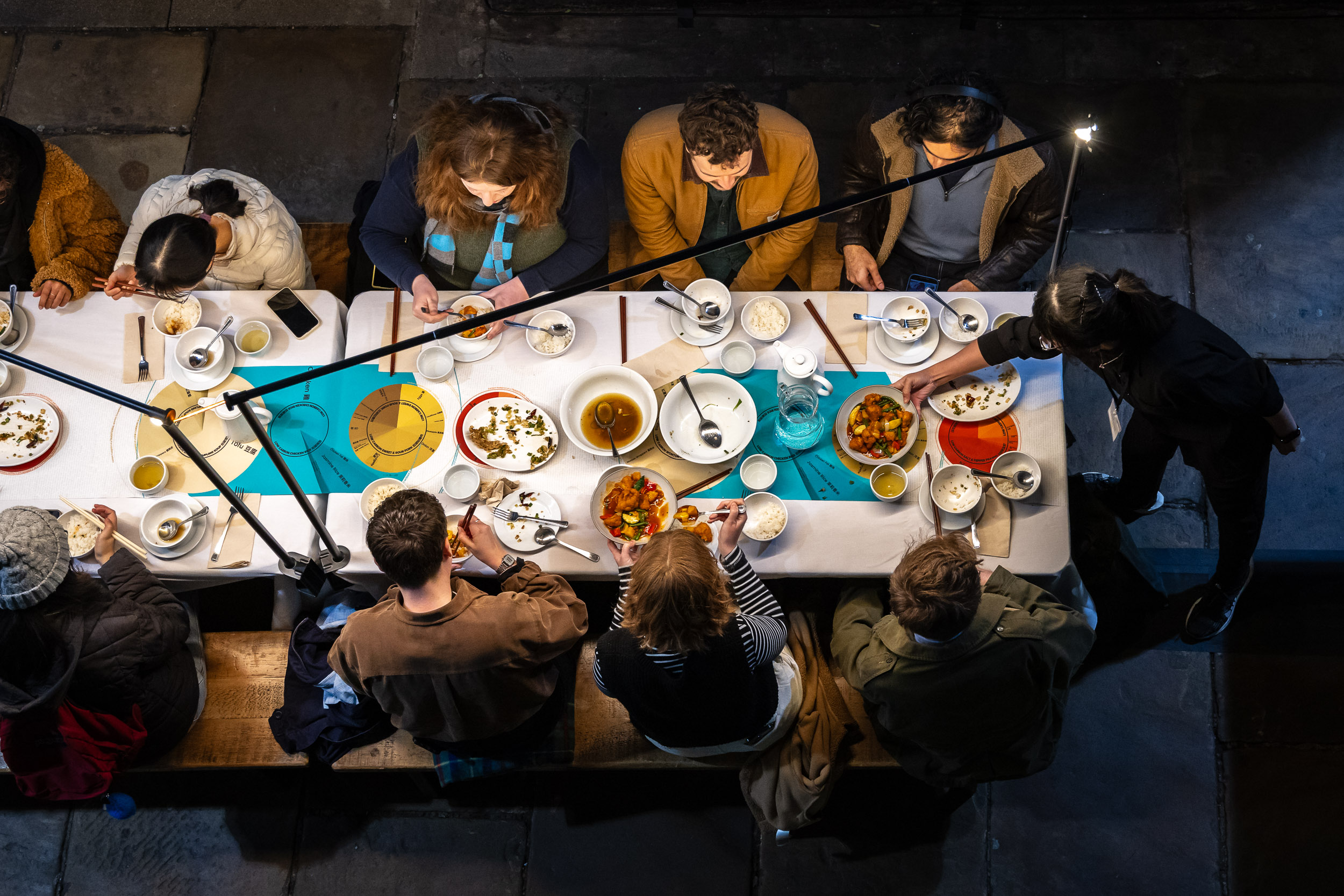
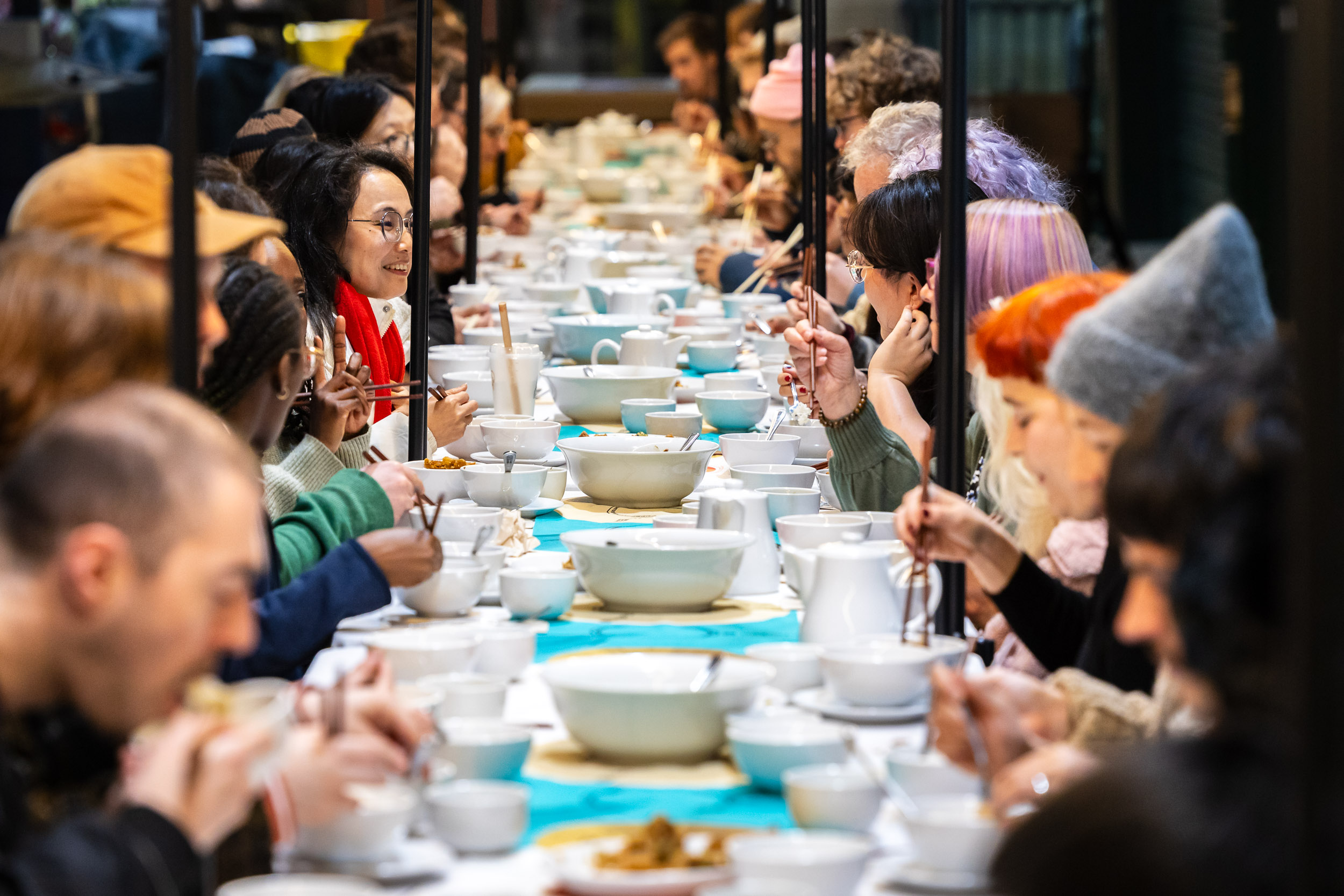
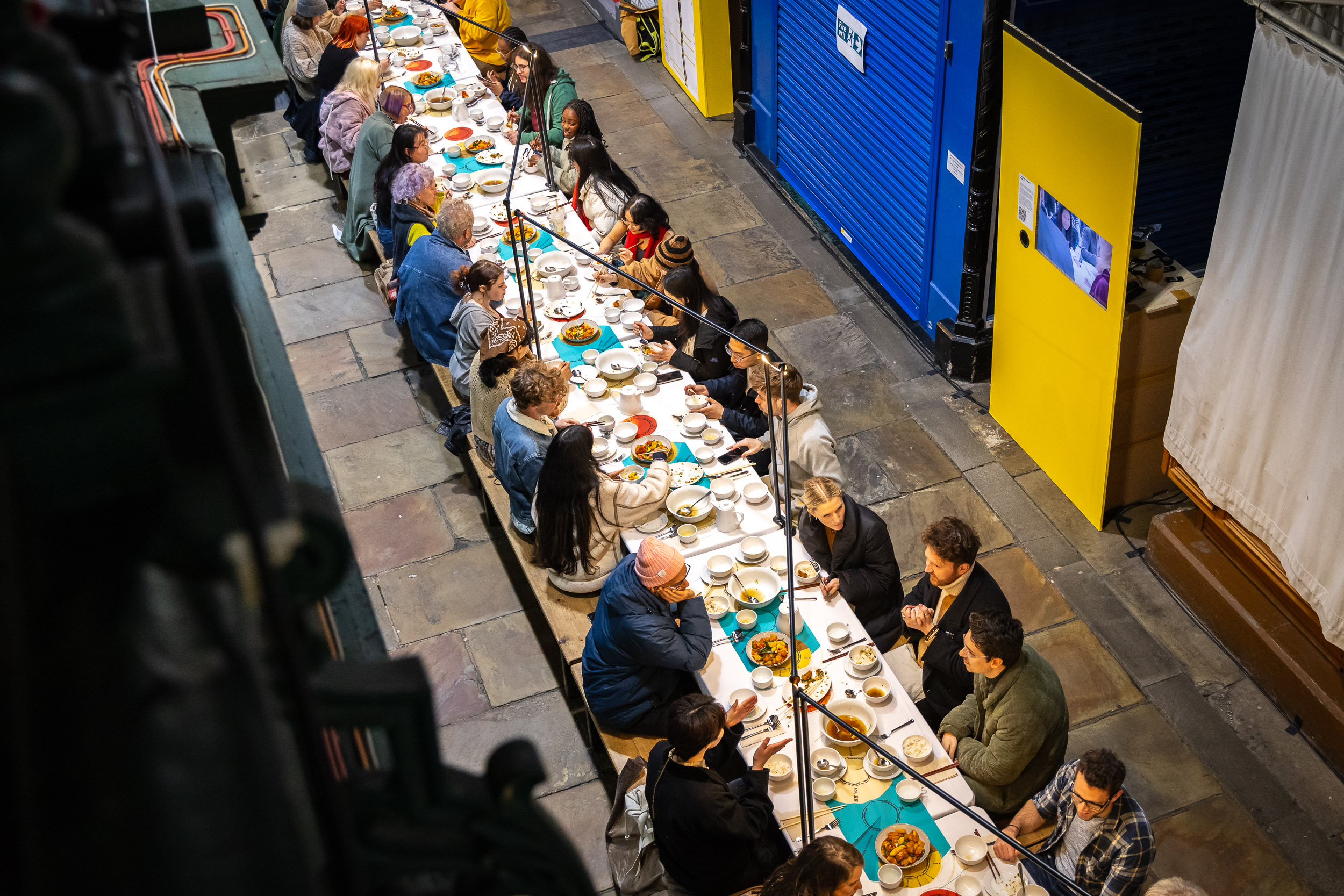
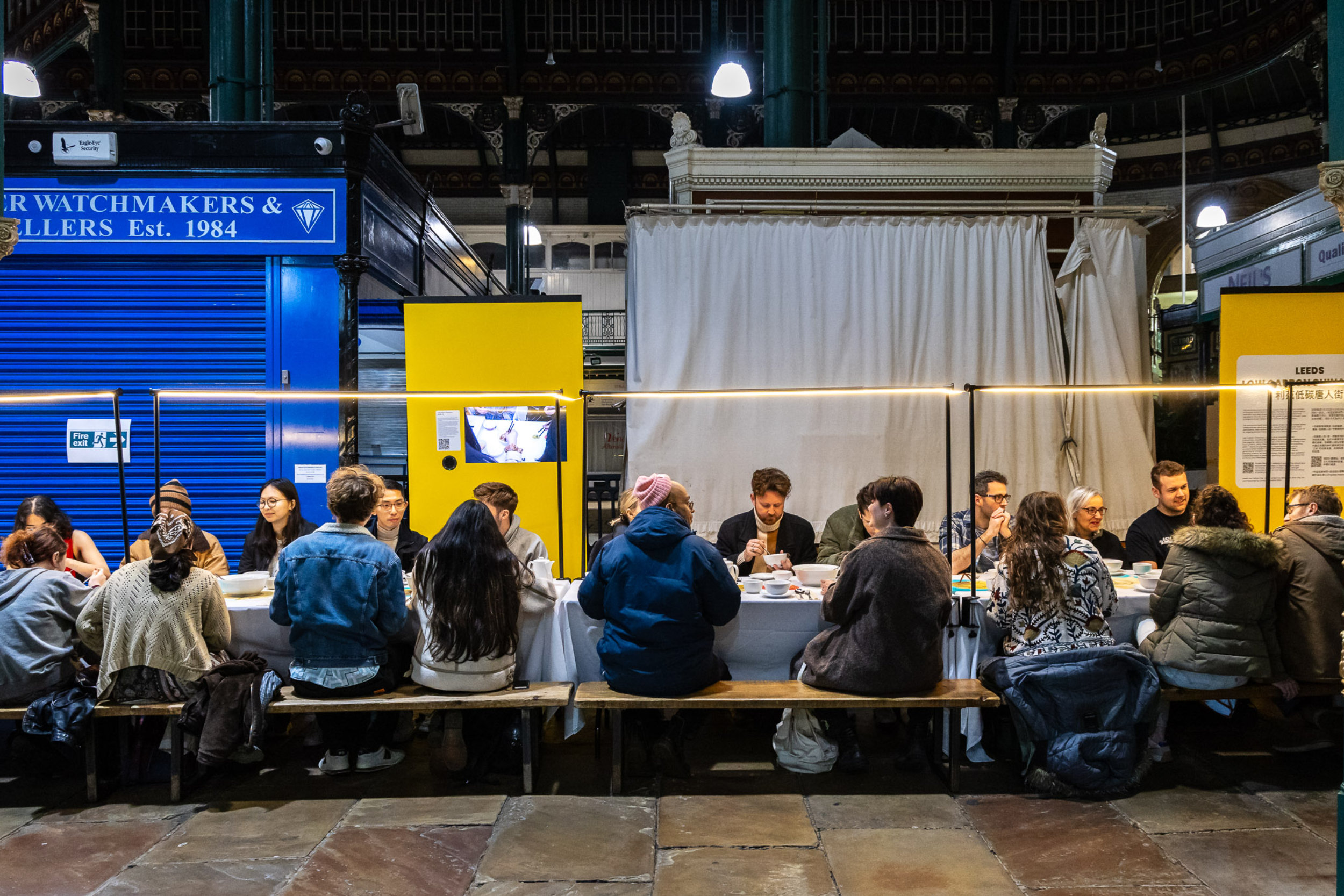
Hosted after-hours at Leeds Kirkgate Market, one of Europe’s largest indoor markets, the Leeds Low Carbon Supper Club brought together 60 members of the public, including local community champions and politicians, for a communal feast. The menu featured a series of low carbon Chinese dishes developed collaboratively with UK-based East and Southeast Asian community members, data scientists, and acclaimed food writers as part of Low Carbon Chinatown.
Ingredients used for the feast, including oyster mushrooms, chillies, and spring onions, were grown and harvested from the preceding Leeds Low Carbon Pop-Up. The Supper Club setting was also assembled using recycled component parts from the Pop-Up, reinforcing the project’s commitment to low carbon approach and circular design. The Supper Club was presented as part of Compass Festival 2024.
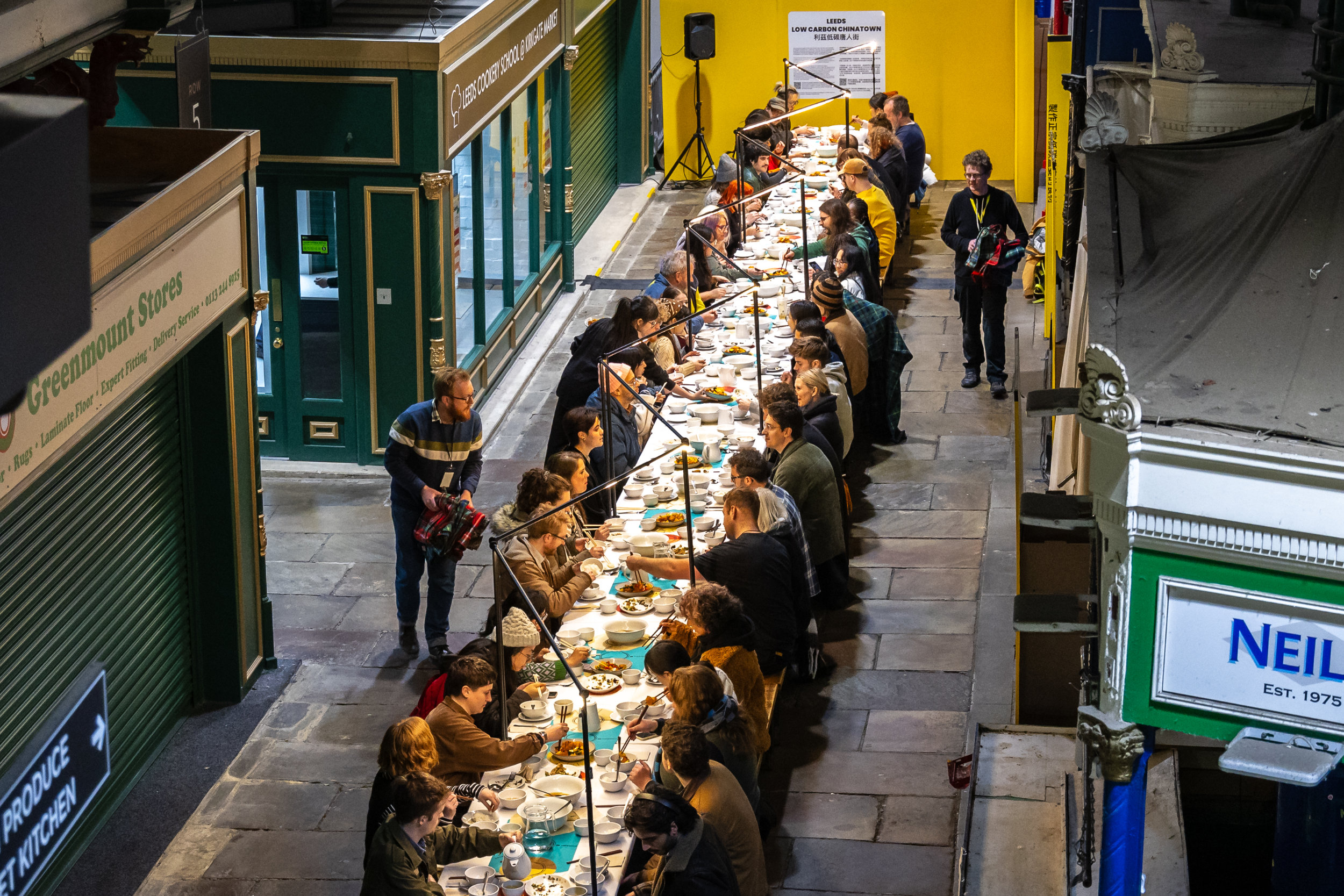
– Photography by Jules Lister –
Stretching across the full length of the communal tables, a custom 20-metre Low Carbon Table Runner visualised the carbon footprint of ingredients used in the featured low carbon dishes, compared with their traditional counterparts. Made from reusable woven bamboo fabric, the runner was overlaid with reflections from East and Southeast Asian participants, combining data with lived experience to highlight the environmental benefits of choosing low carbon food.
“Thoroughly enjoyed the event - there is such an art in beautiful food shared communally, and the environmental messaging was important, inspiring and delivered in a way that will incite positive activism.”
— Supper Club Guest
“The food was delicious and the event seemed very well run, it was obvious a lot of thought had gone into it and all the speakers were clearly knowledgeable and passionate. Very impressed!”
— Supper Club Guest
“Really great to have a reactivation and recollaboration of a well known space in the city to experience a communal meal. These opportunities are very rare so I was so appreciative of the chance to meet new people and connect over such an important topic.”
— Supper Club Guest
The Leeds Low Carbon Supper Club was designed by Ling Tan and fabricated by Matthew Sykes-Hooban, with production support from Compass Festival.
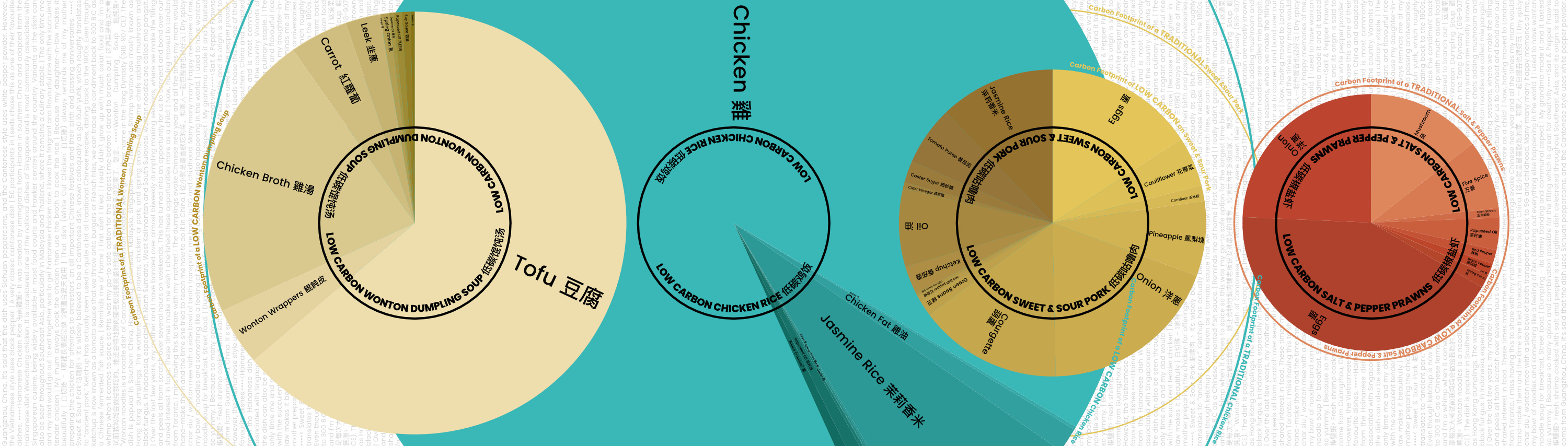
– The Low Carbon Table Runner visualises the carbon footprint of the featured low carbon Chinese dishes, scaled to a shared meal between four people.–
– Custom Low Carbon Table Runner developed for Leeds Low Carbon Supper Club, showing the carbon footprint of the 4 low carbon Chinese dishes based on a communal meal for 4 people. Zoom or pan to view image. –
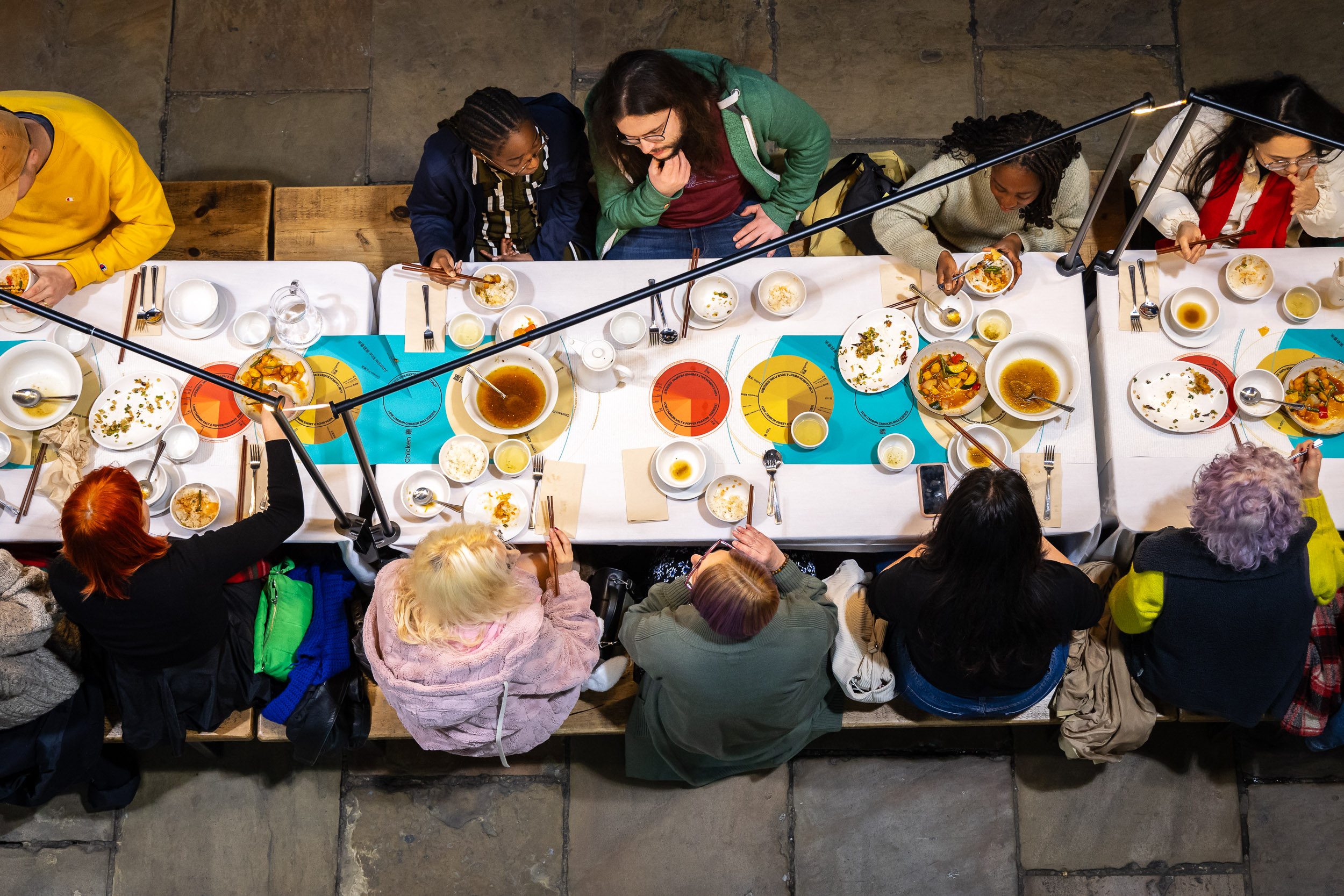
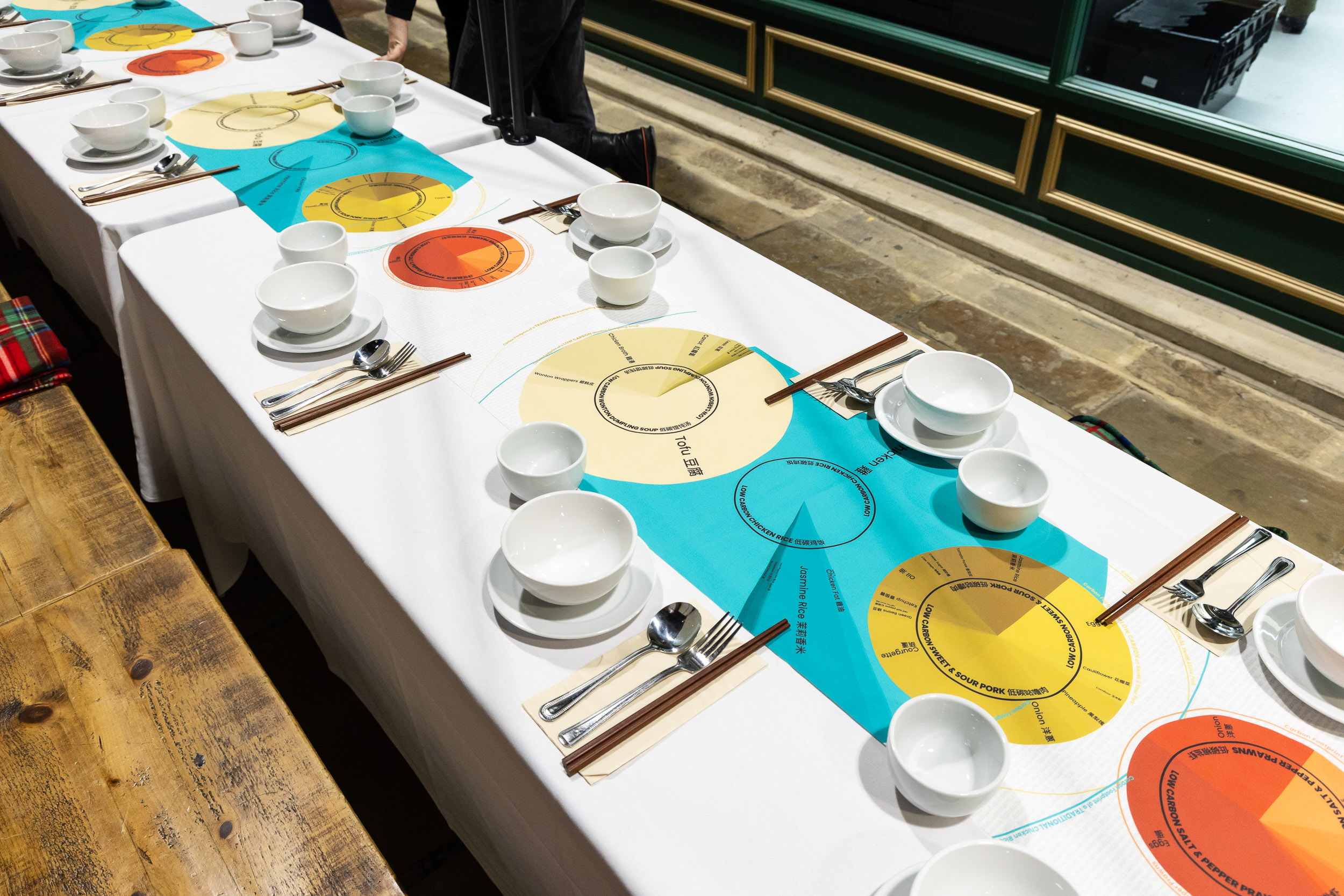
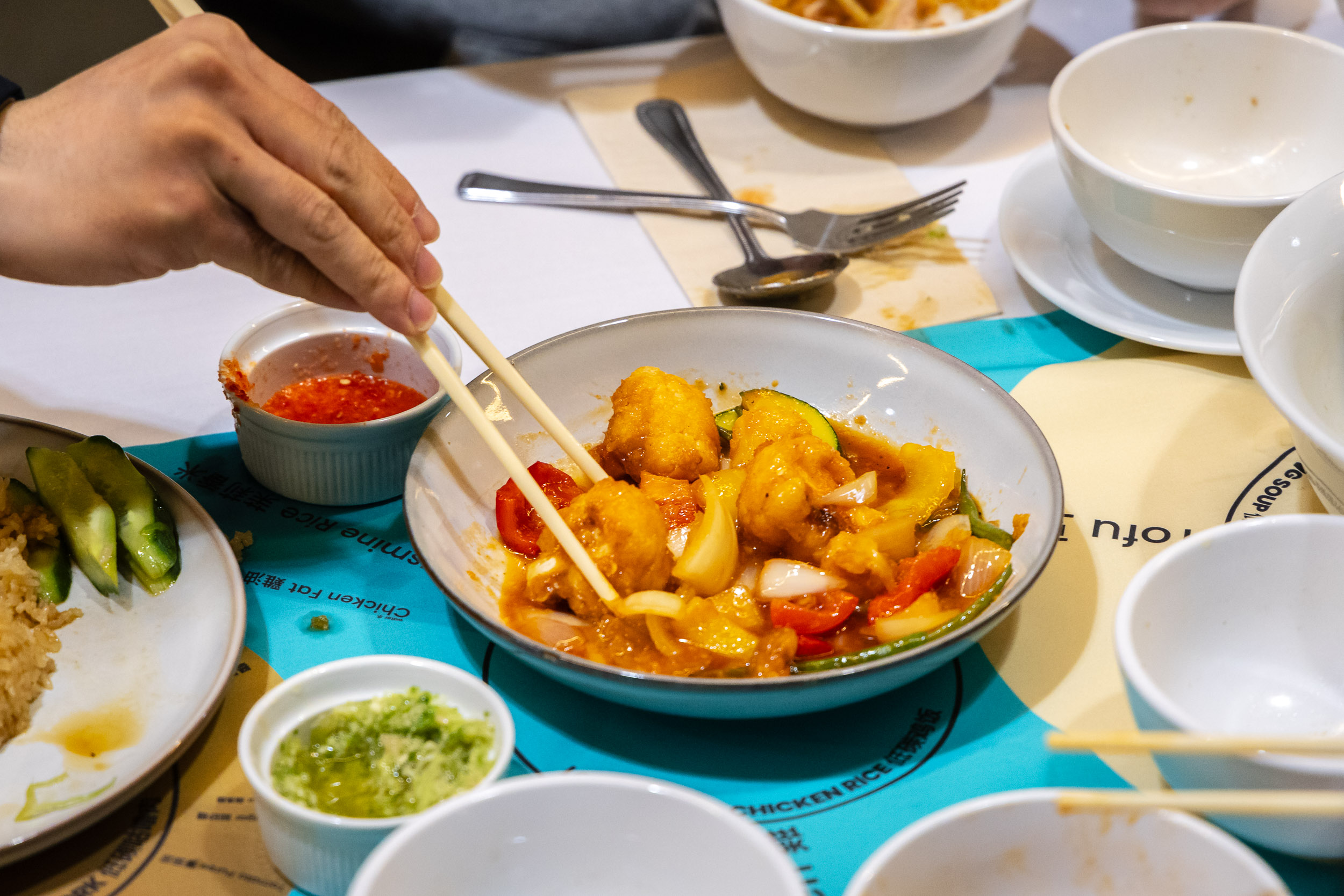
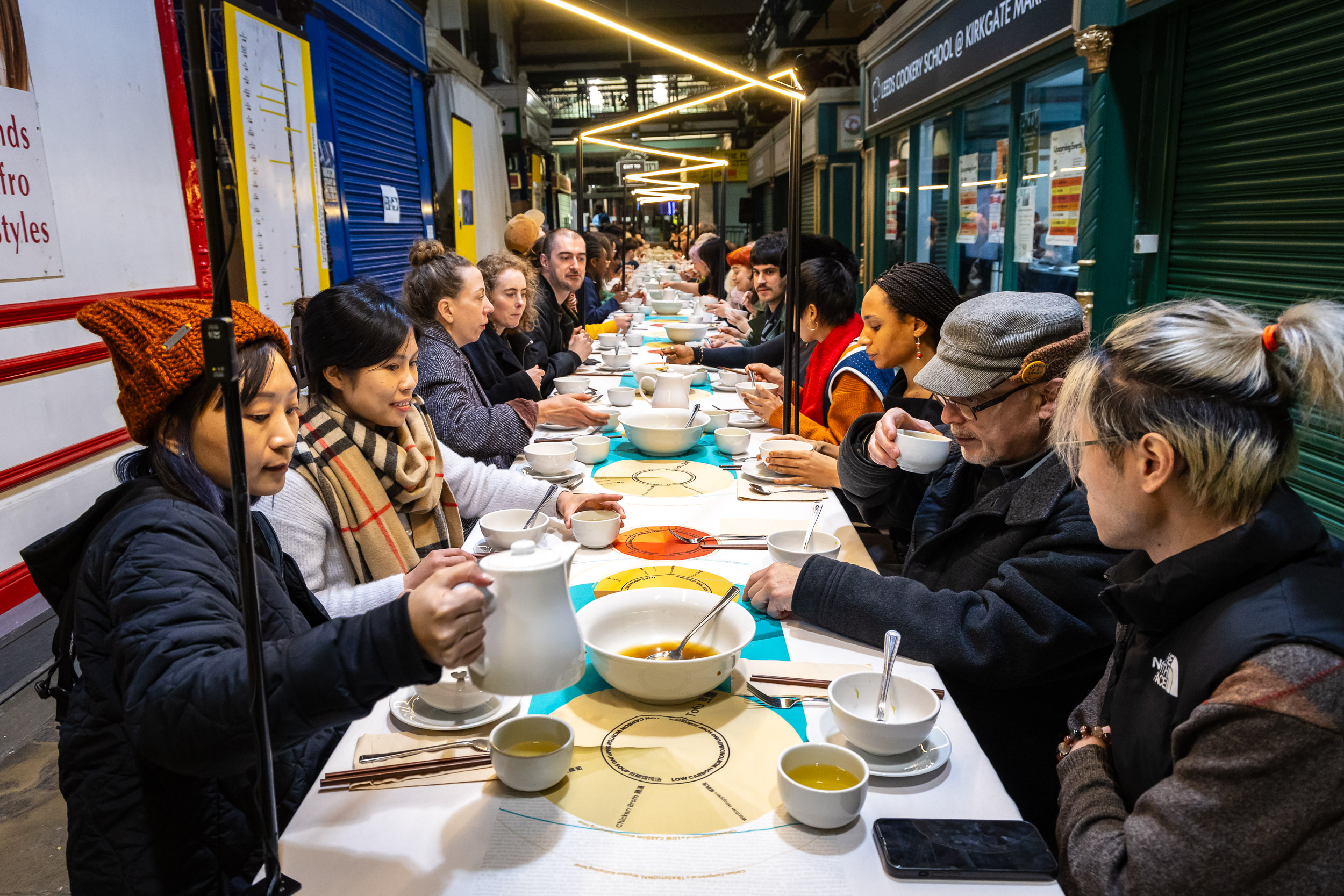
– Photography by Jules Lister –
Low Carbon Children's Banquet
Gainsborough Primary School, Borough of Hackney, London, 2025
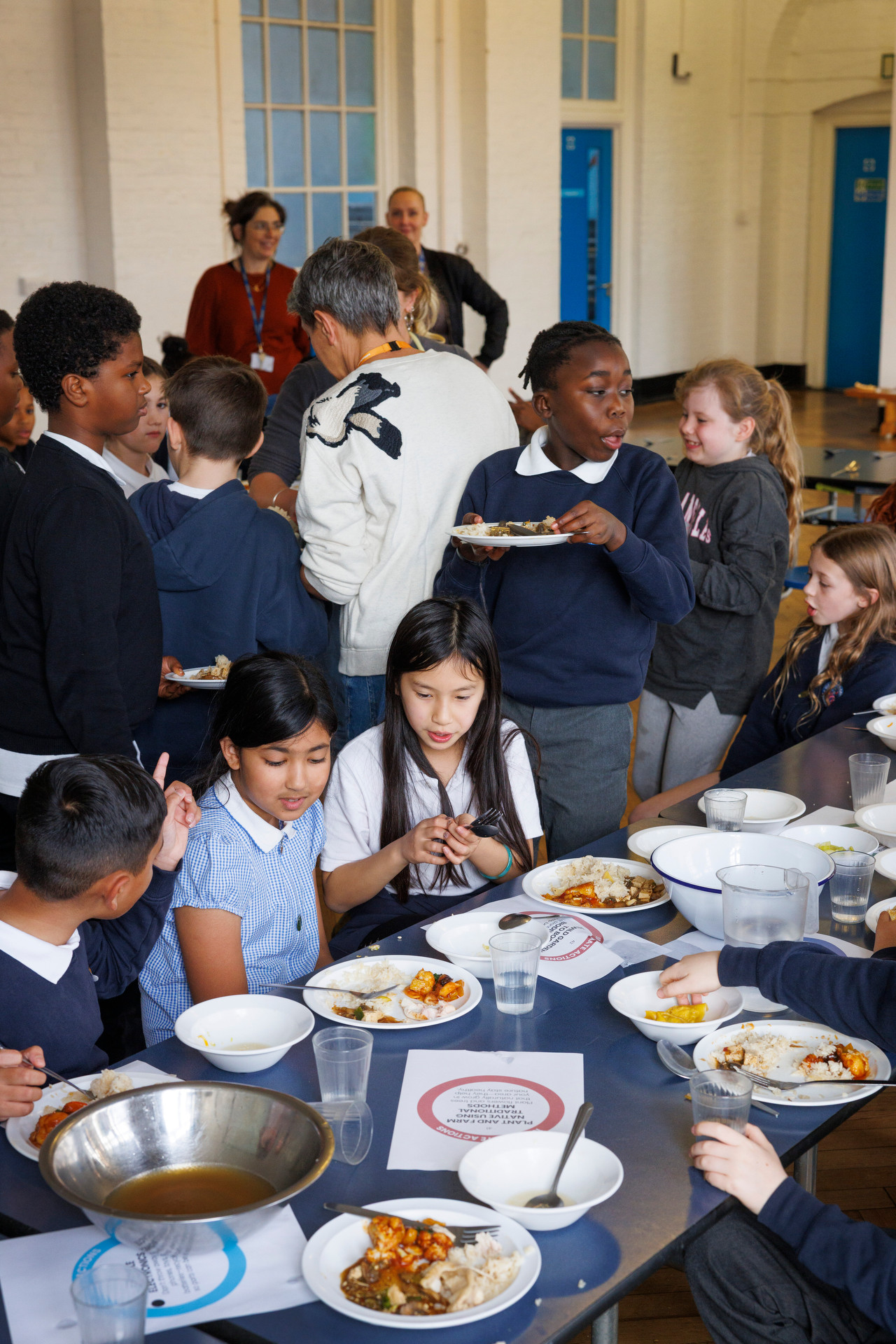
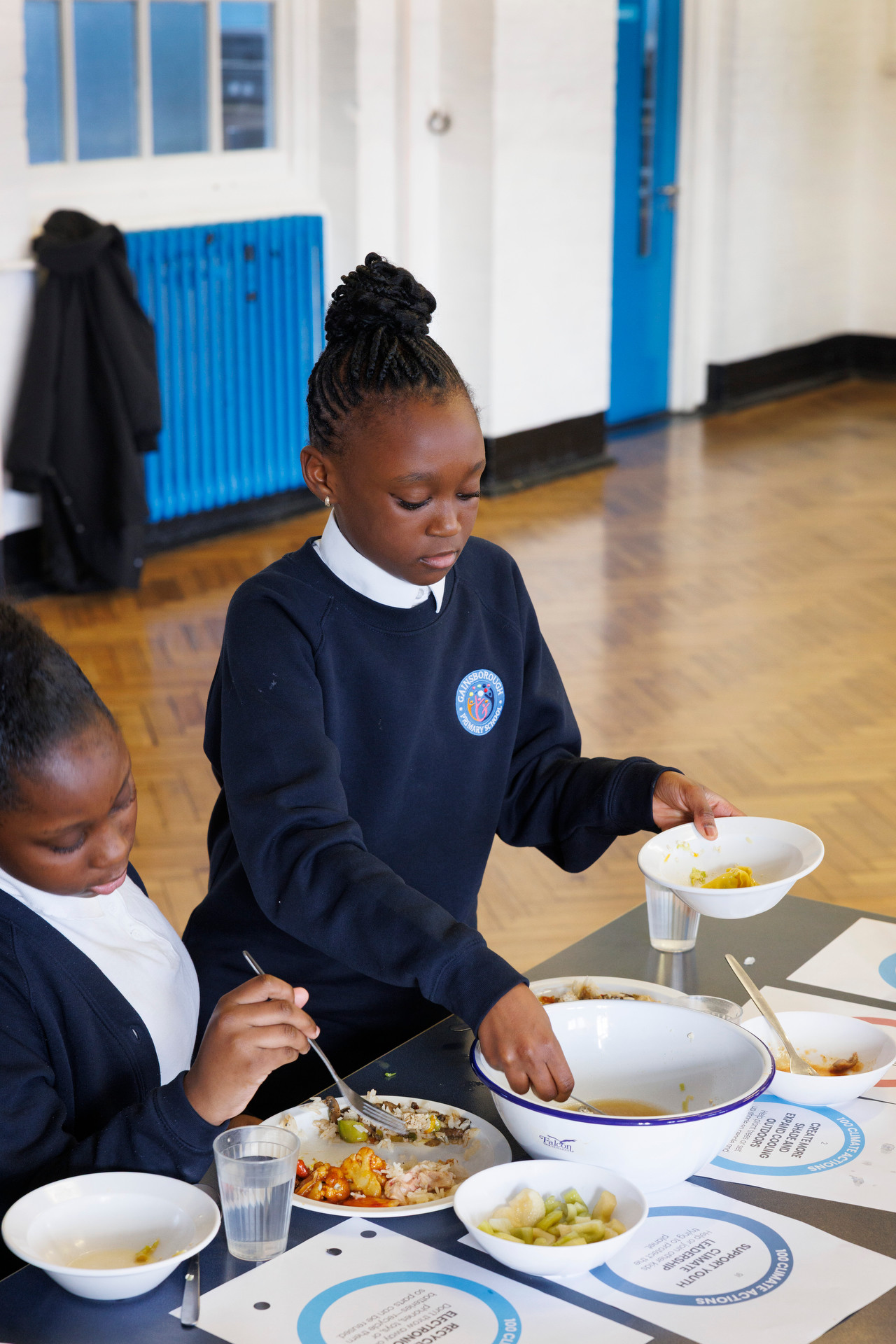
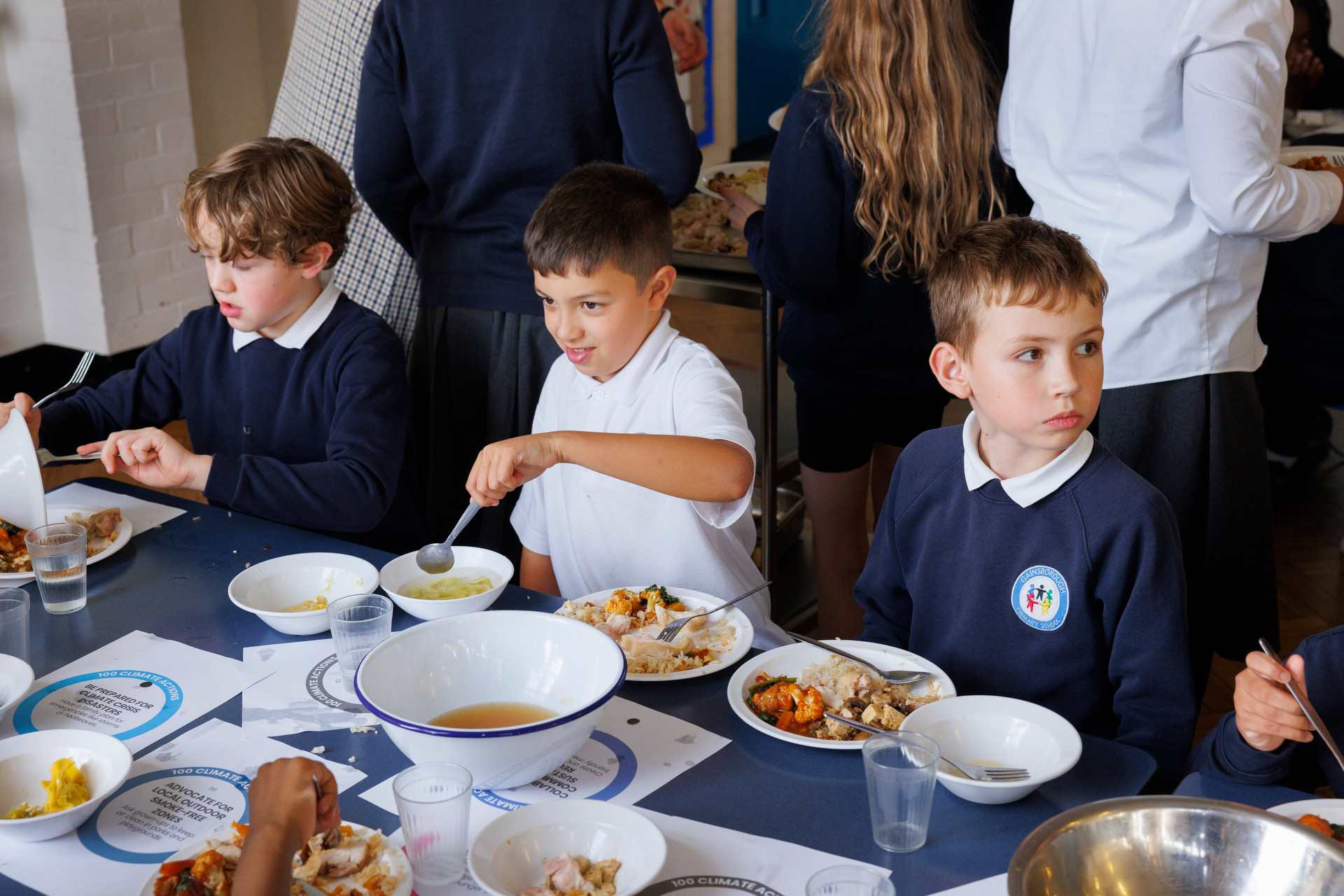
A special Low Carbon Children’s Banquet was hosted for 60 students from Gainsborough Primary School as part of Hackney’s Low Carbon Chinatown. The students gathered to sample a series of low carbon Chinese dishes, which was also featured at the finale Low Carbon Banquet For A Hundred, while learning about climate actions that they can take at home and collectively with friends and family, from the 100 Climate Actions resource toolkit.
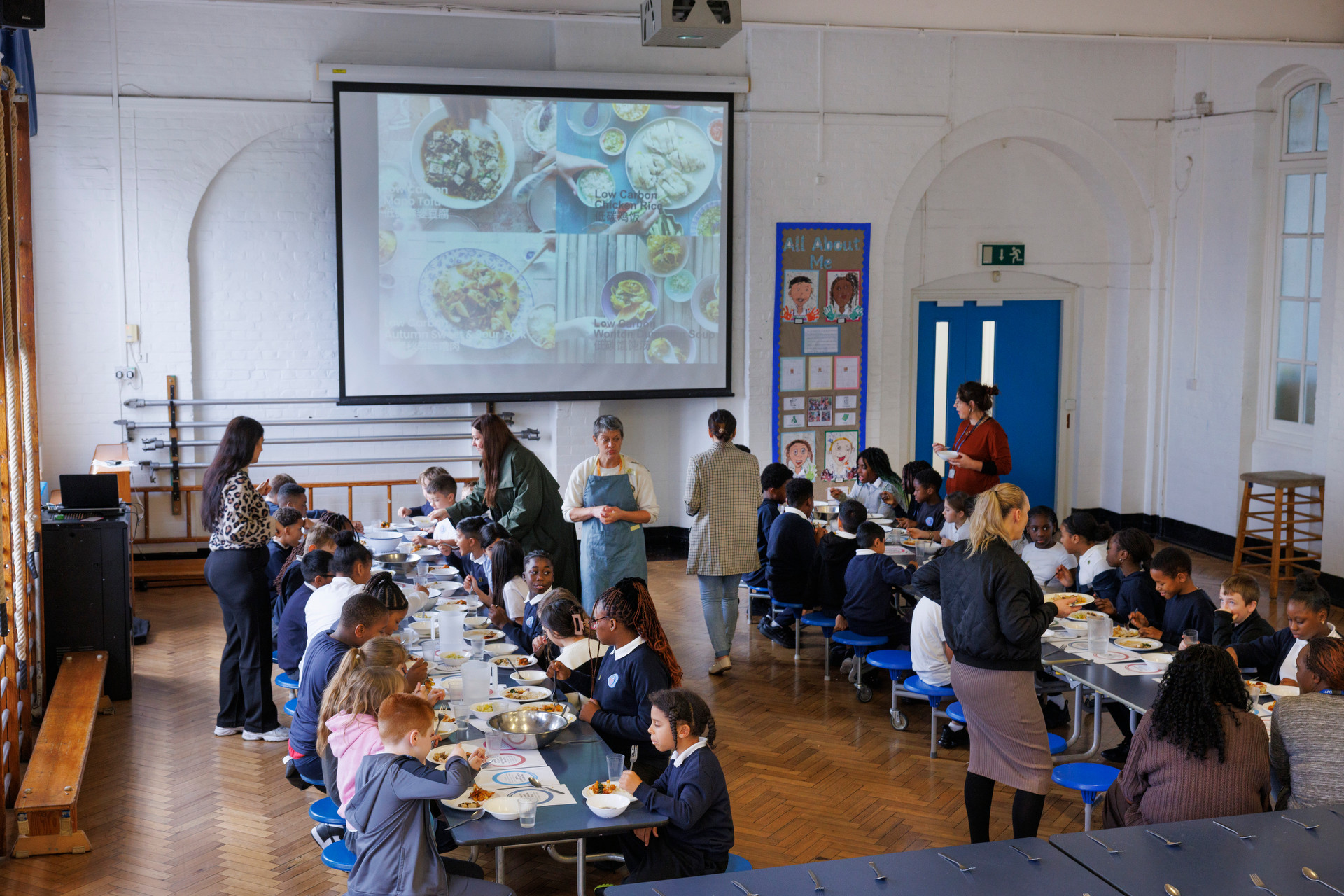
– Video of Low Carbon Children's Banquet. Videography by Nick Turpin. –
Over several months, the students participated in hands-on low carbon cooking workshops, learning to make condiments using produce they helped nurture and grow locally. They also collaborated with Hackney-based food writer and photographer Uyen Luu to develop and document a new set of low carbon Chinese dishes and condiments.
The produce they grew was later used to prepare the meal at the Low Carbon Banquet For A Hundred, creating a tangible connection between both children and adults Banquets and reinforcing the cross-generational nature of collective climate action.
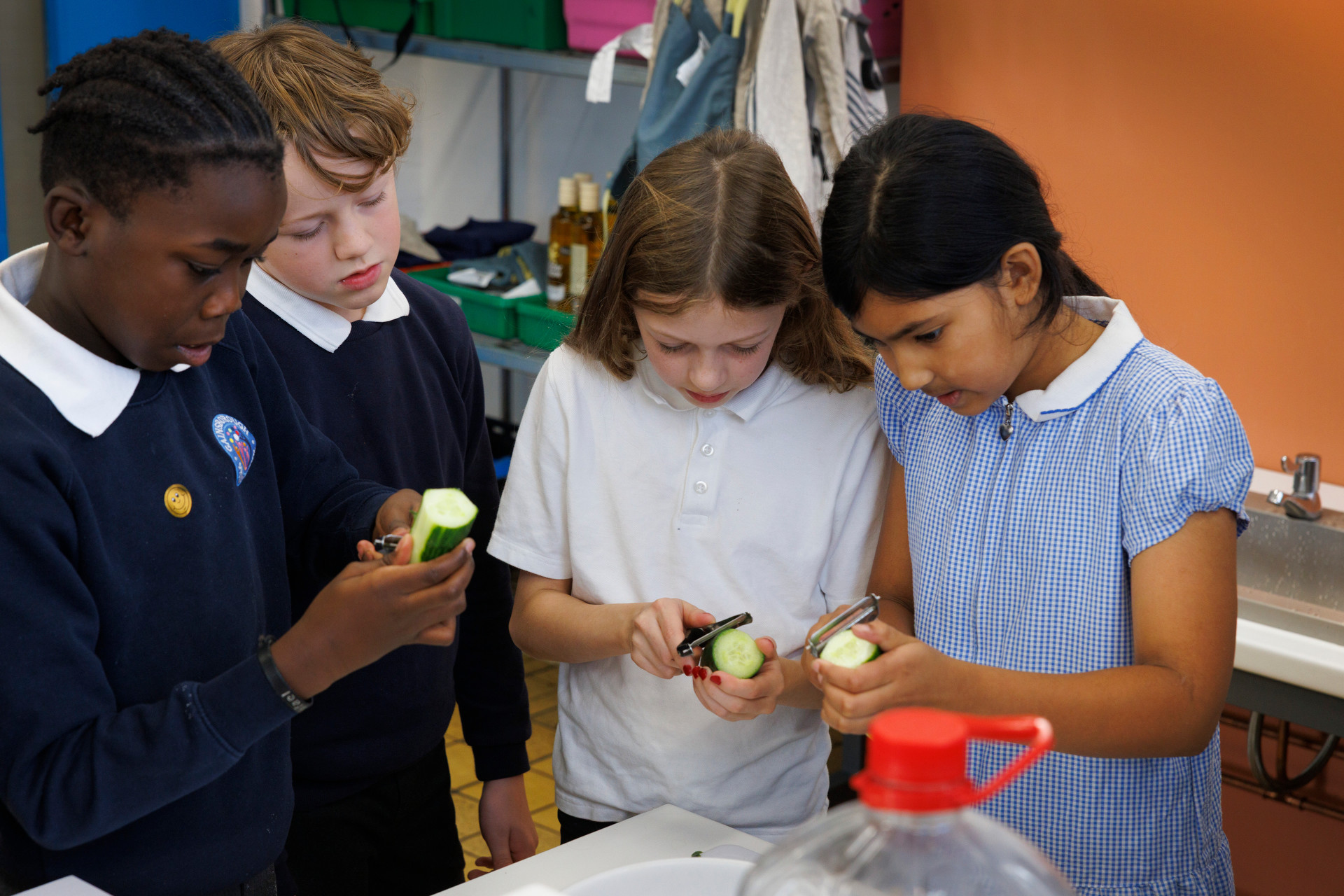
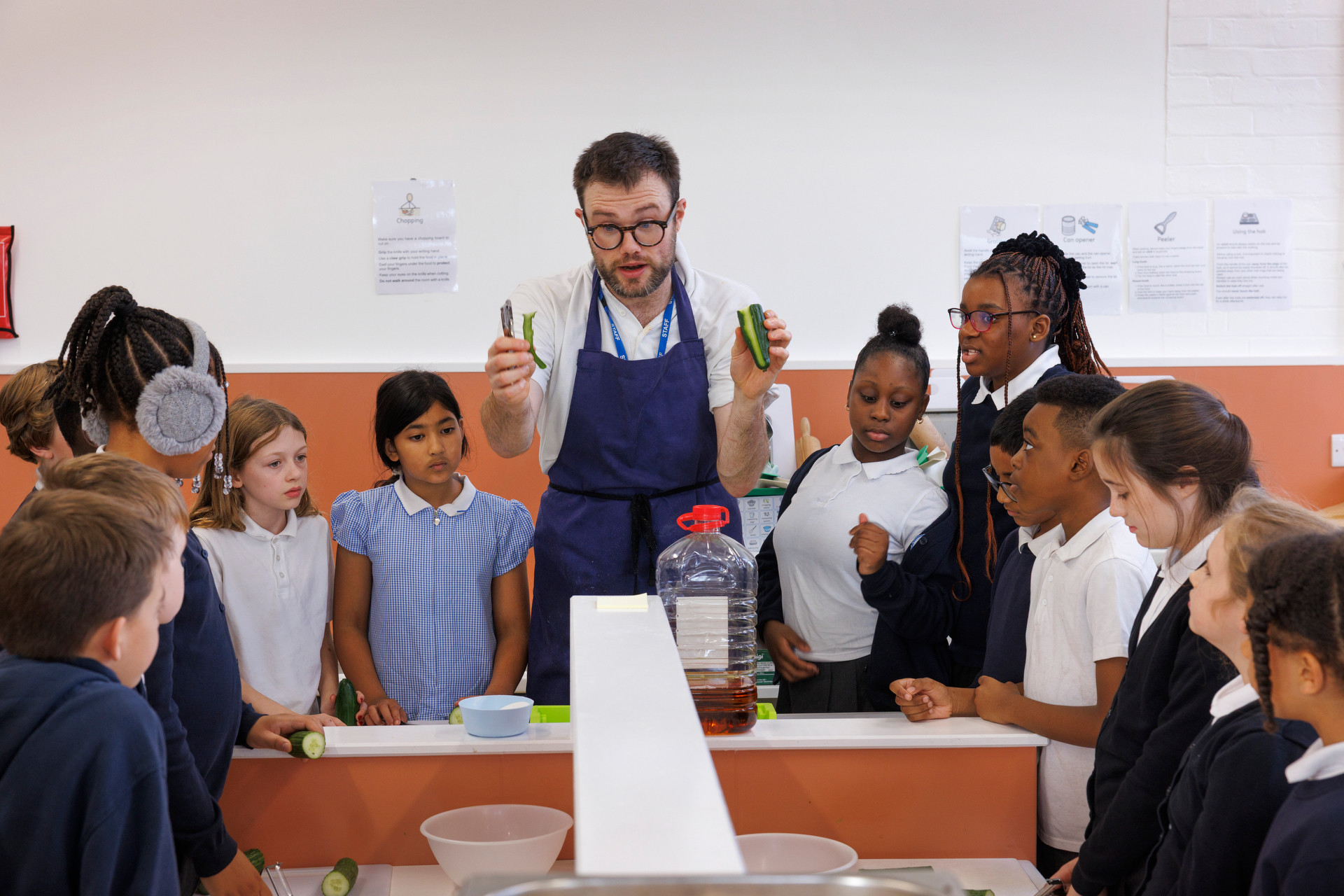
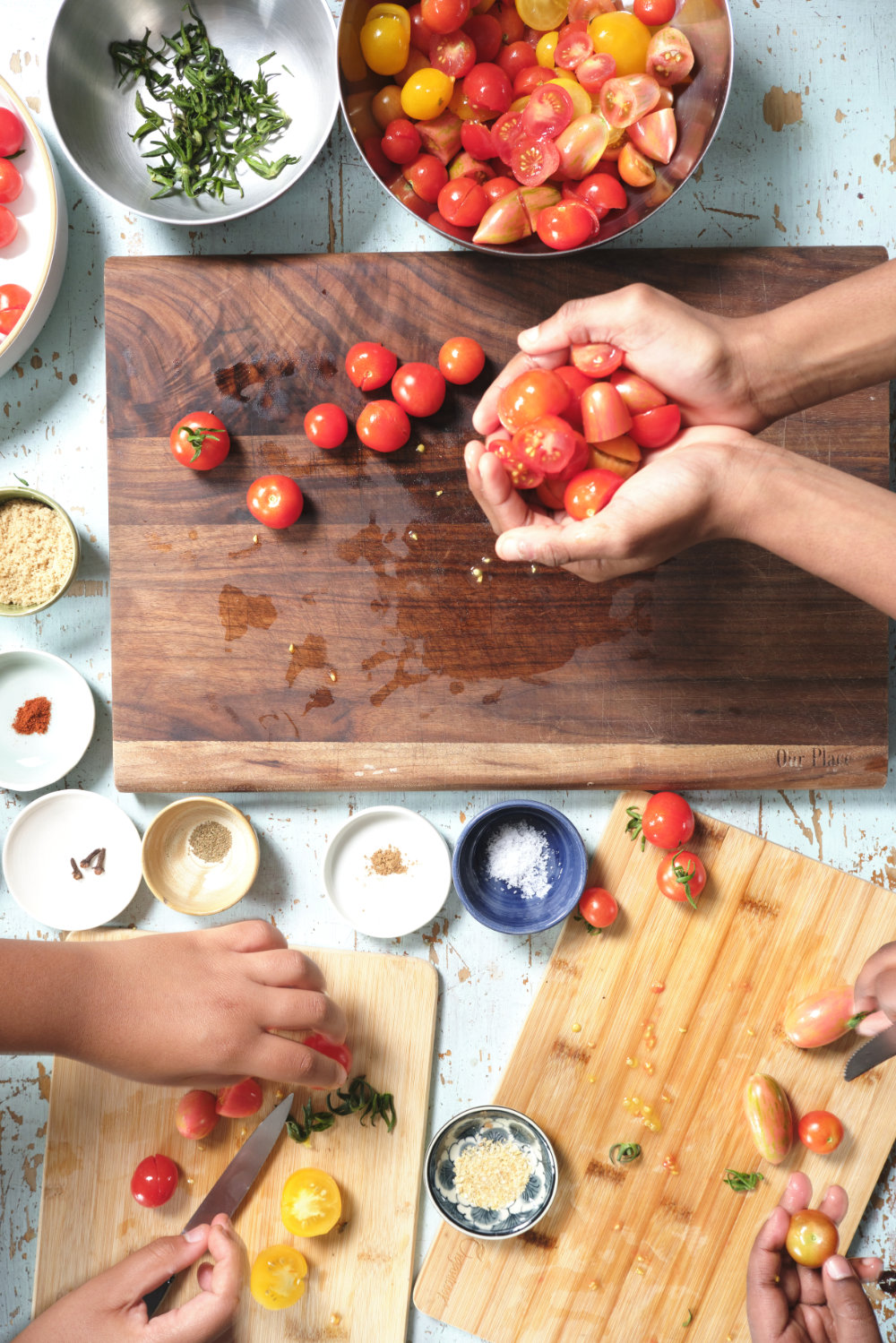
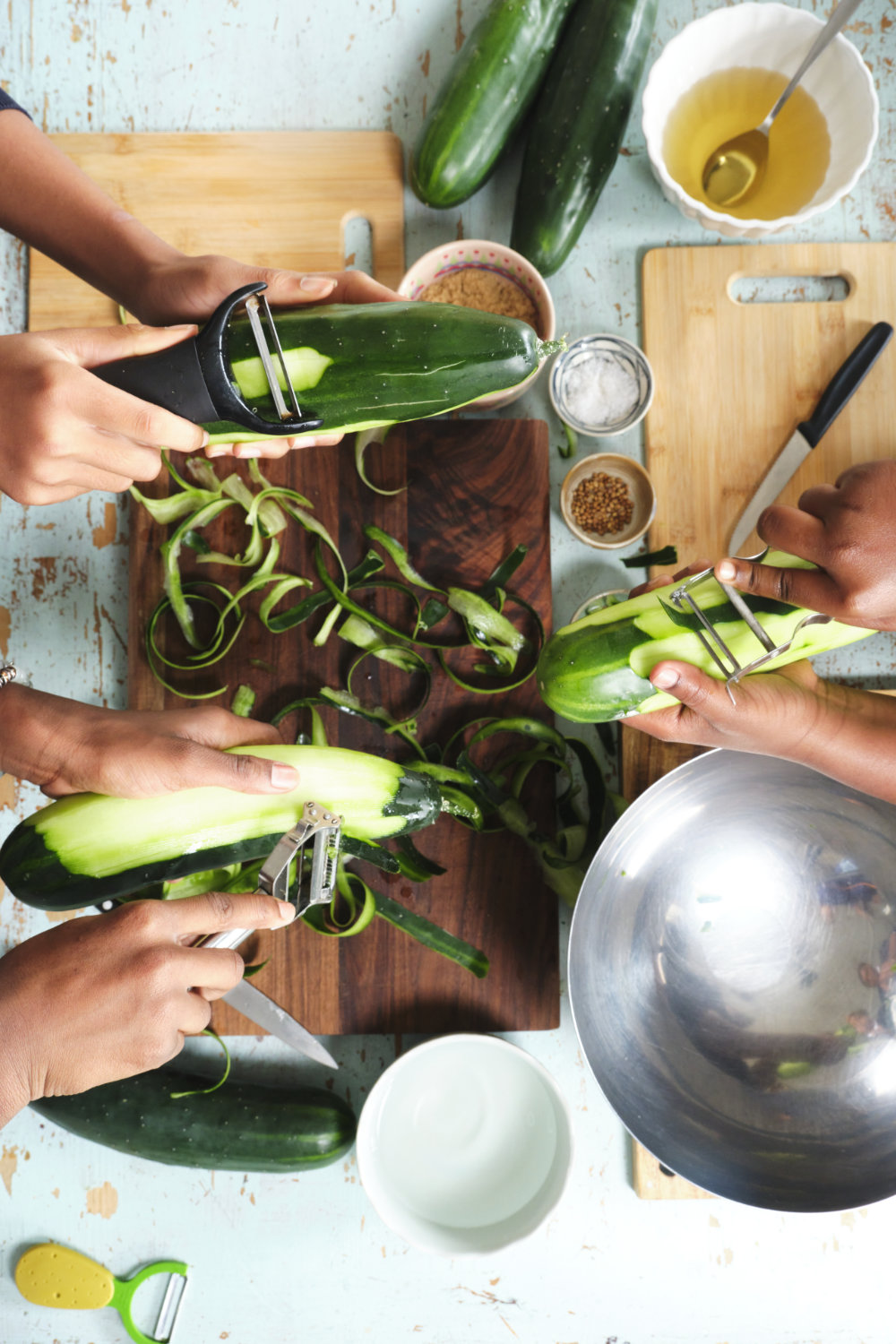
The Low Carbon Children’s Banquet will now become an annual event at Gainsborough Primary School, using the 100 Climate Actions as a resource to teach about climate change, and bringing students and their families together over a shared meal to discuss climate action and responsibility.
“A really powerful thing for the children, especially in the banquet and the learnings around it, is to see that their actions and the things that they eat daily really impact the world.”
— Rob Bronwell, Food Educator, Gainsborough Primary School
“Children see this is bigger than just them growing things in their playground, that everyone is working towards the same aim [of collective climate action]. The banquet gives a real sense of purpose and meaning for the children.”
— Jenna Clark, Executive Headteacher, Gainsborough Primary School
Special thanks to Gainsborough Primary School's Executive Headteacher Jenna Clark and the teachers who supported the project, including Rab Brownell and Debbie Lewis.
Low Carbon Chinatown Tastings
Science Gallery London 2025
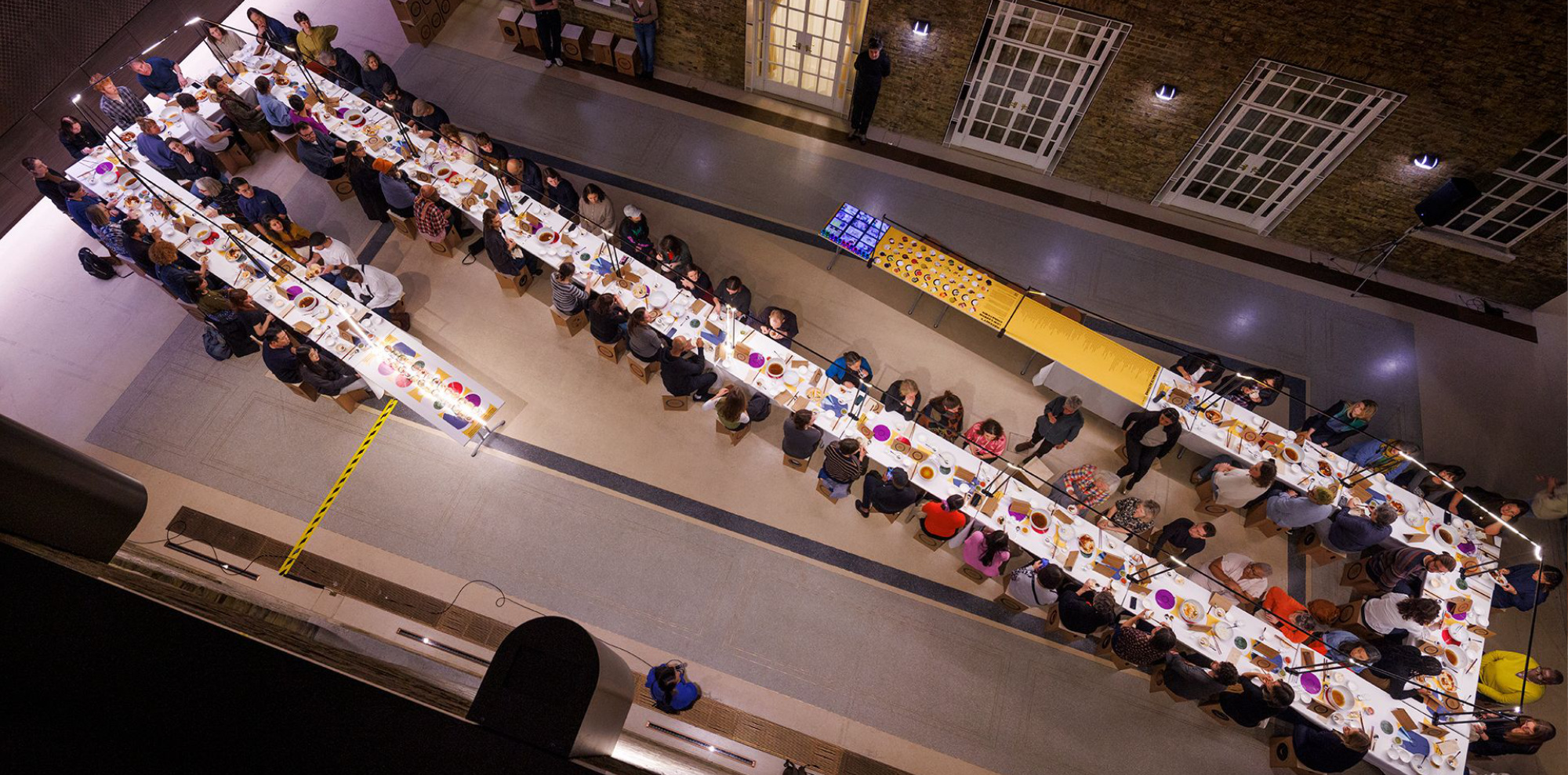
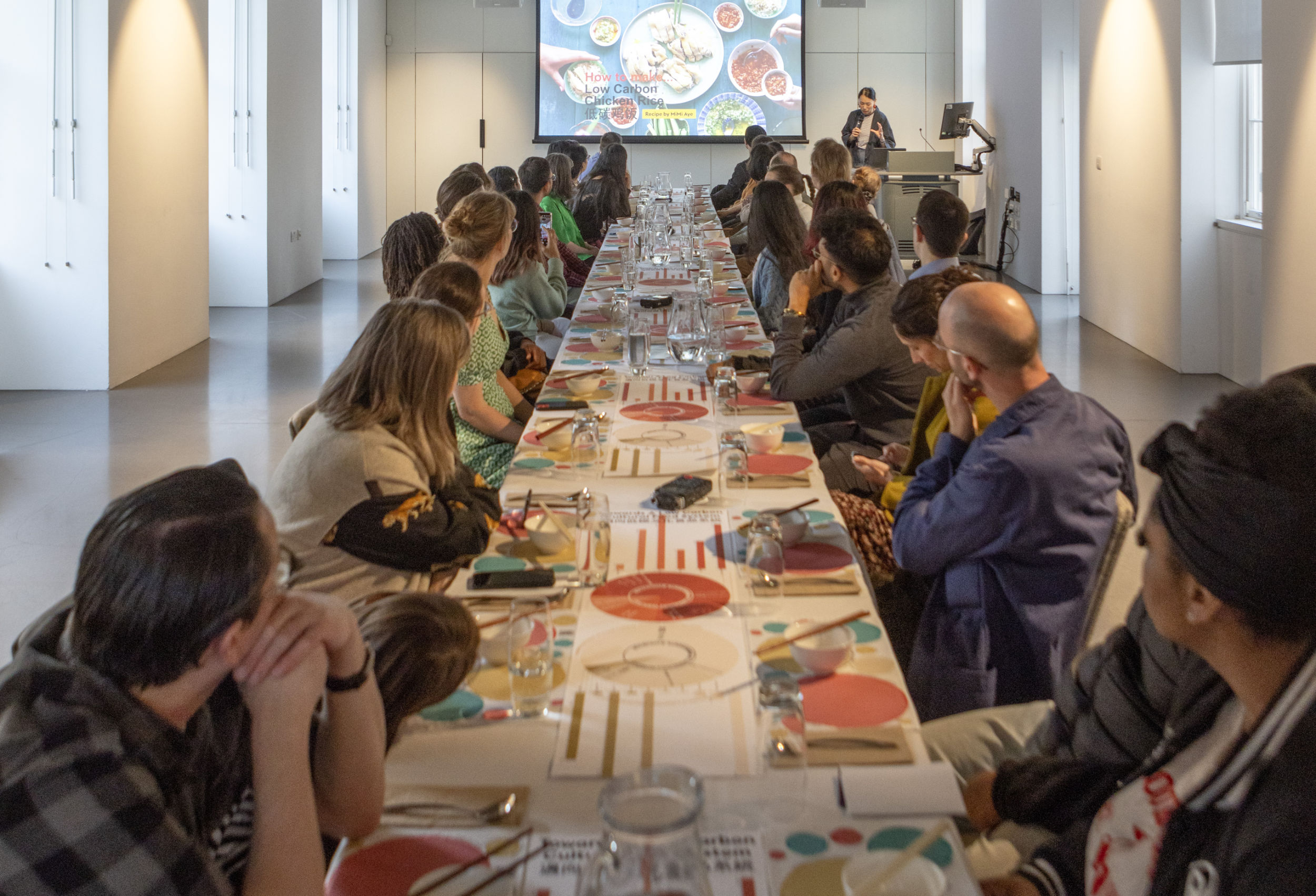
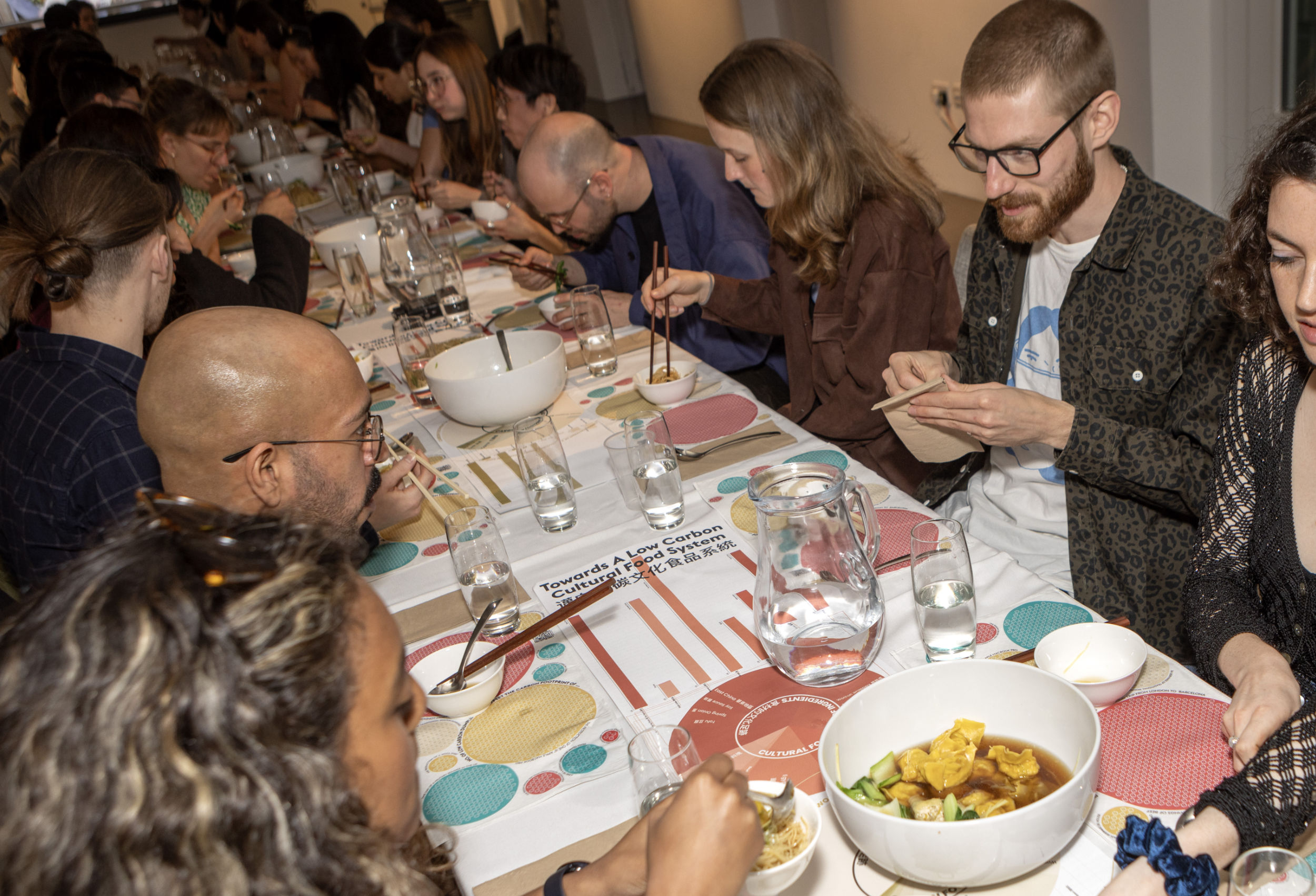
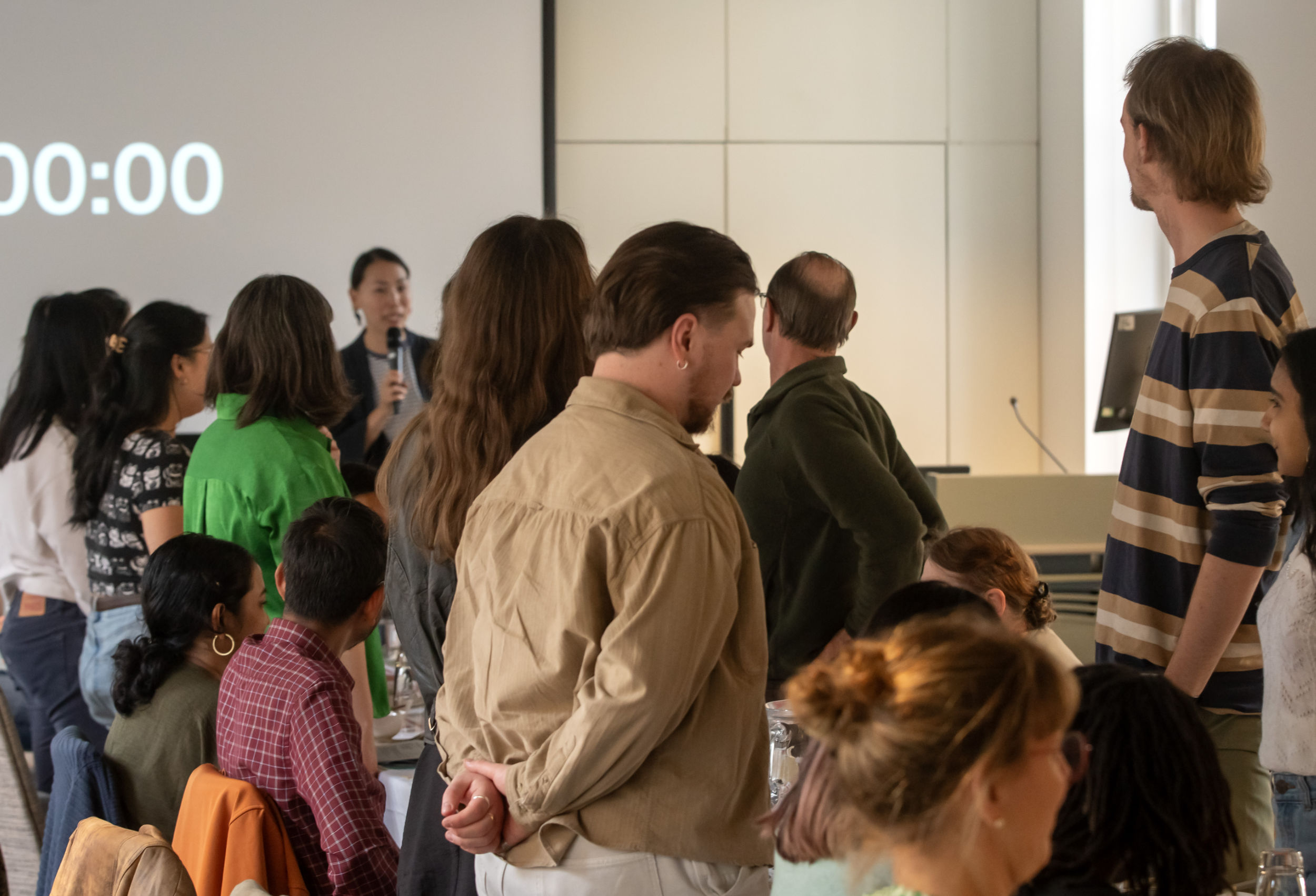
As part of Science Gallery Friday Late, we invited 72 guests to take part in two rounds of communal tastings of Low Carbon Wonton Dumplings. Through provocations from six guest experts, guests engaged in discussions on the environmental impact of our food system, the gap between actual and prescribed climate actions, and the complex ways in which food culture, identity, and habits influence sustainable food choices.
The guest experts included cookbook author Shu Han Lee, Lau Chair of Chinese International Relations Astrid Nordin, Climate advocate Adithi Sathiyan, Author & Entrepreneur Alexandra Deschamps-Sonsino, Researcher & Artist Angela YT Chan and King's College Researcher & Lecturer Thomas White.
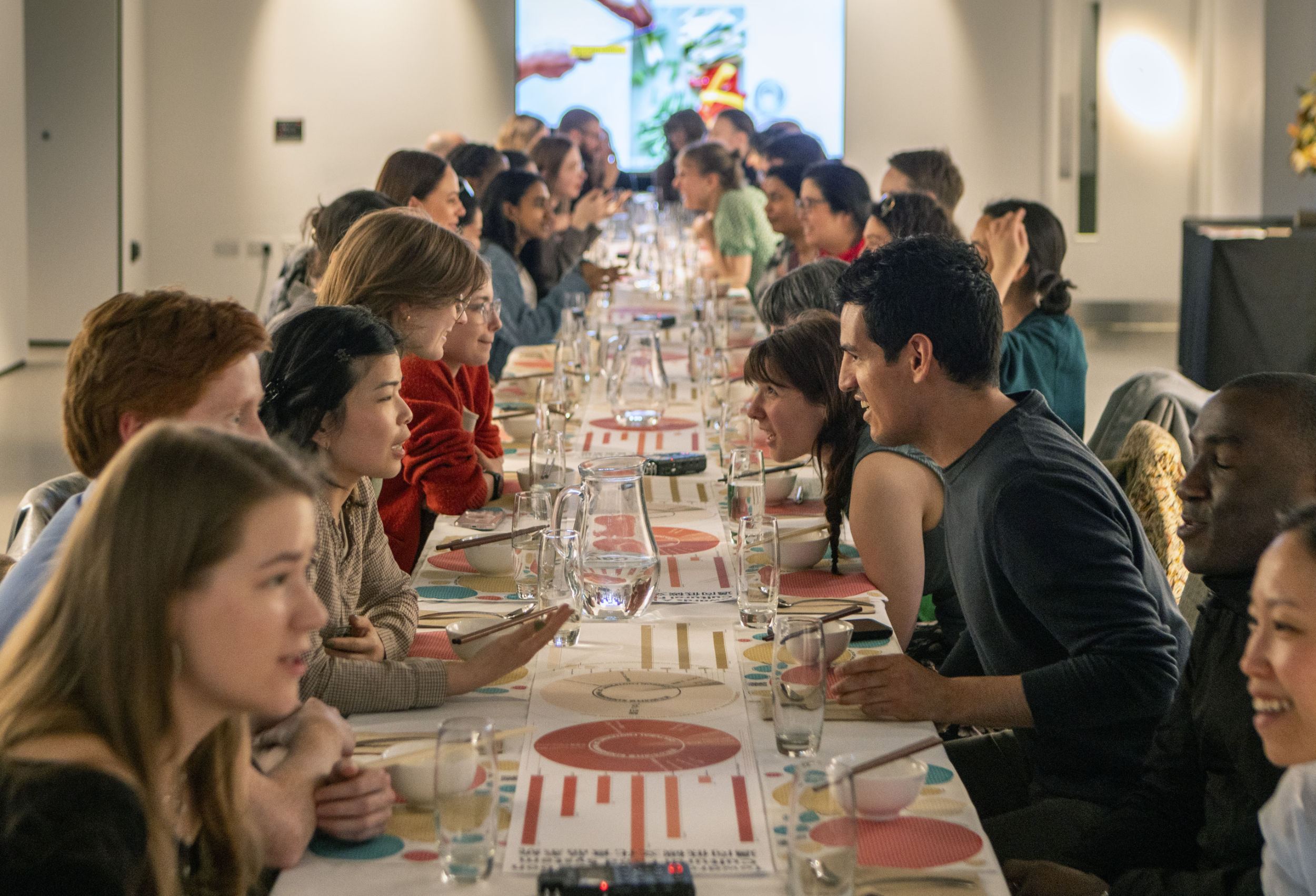
– Photography by George Torode –
A custom Low Carbon Table Runner stretches across the full length of the communal tables. One side visualises the carbon footprint of a Low Carbon Wonton Dumpling Soup, showing the travel emissions and distance of each ingredient from production to consumption. The other side illustrates the cultural footprint of the dish by tracing the historical origins of each ingredient and mapping how many ingredients are connected to each country of origin. The runner highlights the complexity of our food system—the pursuit of sustainability, and the cultural impact it can have over time.
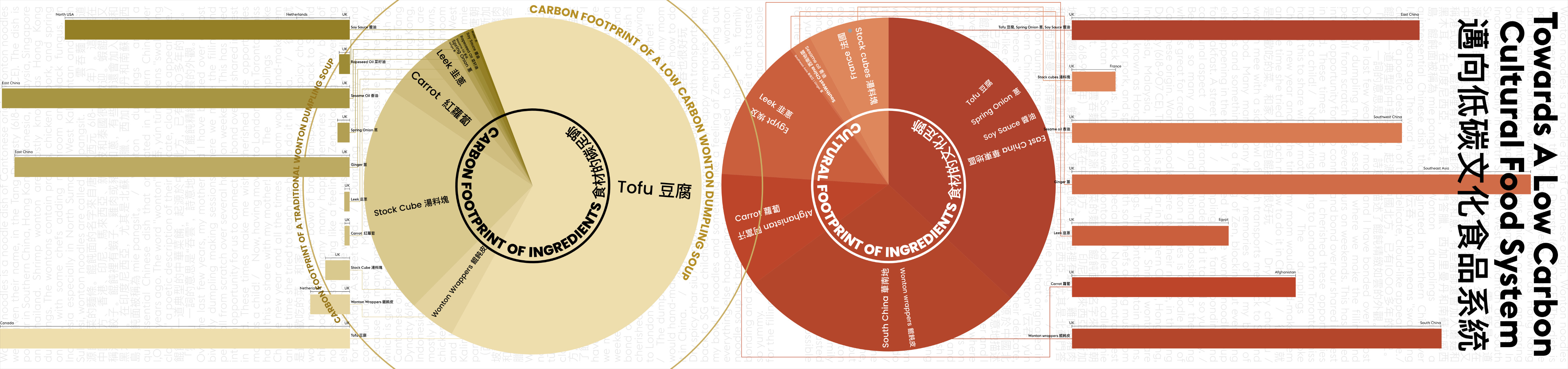
– Custom Low Carbon Table Runner developed for Science Gallery Tastings –
– Custom Low Carbon Table Runner developed for Science Gallery Tastings. Zoom or pan to view image. –
Each guest was invited to take home a climate resource in the form of a custom Low Carbon Table Mat. The mat compares the carbon footprint of a bowl of Low Carbon Wonton Dumplings with the emissions generated by various global activities—ranging from a round trip between London and Barcelona, to the production of a 16-inch Apple MacBook Pro, to the average daily carbon footprint of individuals in the USA, the UK, and China, and even that of a UK military soldier. It visualizes the environmental impact of everyday actions, helping to put into perspective the scale of individual behavior—and the collective influence we can have on the climate.
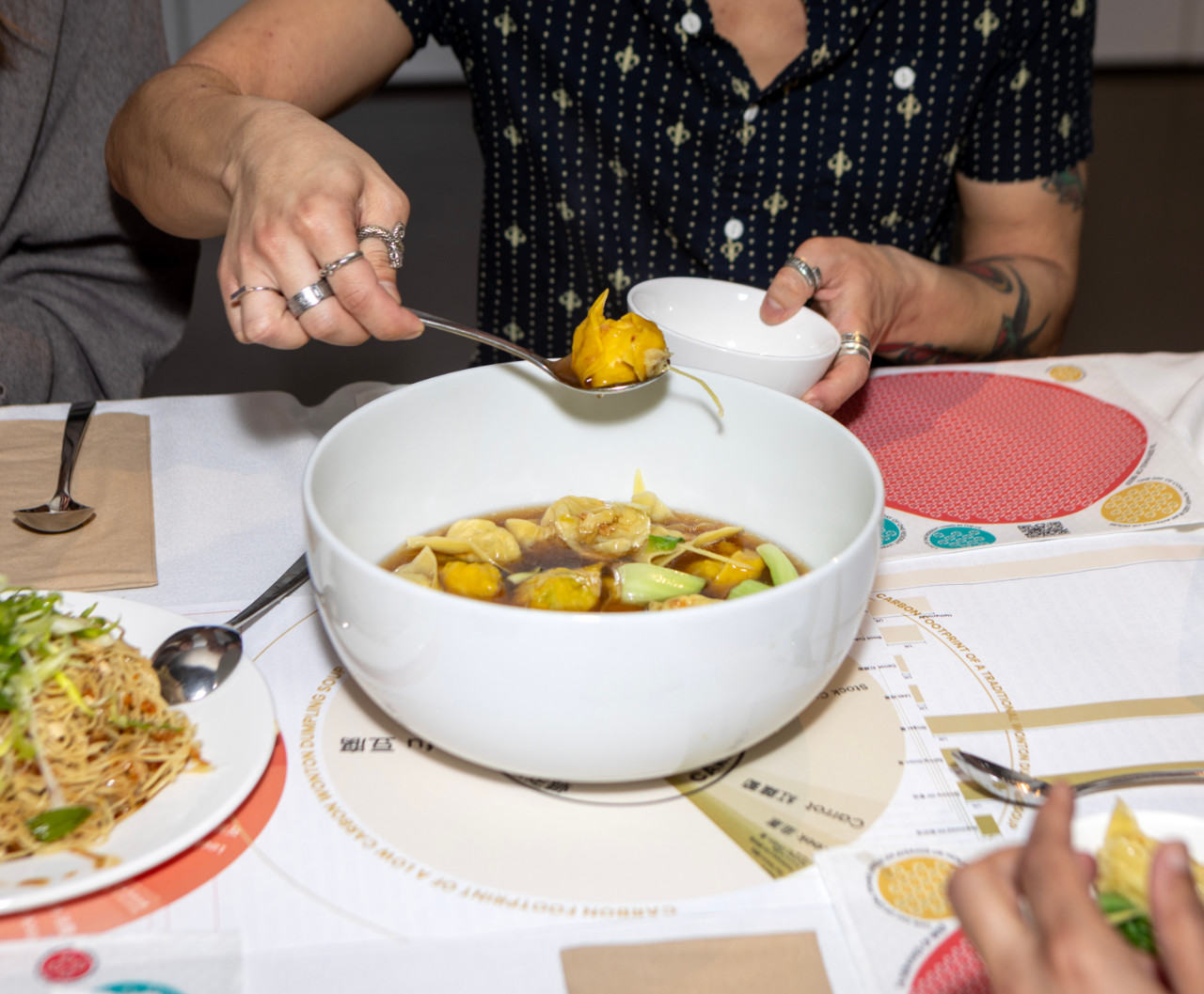
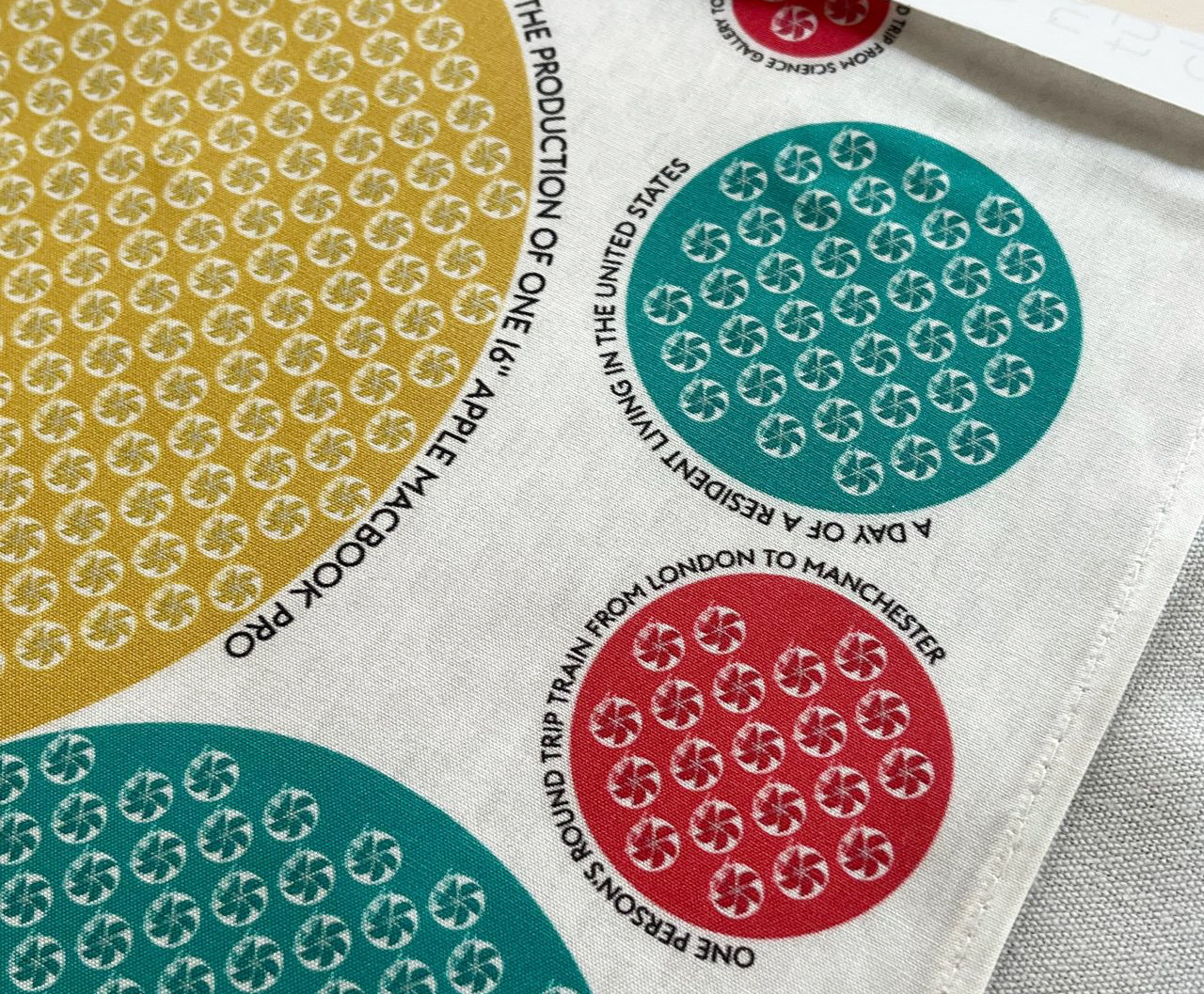
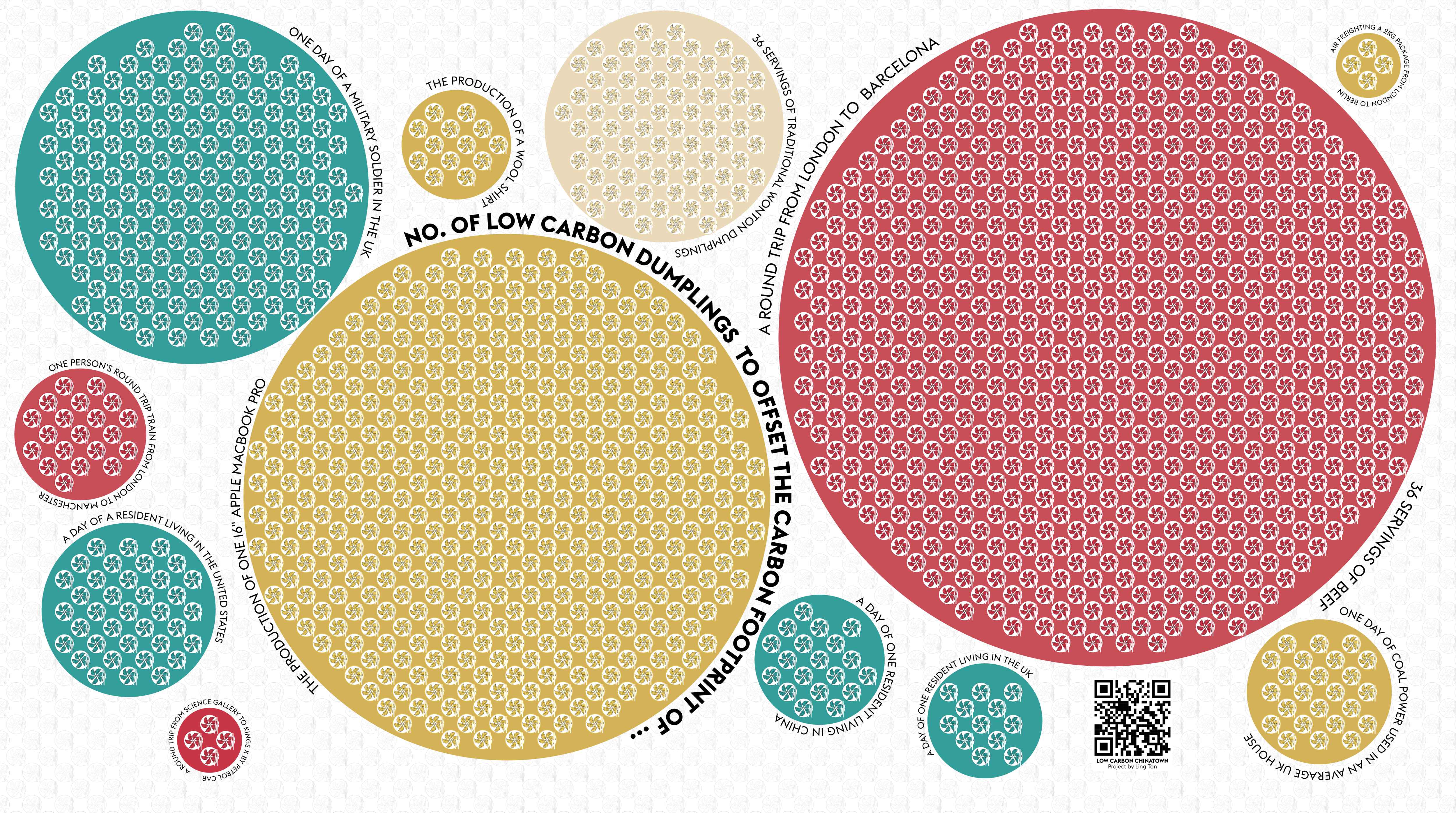
– Custom Low Carbon Table Mat compares the carbon footprint of a bowl of Low Carbon Wonton Dumplings to the emissions generated by various global activities –
– Custom Low Carbon Table Mat compares the carbon footprint of a bowl of Low Carbon Wonton Dumplings to the emissions generated by various global activities. Zoom or pan to view image. –
Low Carbon Chinatown Feature
Ars Electronica 2024
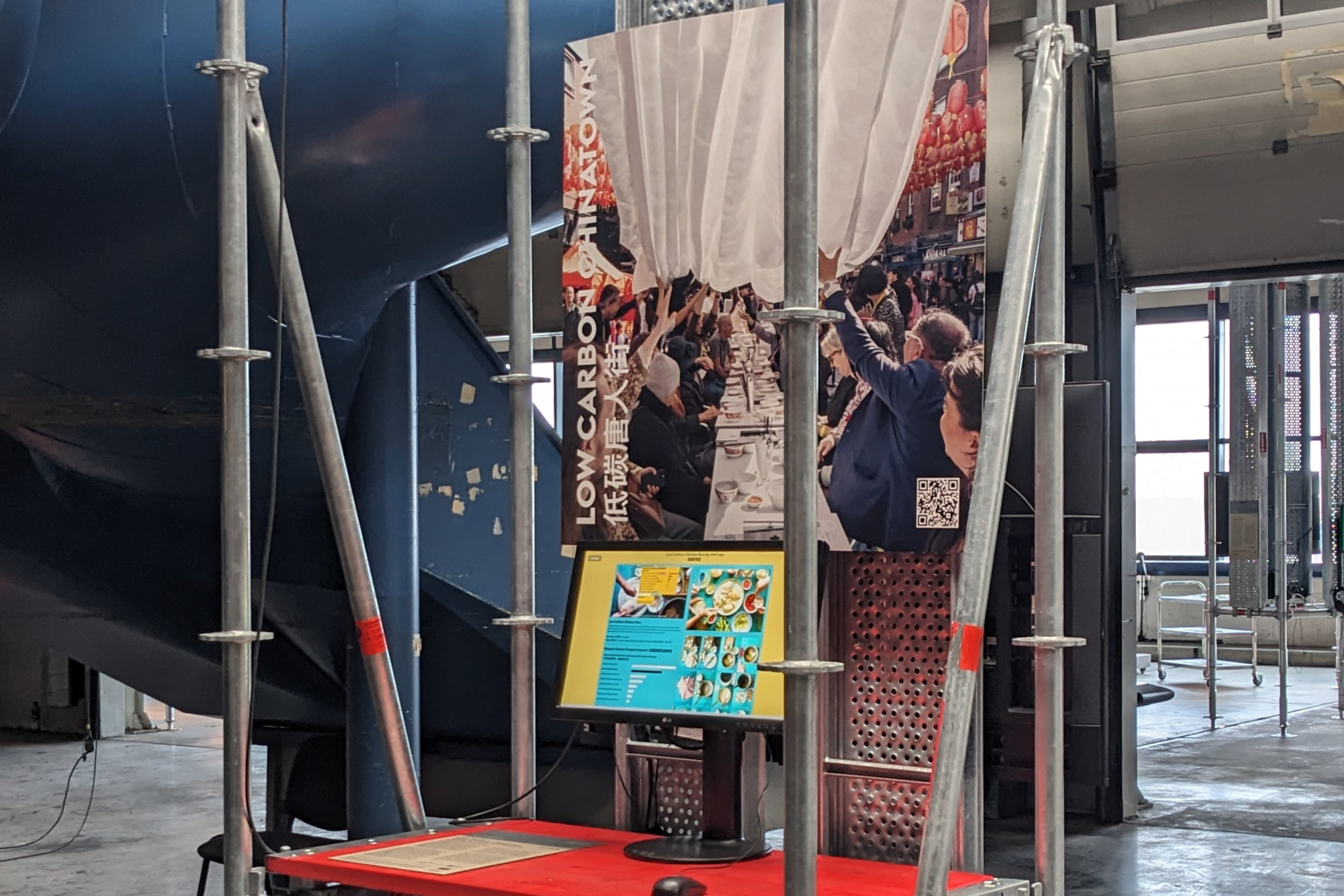
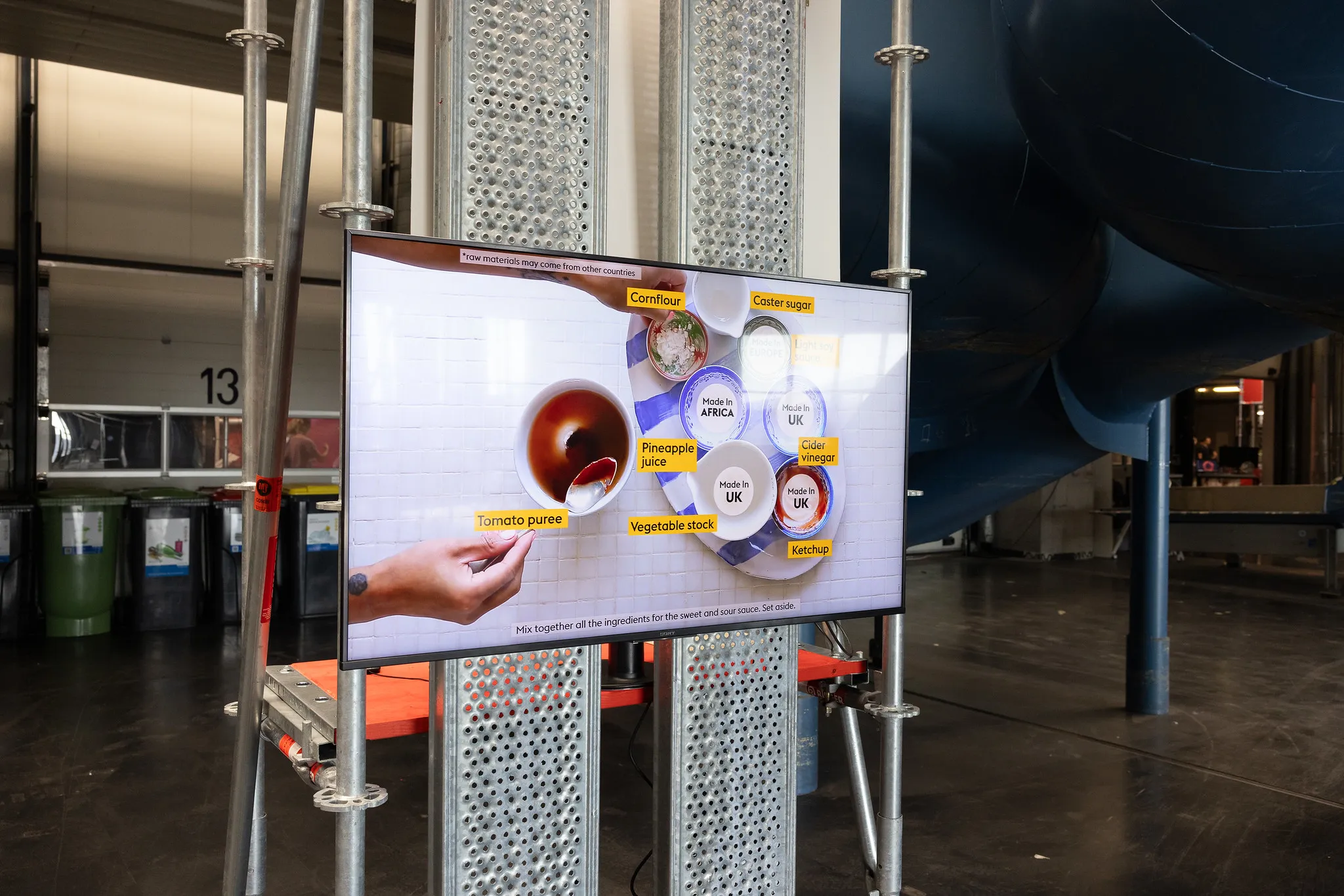
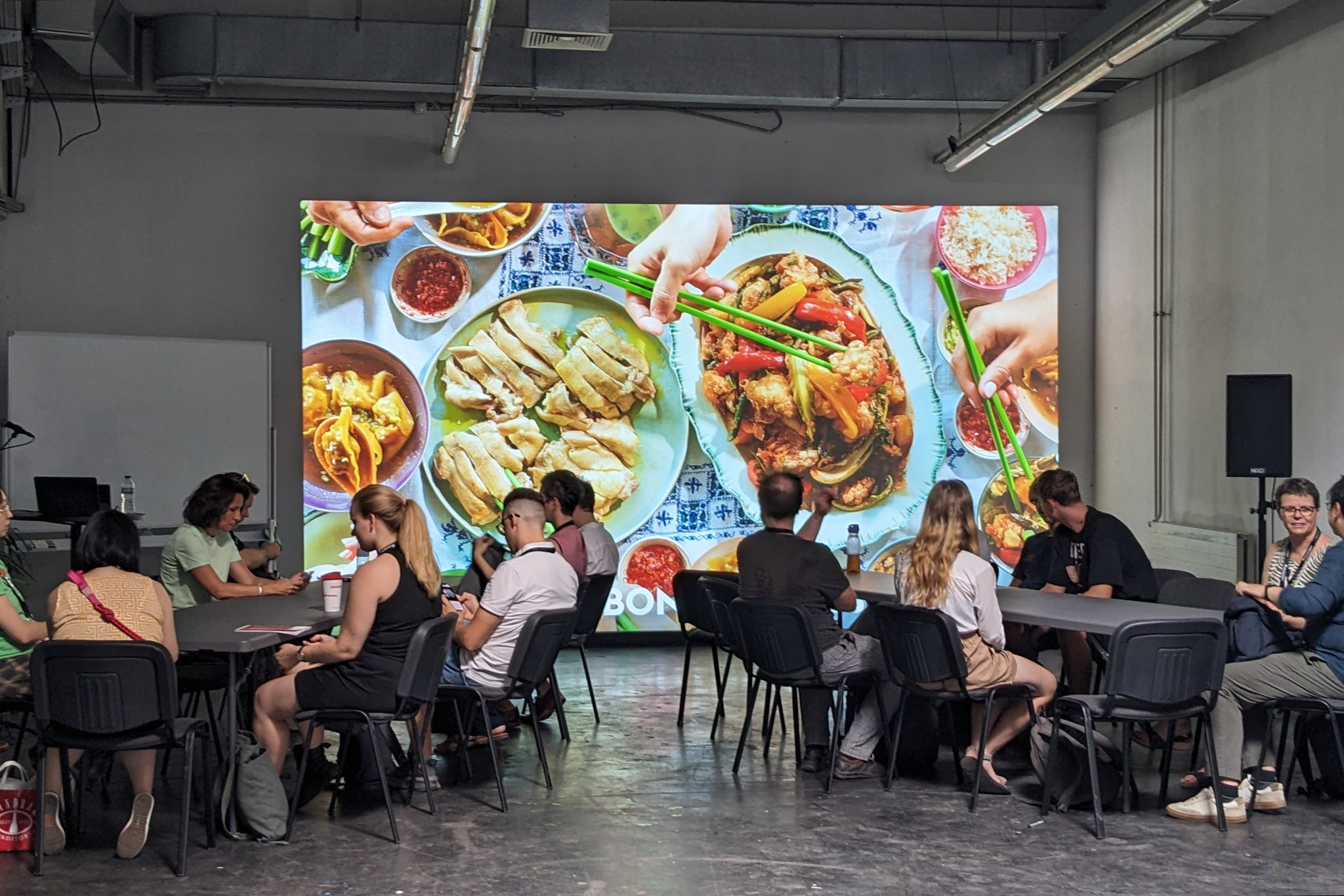
Low Carbon Chinatown was featured at Ars Electronica 2024 as part of the S+T+ARTS Exhibition where the project was nominated for the S+T+ARTS Prize. As part of the exhibition, Low Carbon Food System Workshop was hosted where the audience engaged in discourse about migrant food culture, while learning about the food system through the lens of diverse Chinese food. This includes exploring different low carbon ingredients, cooking techniques and food sources that, in combination, still retain the core essence of authentic Chinese food culture.
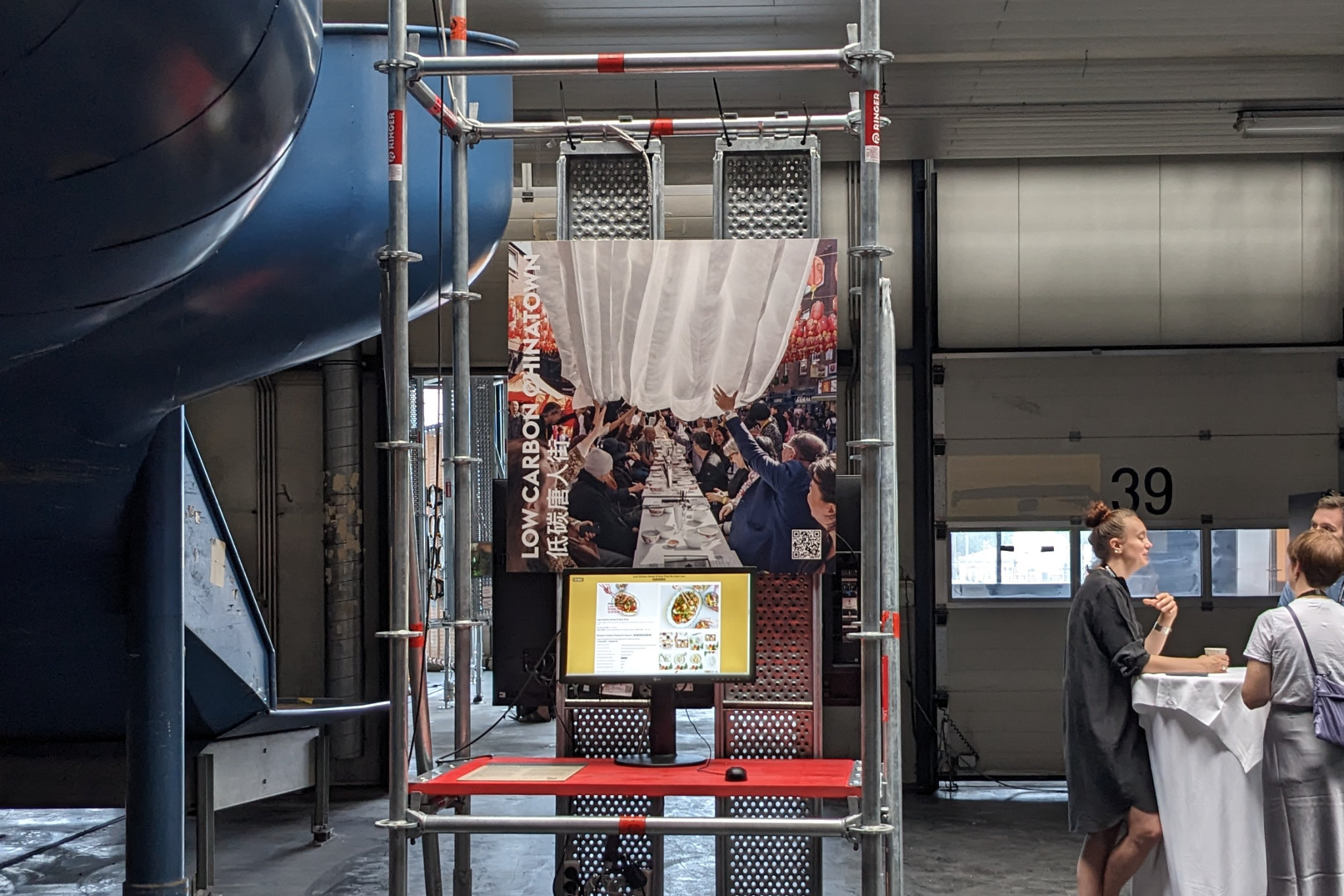
Low Carbon Chinatown Residency
Compass Live Art
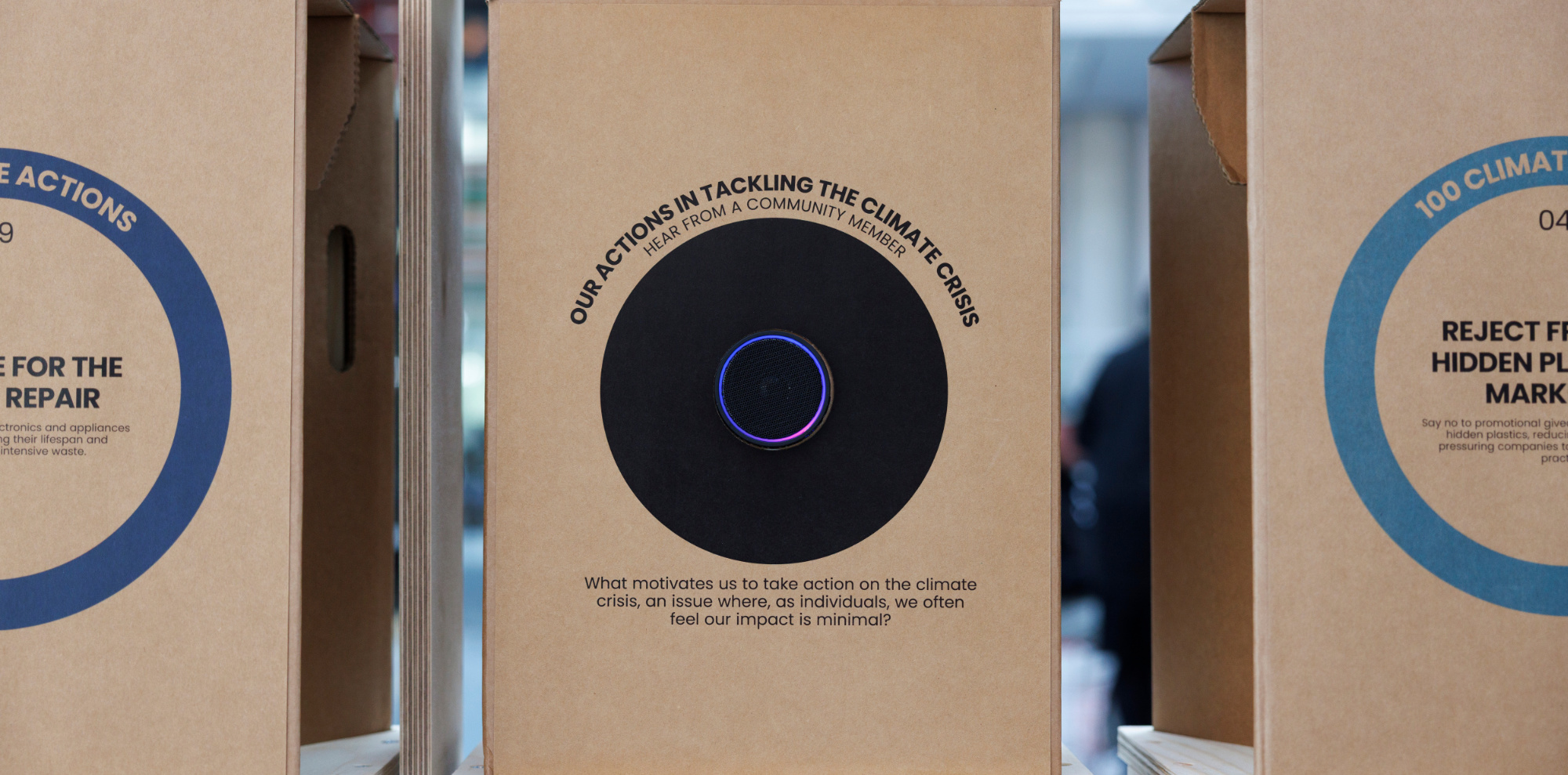
What motivates us to take action on something like the Climate Crisis, that, as individuals, we feel we can only have a minimal impact on?
Subverting the use of social media to interject complex and, at times, activist messages, these short cooking-documentary films follow 4 Leeds residents: a 79-year-old immigrant from Hong Kong; a 41-year-old immigrant from China; a 25-year-old university student from China; and a 18-year-old high school student from Hong Kong.
In their own home environments, they each prepare their own version of a low carbon Salt and Pepper ‘Prawns’ dish, while talking about their experience living in the UK as migrants, and their relationship to climate change. The films invite the audience to examine how different ages, backgrounds, heritages, and life experiences affect the way people take action in tackling the Climate Crisis. Explore their low carbon recipes using the Low Carbon Digital Cookbook.
The residency project is by Ling Tan, supported by Compass Live Art. Special thanks to film participants Man Chiu Leong, Bei Gao, Haojin Wang and Stephen Wong, Lychee Red Chinese Seniors and Mafwa Theatre & Lincoln Greeners.
– Bei Gao –
– Man Chiu Leong –
Low Carbon Chinatown Supper Club
Manchester Museum, Barking Riverside
The Supper Club brings the Low Carbon Chinatown experience indoors into neighbourhoods and institutions and engages large groups of audience on the environmental impact of our food systems through a communal feast featuring a series of low carbon Chinese dishes developed in Low Carbon Chinatown.
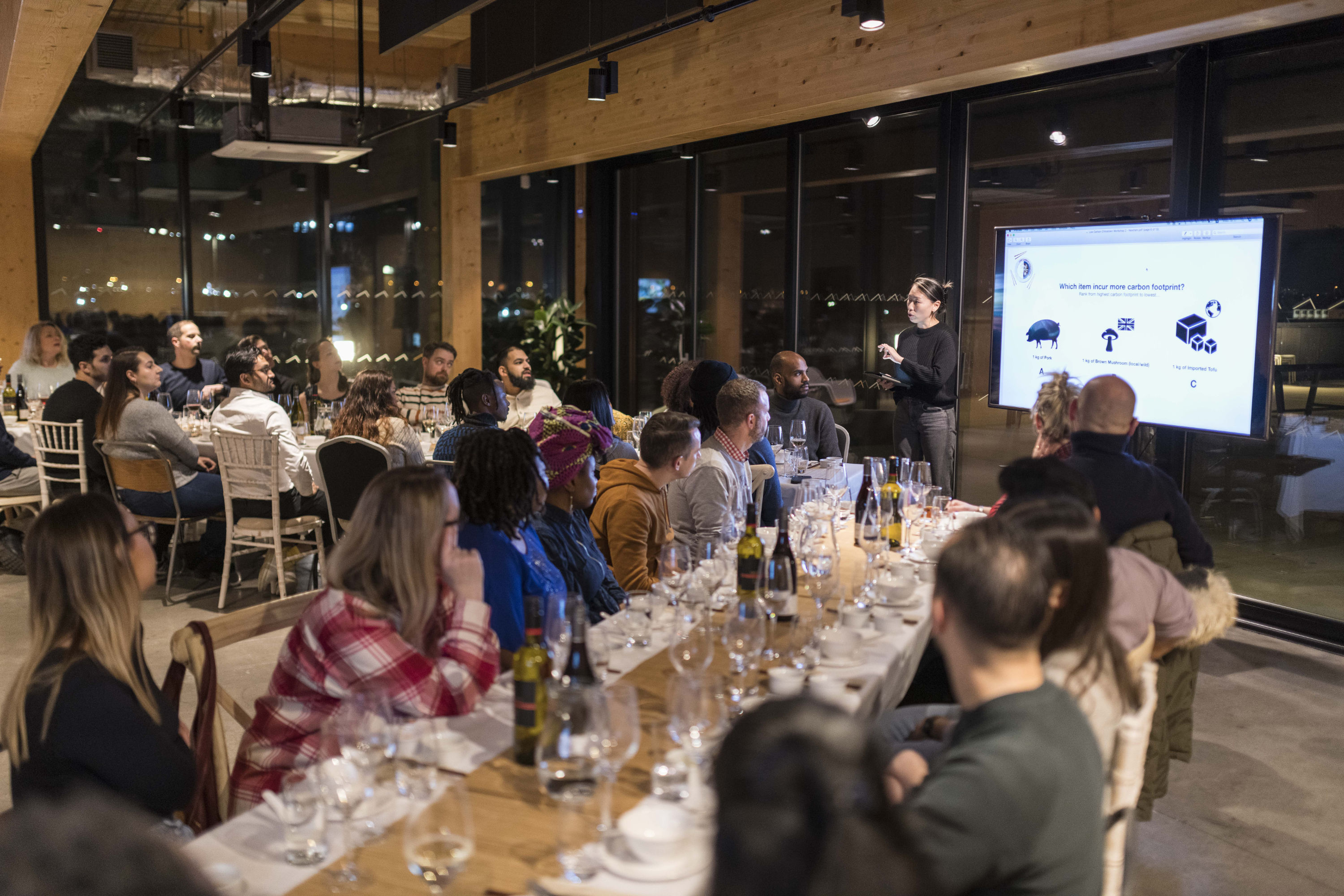
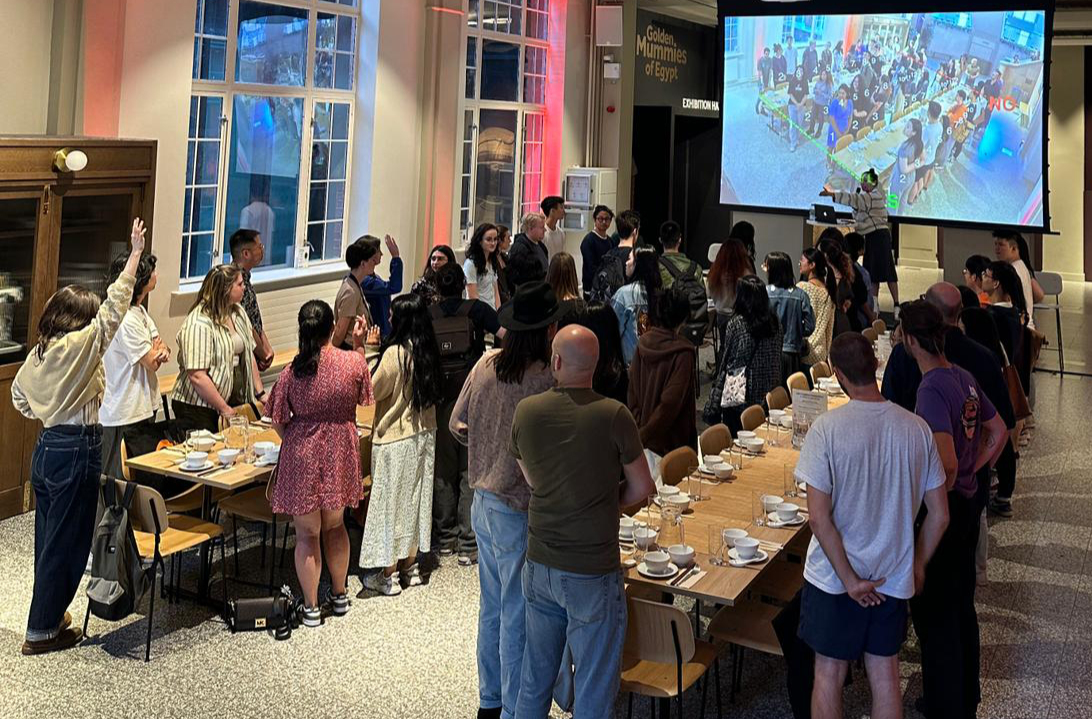
Audiences engage with issues surrounding climate change through an interactive, educative and delicious experience. Before the meal begins, the audience shuffle their seating positions based on a series of questions that help them examine their individual and collective opinions on the climate crisis. As they discuss and negotiate with each other, a live camera feed provides an overview representation of everyone’s collective perspective. Once seated, audiences are presented with the low carbon dishes to taste, alongside the data science behind each dish. While having the meal, they take part in an interactive mini workshop session that helps them better understand the carbon footprint of food, and watch the making of the low carbon dishes on a projected screen.
Low Carbon Chinatown Supper Club is a project by Ling Tan, previously presented in Manchester Museum and Barking Riverside Wild Ecology Centre.
Low Carbon Food System Workshops
Hackney, Newham, Chinatown
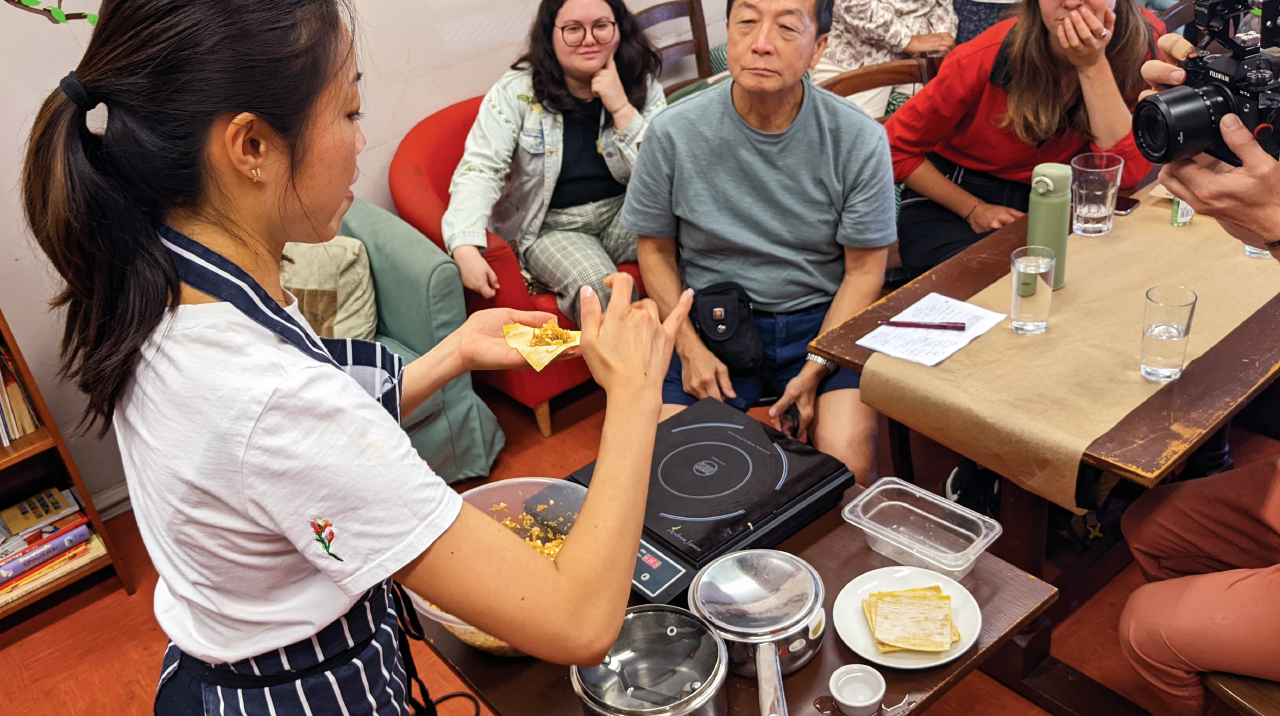
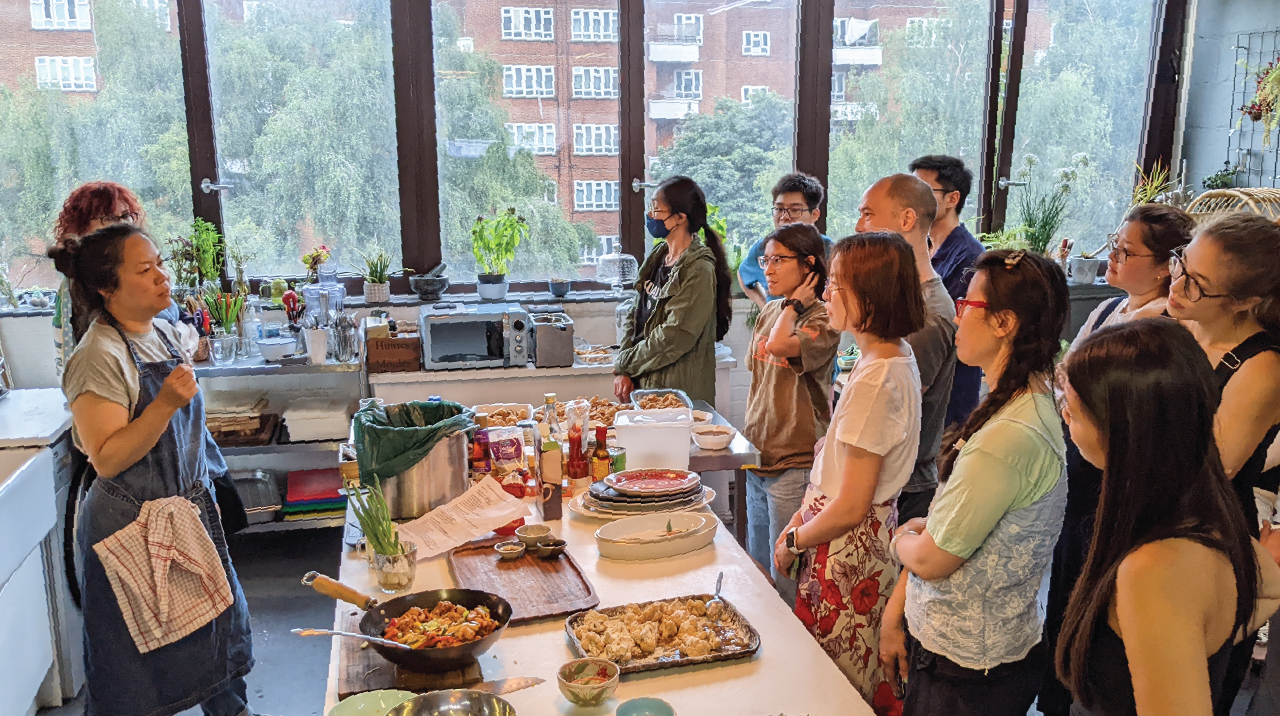
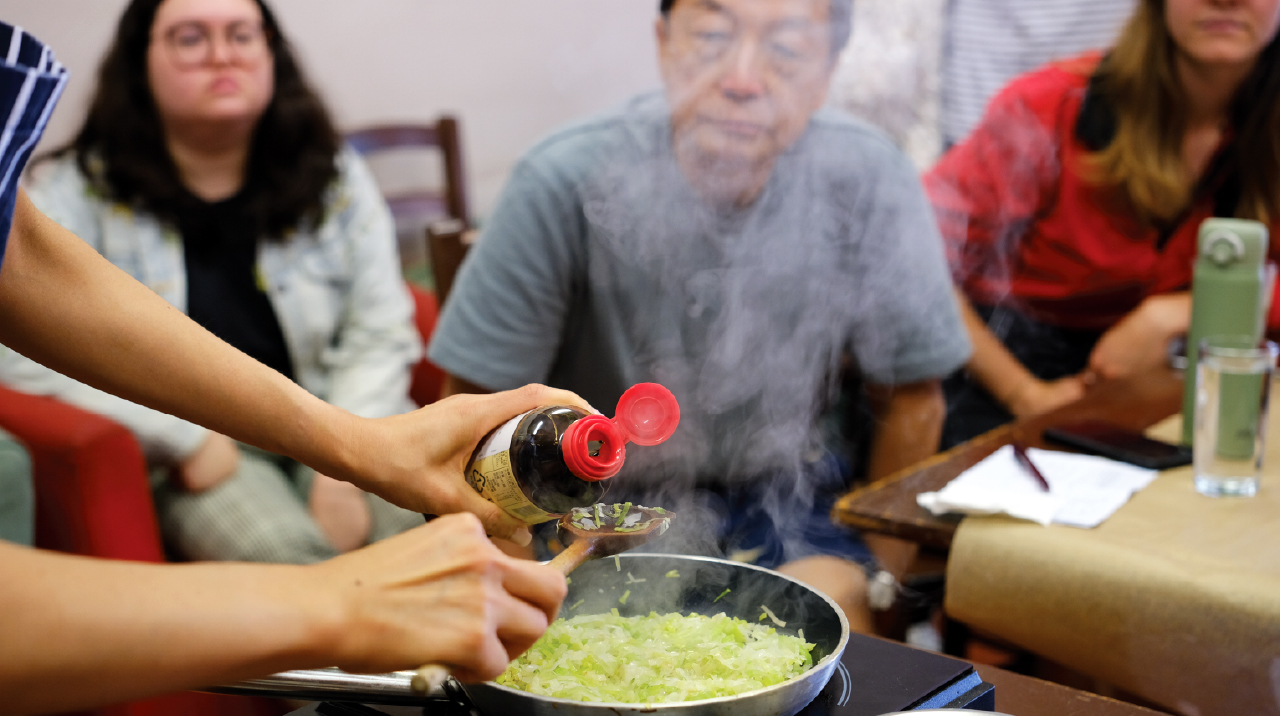
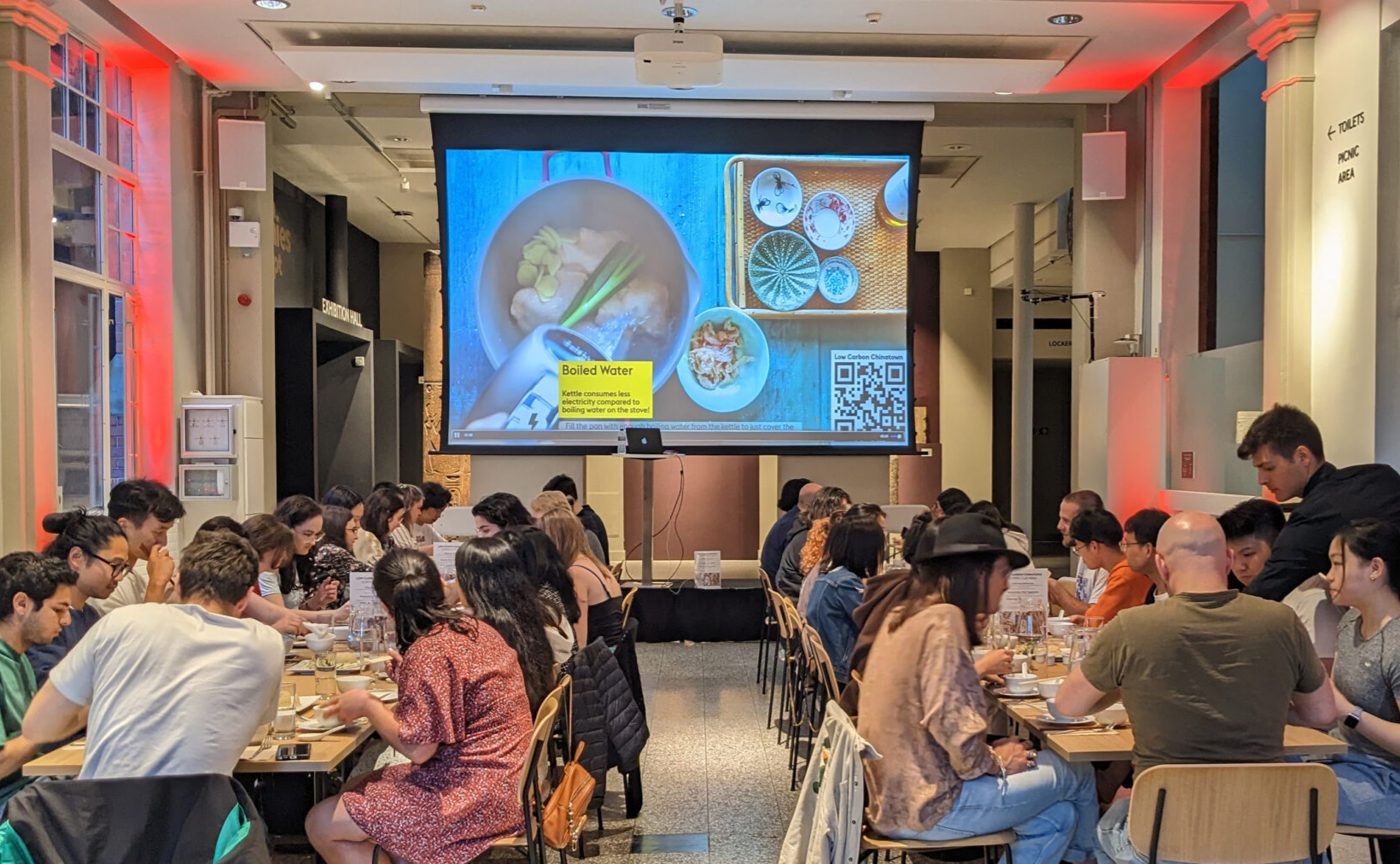
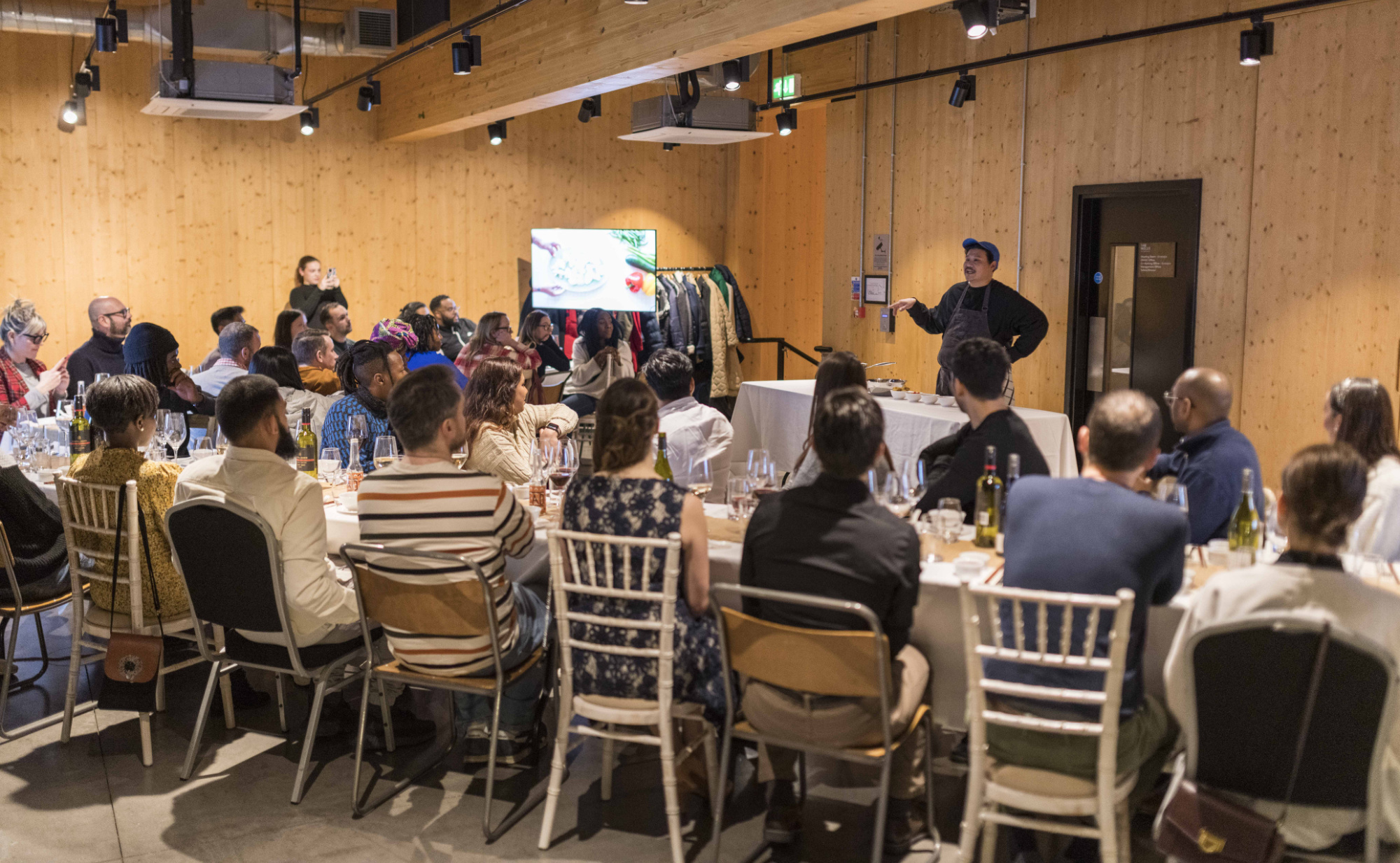
The workshop format engages participants in discourse about migrant food culture, while learning about the food system through the lens of diverse Chinese food. This includes exploring different low carbon ingredients, cooking techniques and food sources that, in combination, still retain the core essence of authentic Chinese food culture.
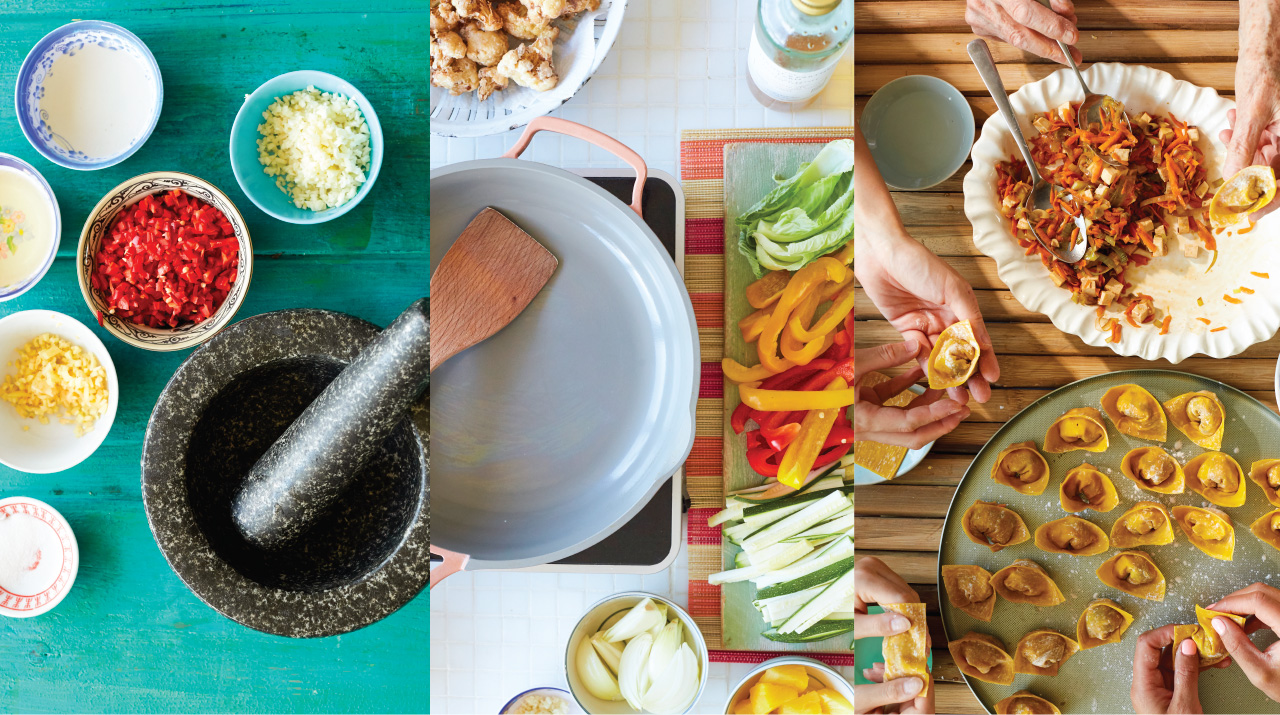
Kicking off in London as our first stop, in the iteration, a group of almost sixty London based East & South-East Asian participants came together over the summer in a series of engagement workshops to experiment with cooking Chinese dishes while reducing its carbon footprint. They collectively develop a set of low carbon (footprint) Chinese food recipes, based on traditional Chinese cuisines that are popular in the UK, with the help of a data scientist Raphael Leung and acclaimed food writers Mimi Aye, Uyen Luu and Shu Han Lee. Visit our Low Carbon Digital Cookbook to learn about the various low carbon dishes that were developed in the participatory process.
Making A Low Carbon Hainanese Chicken Rice
MiMi Aye x Chinatown
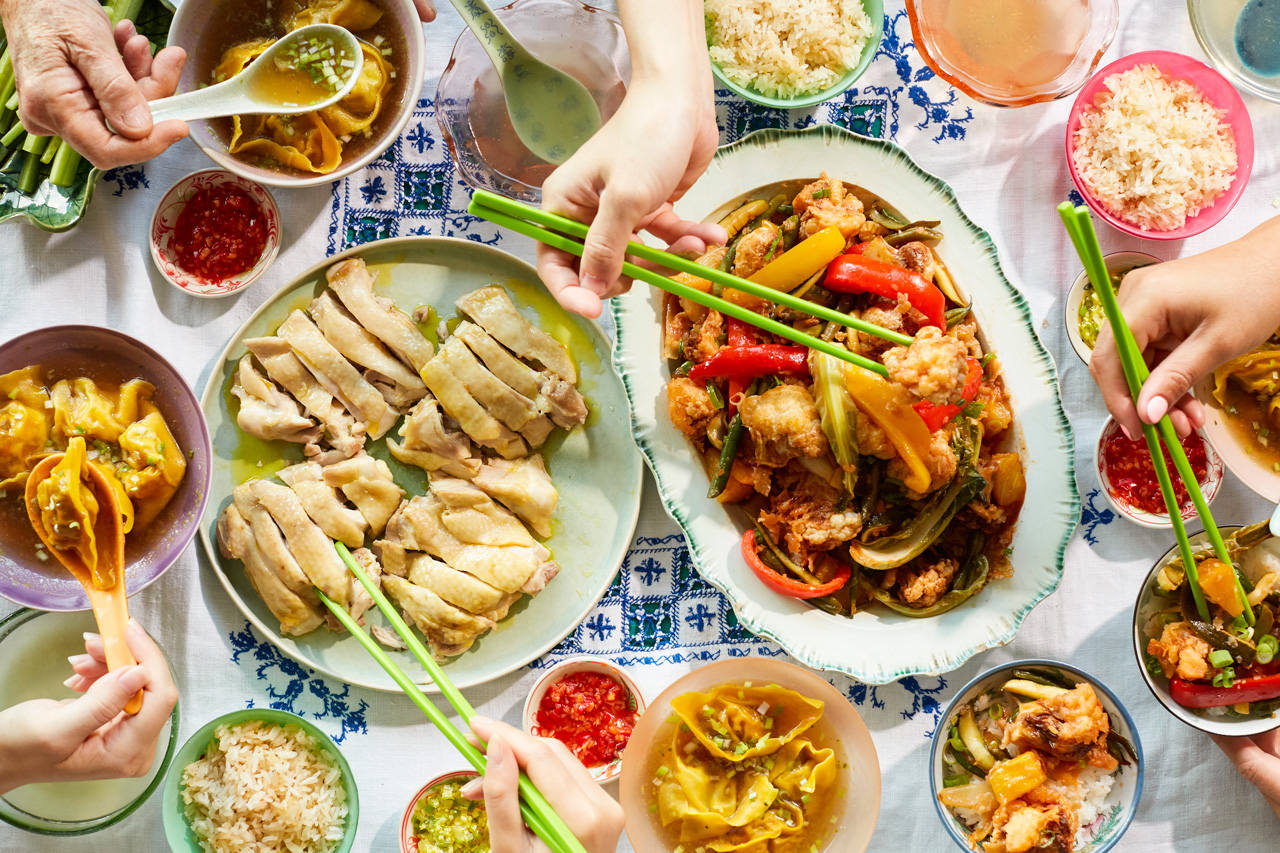
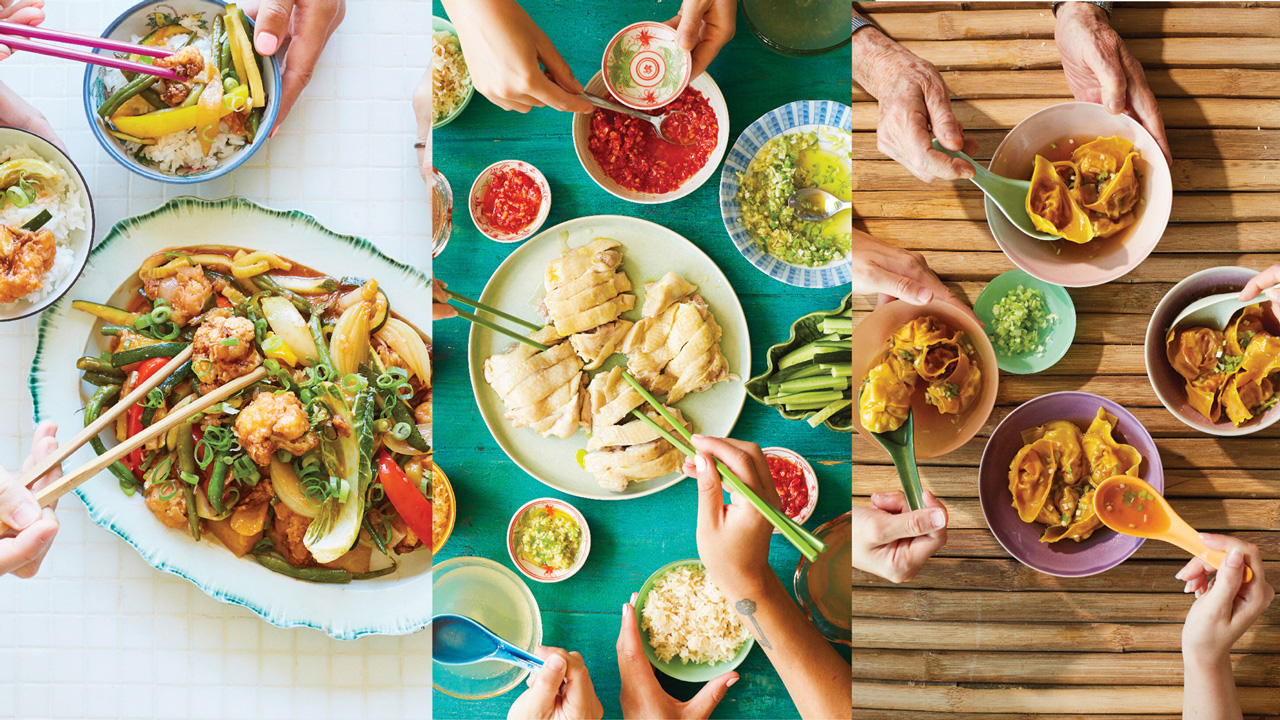
How do we cook our favourite dishes using a lower carbon footprint approach? UK-based Burmese Chef and Food Writer MiMi Aye explored cooking low carbon Chicken Rice with a group of participants living in central London, focusing on reducing the carbon footprint using cooking techniques. The result is a low carbon version of the dish – with chicken still included!

Supported by London Chinese Community Centre.
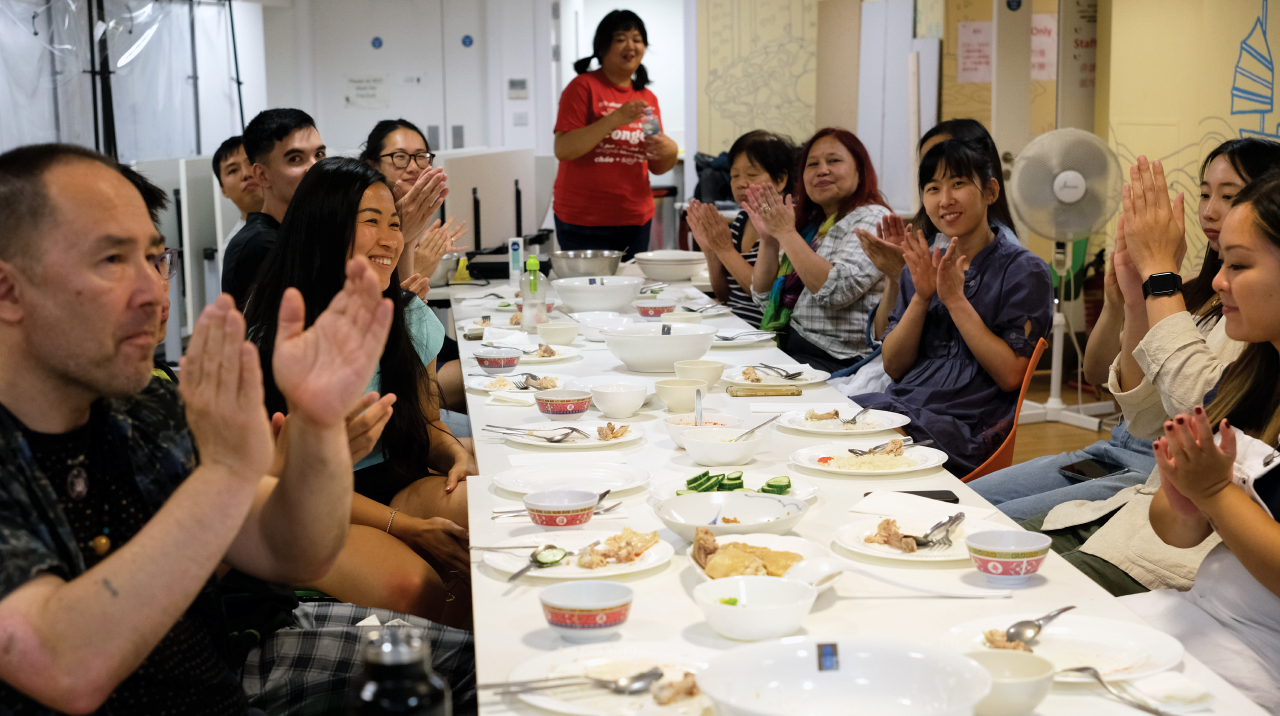
Making A Low Carbon Sweet and Sour 'Pork'
Uyen Luu x Hackney
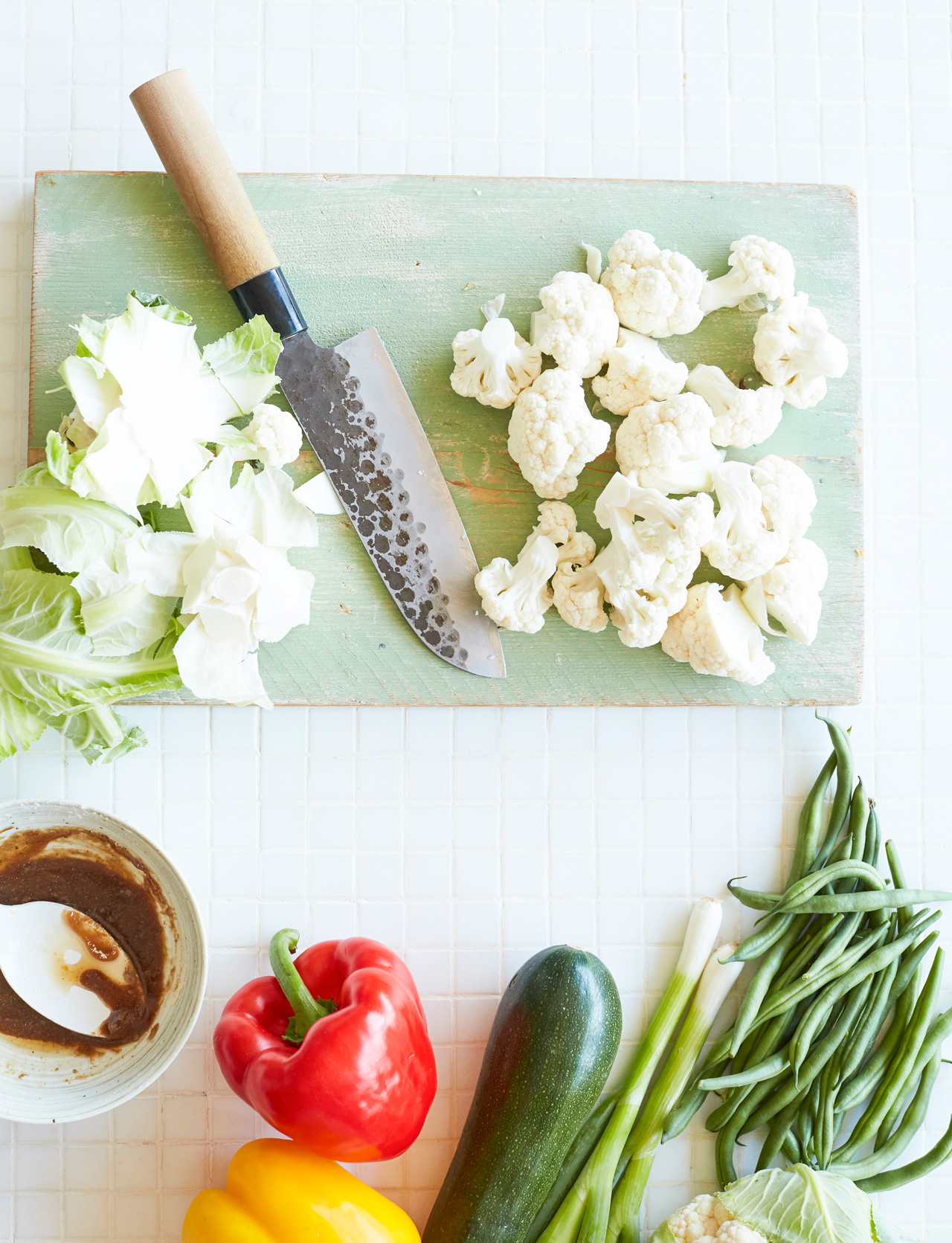
UK-based Vietnamese food writer and photographer Uyen Luu worked with a group of participants living in and around Hackney to develop a low carbon (footprint) version of a classic and popular sweet and sour pork dish with a reduced carbon footprint through buying and growing locally grown produce. No one misses pork once they taste this!
Supported by Hackney Chinese Community Centre.
Making A Low Carbon Wonton Dumpling Soup
Shu Han Lee x Newham
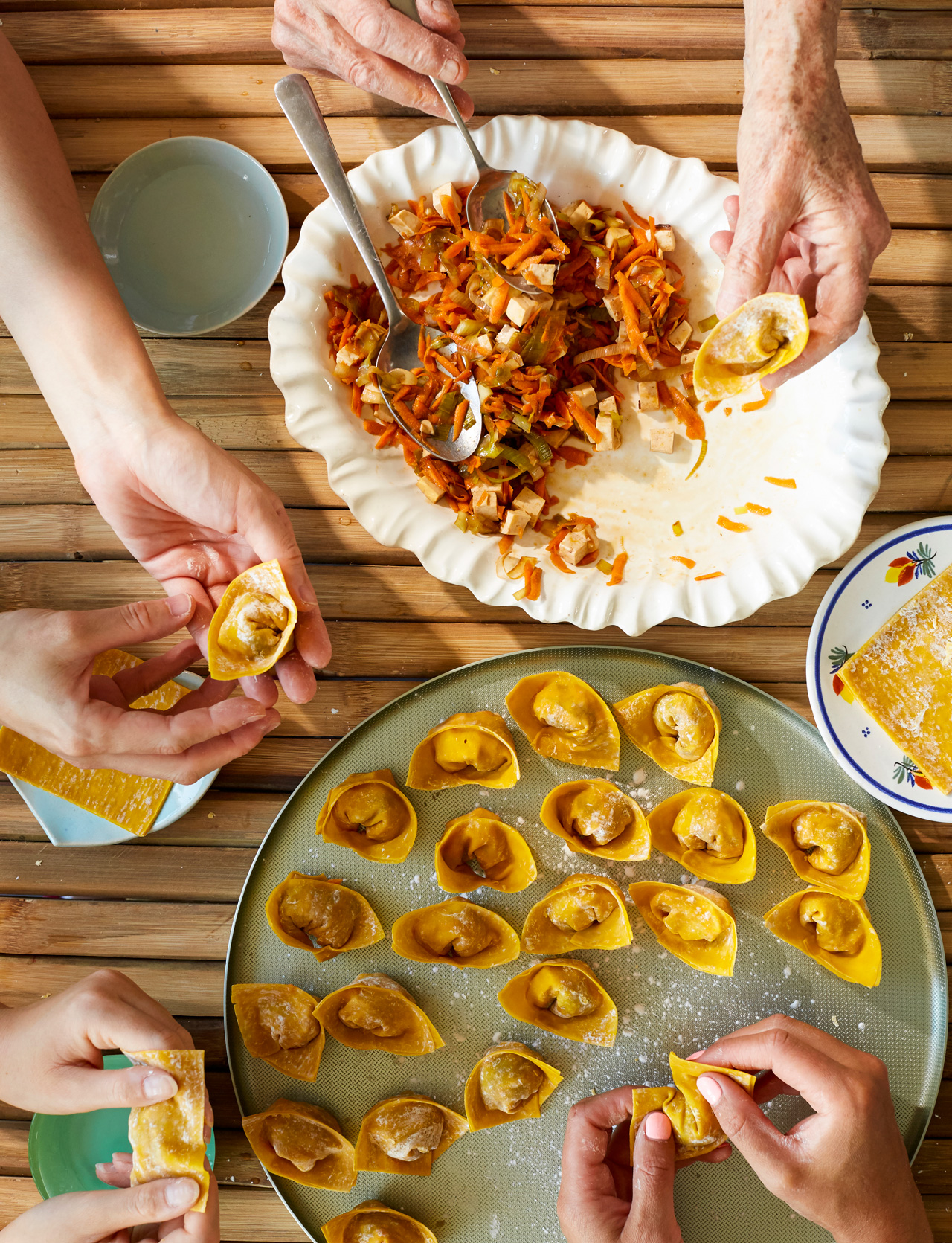
Who doesn't love dumplings? Traditional wonton dumpling uses pork and prawn in the fillings. In this version, UK-based Singaporean food writer Shu Han Lee worked with a group of participants from Newham to develop a low carbon (footprint) of the wonton dumpling soup with vegetarian fillings that taste like meat and wrappings that are made in London.
Supported by Newham Chinese Association and Royal Docks.
– Food photography by Uyen Luu and styling by Sam Dixon –

Low Carbon Chinatown is a project by Ling Tan, originally commissioned by Kakilang.
Leeds Low Carbon Chinatown is commissioned by Compass Festival.
Hackney’s Low Carbon Chinatown is supported by the Climate Team in Hackney Council and public funding by the National Lottery through Arts Council England.
With contributions from data scientist Raphael Leung, climate scientist Dr Alice Garvey, climate economist Catherine Chong, food writers MiMi Aye, Uyen Luu and Shu Han Lee, chef Neil Eakapong, designer Usman Haque, production support Nick Murray, Holly Gibbs & Jennie Gilman, fabricator Gary Campbell and Studio Makecreate, structural engineer Atelier One, community film participants Man Chiu Leong, Bei Gao, Haojin Wang & Stephen Wong.
With support from Arts Council England, Compass Festival, Manchester Museum, Barking Riverside, Royal Docks, Growing Communities, Gainsborough Primary School and MadLeap. With community support from London Chinese Community Centre, Hackney Chinese Community Centre, Newham Chinese Association, Mafwa Theatre, Lincoln Greeners, Lychee Red Chinese Seniors & Gainsborough Primary School.